Miracles are not contrary to nature, but only contrary to what we know about nature.
Saint Augustine
What makes a miracle a miracle? I spent much of the day pondering this general question and a more specific question. Was what happened in Saumur on the 30th November 2016 to a young 21 year old carpenter called Charle a miracle that can be attributed to Charles de Foucauld or was he just a lucky survivor of a freak workplace accident?
It looked like being a long day, so I headed out from the gite at Thines at 7.30am. There was a steep climb through pine trees but thankfully the trail was well marked.
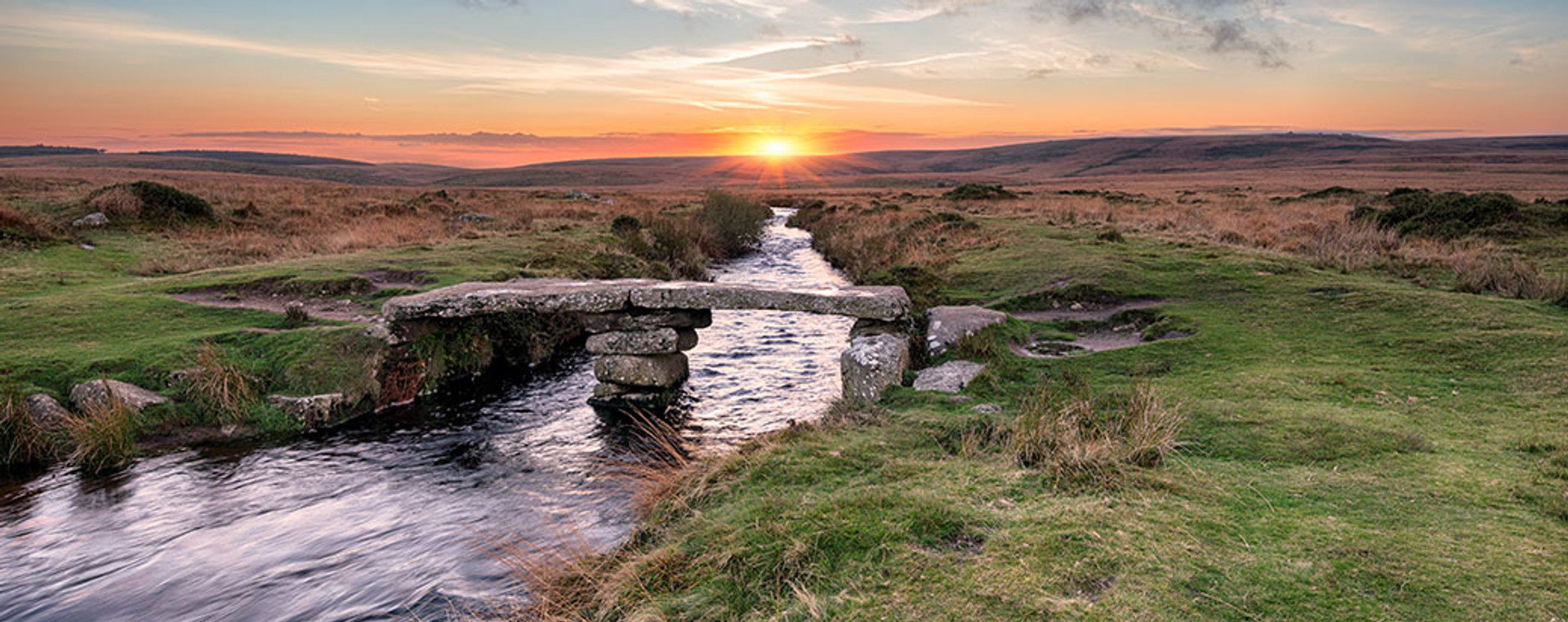
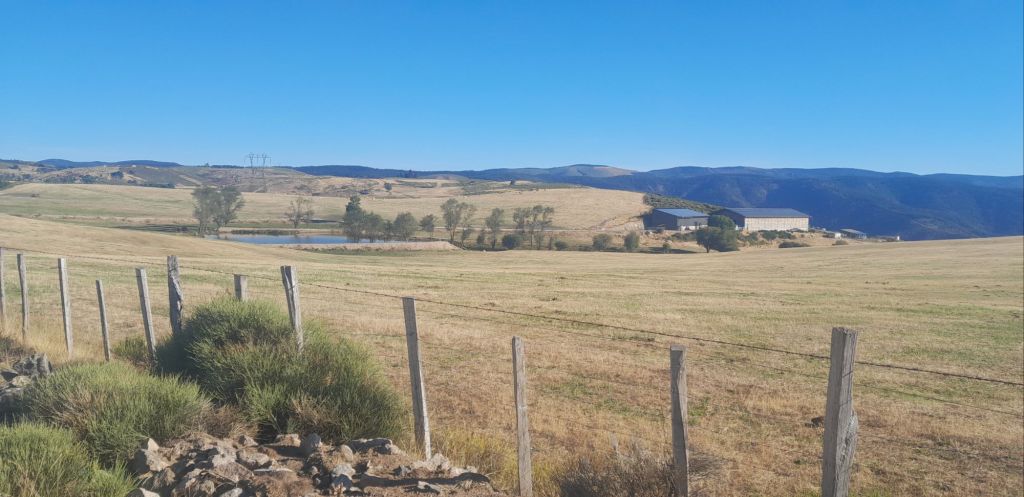
Pretty soon I emerged onto a plateau which for all the world could have been somewhere on Dartmoor. The views were sublime and there were even some cows grazing in the summer pastures which although parched must still have contained some nutrients. Surprisingly there were also some ponds filled with water.
Shortly after 11am I left the GR4 and headed off to the Abbey of Notre Dame des Neiges by road. I still had 20km to walk and that included a 500m descent into a valley followed by a 500m climb to the Col de Notre Dame des Neiges.
A few cyclists, motorbikes and cars passed by but the road was incredibly quiet.
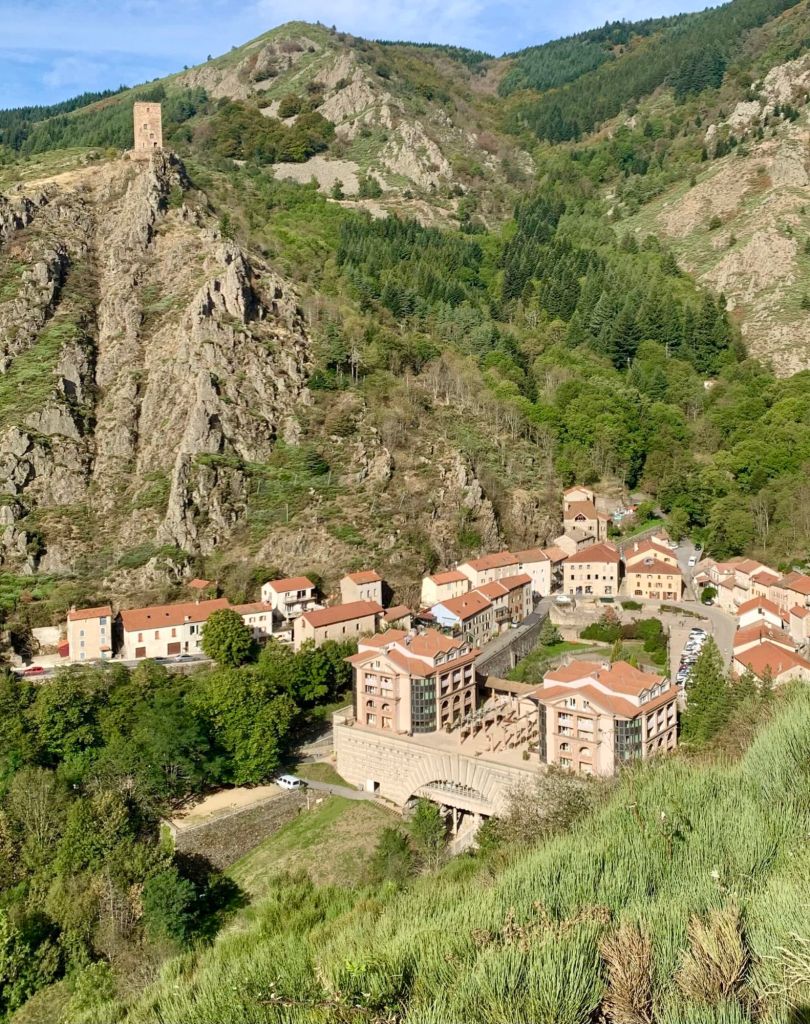
Saint Laurent-les-Bains was the only village of any size I passed through. As luck would have it, there were two restaurants open. I plumped for one on a hillside with a terrace boasting panoramic views called Au Chat Bleu.
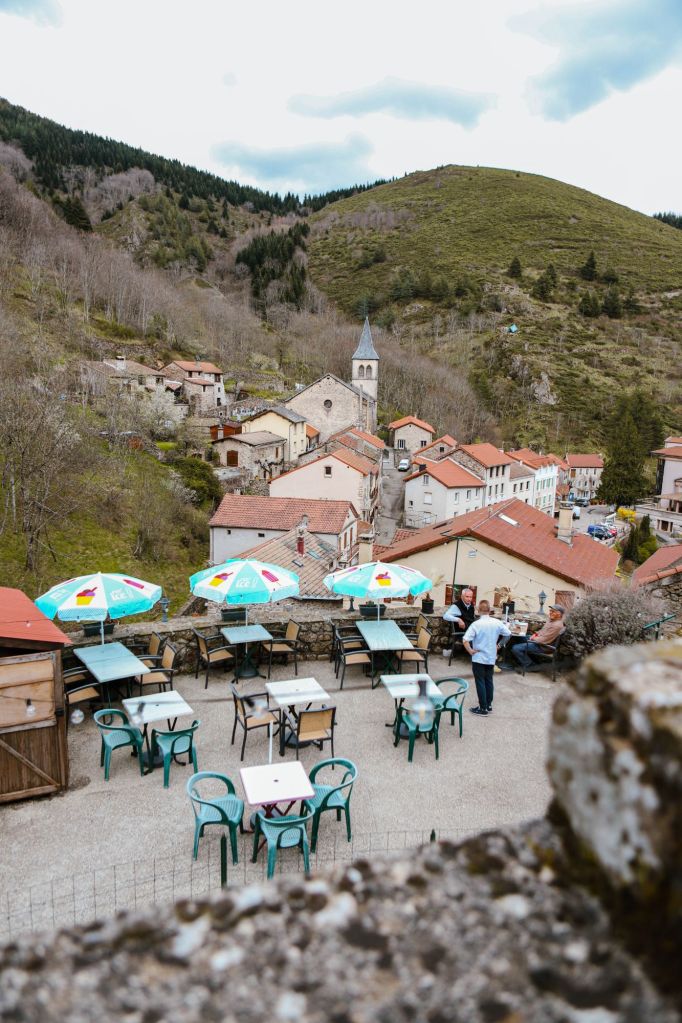
The restaurant was packed as much for the panoramic views as for the food. An hour later I emerged having demolished a sausage and chips, a marron glacè icecream lathered in Chantilly crean and downed a couple of ice cold beers. I sped up the valley and reached the summit in no time!
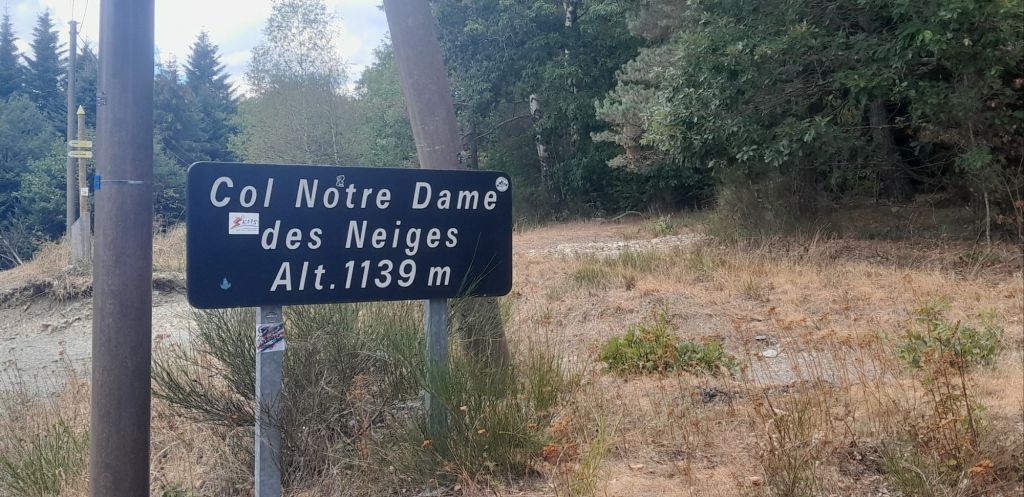
I arrived at the Abbey of Notre Dame des Neiges on the middle of the afternoon. I’m not quite sure what I was expecting. A peaceful monastic retreat high in the Cevennes with a few Trappist monks going about their silent daily routine? The reality was completely different.
There was a restaurant and bar that was doing brisk business with a couple of wimple clad nuns pulling pints as if they hadn’t gone out of fashion. There was a gift shop that was on a par with the British Museum, selling every sort of religious guidebook that you could ever wish for together with candles, honey, soaps, oils, wine, beer and loads of local produce. It was a sort of religious supermarket and the checkout tills were running at full throttle. So what had happened to the Trappist monks?
All was explained by one of the nuns who gave us a 30 minute sermon about being greatful for the small things in life before a three course supper was served to a hungry group of walkers, including myself.
Founded in 1850, the Trappist Abbey had thrived for the best part of a century before a combination of economics and a decline in new entrants had taken its toll. Eventually the decision had been taken in 2022 to close down the Abbey. But at the last moment a ‘miracle’ had occurred. A nunnery in the Gers had decided to take over the running of the Abbey, first with nine nuns, a number which had now grown to thirteen. And I have to say, the place seemed to be thriving both spiritually and commercially!
I wonder what Charles de Foucauld would have made of it all. Born in 1858 into a noble family in the North of France he had pursued a military career befote turning to religion in his early 40s. He had spent time at Notre Dame des Neiges im 1890 before being sent as a missionary to Algeria where he was assassinated at Tammanrasset on 1 December 1916.
So how does one explain what happened on the 30th November 2016?
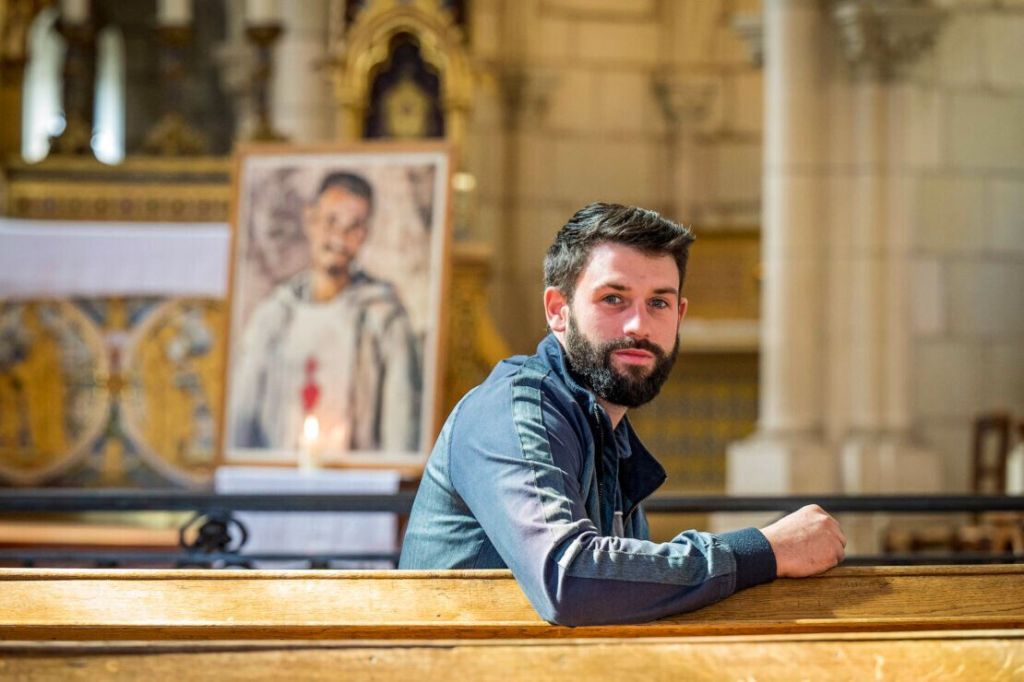
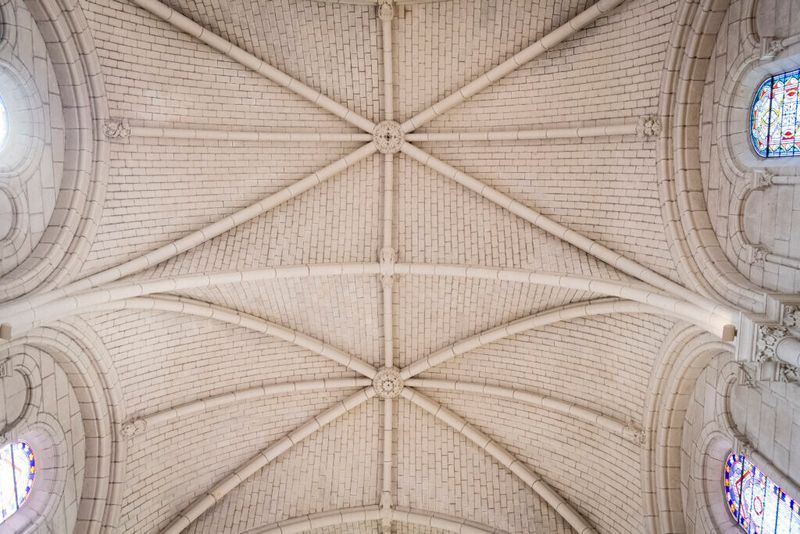
On that day, two workers from the Asselin company, specializing in heritage restoration, were busy working on the framework of the Saint-Louis High School chapel. Leaving the construction platform, Charle, a 21-year-old apprentice, chose to take the shortest route by walking along the vault. Perhaps due to the weight of his toolbox, the vault suddenly gave way, and Charle fell 15 meters into the chapel below. His fall lasted only 1.8 seconds, but to Charle it felt like an eternity. His thoughts raced: “Don’t fall on my feet. Protect my head with my hands.” He opened his eyes. “I wasn’t at the bottom yet. I tried to lie down. And then I closed my eyes again.”
Workplace accident statistics are clear: falls of more than 10 meters are almost always fatal, or leave the victim severely disabled. Charle, however, landed at 60 km/h on a bench that shattered on impact. He then stood up with just a scratch on his forehead before he noticed that one of the bench’s upright stanchions, about 50 cm long, had pierced his chest just below his heart. He made his way back up the nave, decided against going out into the courtyard “so as not to alarm the students,” and turned towards a side door. “I saw him coming. He told me, ‘We have to call for help,’” recalls Éric Bernard, the IT manager, still stunned. It was Charle who, being a skilled carpenter, told the fire department the diameter of the piece of wood over the phone. A helicopter made an emergency landing on the school’s soccer field. So much for the lawn sown that very morning! Alas, the bench post, too long, prevented Charle from getting through the door. It was by ambulance, and under sedation, that he finally reached the University Hospital of Angers.
Meanwhile, his boss, François Asselin, learned of the tragedy. The high-profile president of the General Confederation of Small and Medium-Sized Enterprises (CPME) was in Paris for a meeting. A devout Catholic, the man from Saumur immediately launched an intense prayer vigil with his wife. They called upon Charles de Foucauld, whom his family often prayed to. Unable to reach either the hospital or his worker’s parents, the businessman spent a sleepless night, convinced that the young carpenter was doomed. At the same time, in Angers, the young man was taken into surgery. The surgeon who removed the large foreign object had to perform a splenectomy, but he noted with relief that no vital organs had been affected. And apart from a broken rib, the skeleton was intact. “Scientifically inexplicable,” medical experts would later conclude.
What makes the incident all the more remarkable are the following facts.
The accident took place at the hour of Vespers which liturgically form part of the services of 1 December 2016, the 100th anniversary of Charles de Foucauld’s death.
The accident happened in Saumur, close to where Charles de Foucauld was stationdc as a cavalry officer in his youth.
Perhaps the most bizarre ‘coincidence’ was that Charle was saved on November 30, 2016, following a novena (nine consecutive days of prayer) whose purpose was precisely to ask God for a miracle through the intercession of Charles de Foucauld. This novena was the culmination of a full year of prayers offered with the same intention by the faithful of the Blessed Charles de Foucauld parish in Saumur.
Charles de Foucauld was made a saint in May 2022. Although there is a chapel in the grounds of the Abbey dedicated to him, the nuns don’t make a song and dance about his connection to the Abbey. They just go about their daily routine and make walkers like myself feel lucky to have had the chance to discover the wonderful Abbey of Nôtre Dame des Neiges.


Leave a Reply