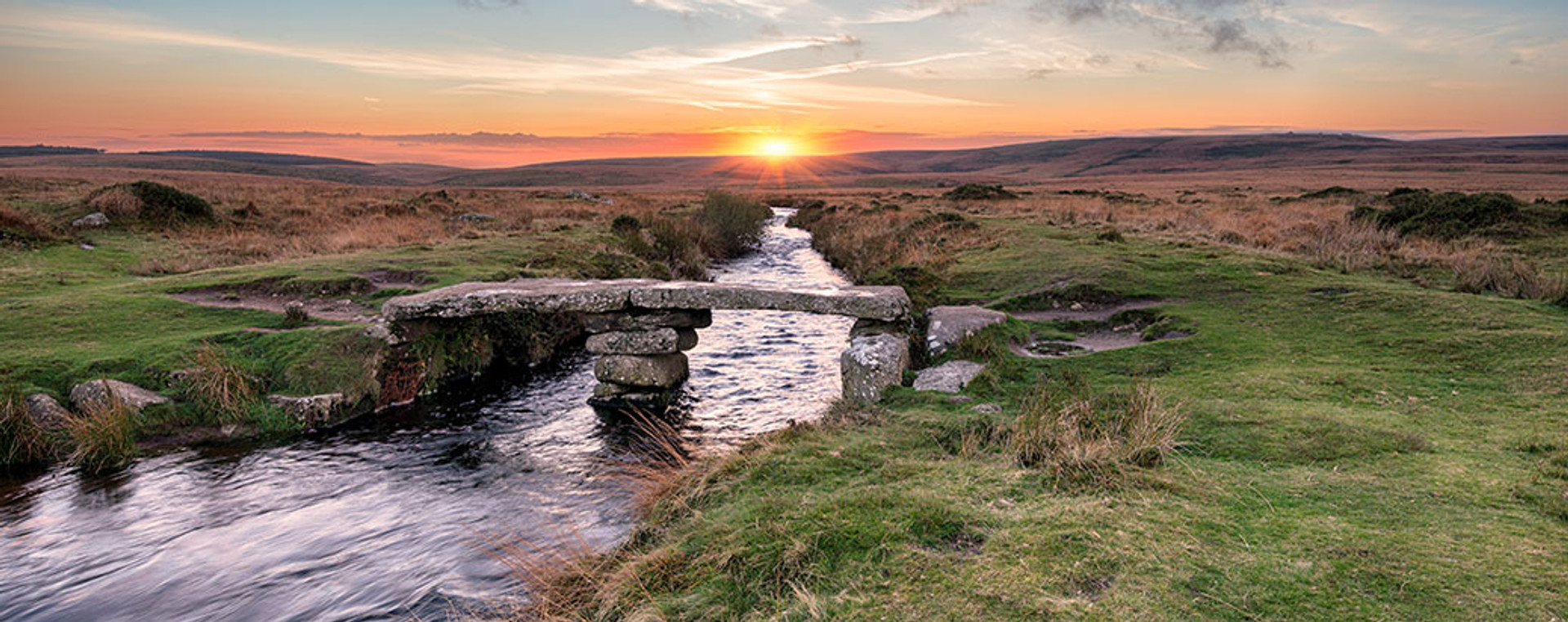
If, unfortunately, a man comes to walk alone on the bank, the Drac, who waits on the lookout, invisible, between two waters, lets a gold coin float on the surface. Seeing its reflections, the man enters the river to try to retrieve it. And there, crack! The Drac catches it, carries it off and eats it.
Fabien Bages – Tales and Legends
It proved a long day – 10 hours of walking with the temperature in the low 30s during the afternoon. Thankfully the terrain wasn’t too arduous with most of the day spent walking through vineyards. I am traversing the heart of Côtes du Rhône country.
I left Vaison-la-Romaine shortly after 7am crossing its Roman bridge which is the only one of its kind outside Rome. The ruins of the Roman city aren’t showy, but they give a good idea of how Roman cities functioned. The Roman remains in the centre of town were impressive.

Just like Rome, Vaison la Romaine has seven hills. And like Rome it was very prosperous, its population in the 2nd century was about the same as it is today. It wasn’t until 1907 that someone wanted to do some digging into the town’s illustrious past, a local abbot named Autel dedicated his life to excavating the Roman remains right in the centre of Vaison. So successful was he that in the 1920s the ‘la-Romaine’ was appended to the town of Vaison.
You won’t find great monuments in Vaison la Romaine as you do in Nimes and Arles, these are either destroyed or hidden under the modern town, but what you do get is a feel of everyday life. Vaison la Romaine also has an amphitheatre which would have held seating for up to 6,000 people!
The surviving fragments of upscale Roman habitations survived essentially because they were more solidly built than cheaper housing. These homes would have been beautifully decorated – fountains, light wells, interior gardens; carpets, drapes, art and fine furnishings.
Certain practical rules of construction were obeyed: kitchens to the north so food could be better preserved, bedrooms small so as to maintain their temperature better, the baths by an entrance so firewood did not have to be carried far. Heating was channelled around the house from the baths area, and windows filled in with glass.
I headed out of Vaison towards the village of Roaix. As soon as I was out of the suburbs I entered vineyards which I spent most of the day walking through. There’s not a huge amount you can say about vineyards – they all basically look the same. The fun is sampling the wine – although there were many opportunities to drop into the vineyards, I didn’t fancy carting a case of wine about in my rucksack!

The highlight of the day was passing a vineyard outside Rouaix which featured a Templar chapel

With its exotic name and situated beneath an impressive 12th century chateau and on the banks of the Rhone, Mondragon had every reason to be a bustling thoroughfare with a pretty market square, charming cobbled medieval streets and a certain Provencal ambience. Unfortunately Mondragon had none of these features. The town was completely deserted when I arrived and didn’t really seem to have any central point like a town square. Perhaps the most interesting feature of the town is the annual fete which celebrates the legend of the Drac or dragon.
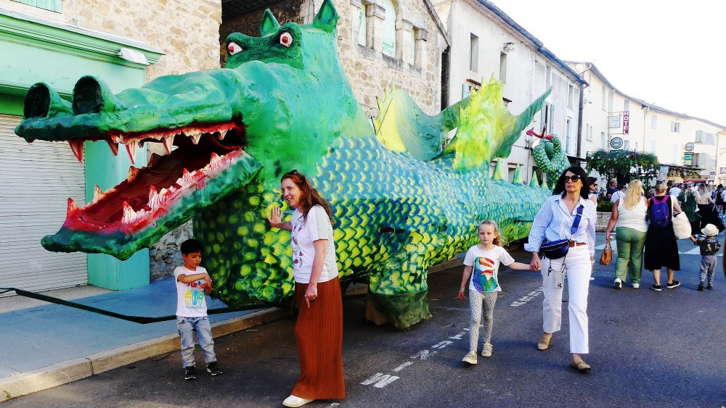
Not to be confused with the neighbouring legend of the Tarasque of Tarascon, the Drac is the monster of Beaucaire. A dragon with sharp claws, a devious and talented magician, invisible to human eyes… The story was told by Gervais de Tilbury in the early 13th century, according to which the Drac haunts the waters of the Rhône, where it lies in wait for and traps children and other passersby in order to devour them. It must be said that the monster is fond of human flesh. The monster does not hesitate to transform itself into a man to hunt even on the lands of Beaucaire, much to the despair of its inhabitants. It is all the more difficult to protect oneself from it since most of the time, they cannot even see it thanks to its invisibility.
According to the legend, while washing her clothes in the waters of the Rhône, the washerwoman sees a wooden cup (or her paddle, depending on the version) passing by and can’t help but grab it. The Drac grabs her and takes her with him to the bottom of the river… where he spares her life. It turns out that the Drac has just had a son and therefore needs a human to take care of the Dracounet!
For seven years, the washerwoman raised the young Drac. Following the father’s instructions, she coated him every night with a special cream. Made from eel paste (or human fat, depending on the version…), it rendered him invisible to human eyes. ‘Wash your hands with this special water every night after applying it,’ the Drac ordered her. One night, however, she forgot and went to bed without washing the grease off her hands. She woke up the next morning, rubbing her eyes, and realized that she could now see the Drac, who was normally invisible.
Seven years after her abduction, the Drac returns the washerwoman to dry land. Pressed with questions, unrecognizable after so many years, she recounts what she saw in the waters of the Rhône. And while strolling through the town, she recognizes the Drac and goes to greet him. A grave mistake! Enraged at having been seen, he gouges out the washerwoman’s eyes and vanishes without looking back.
None of the small villages I passed through boasted shops of any variety which meant I’d worked up quite a thirst by the time I reached the campsite at La Pinède shortly after 5pm. I found my way to my bell tent and crashed out. Walking 35km in 32C isn’t the cleverest way to spend August in the south of France and may explain why I haven’t met any other walkers in the last week
With storms forecast for the night I was glad to be spending a night under canvas and equally relieved that I hadn’t had to lug a tent around with me in the heat!


Leave a Reply