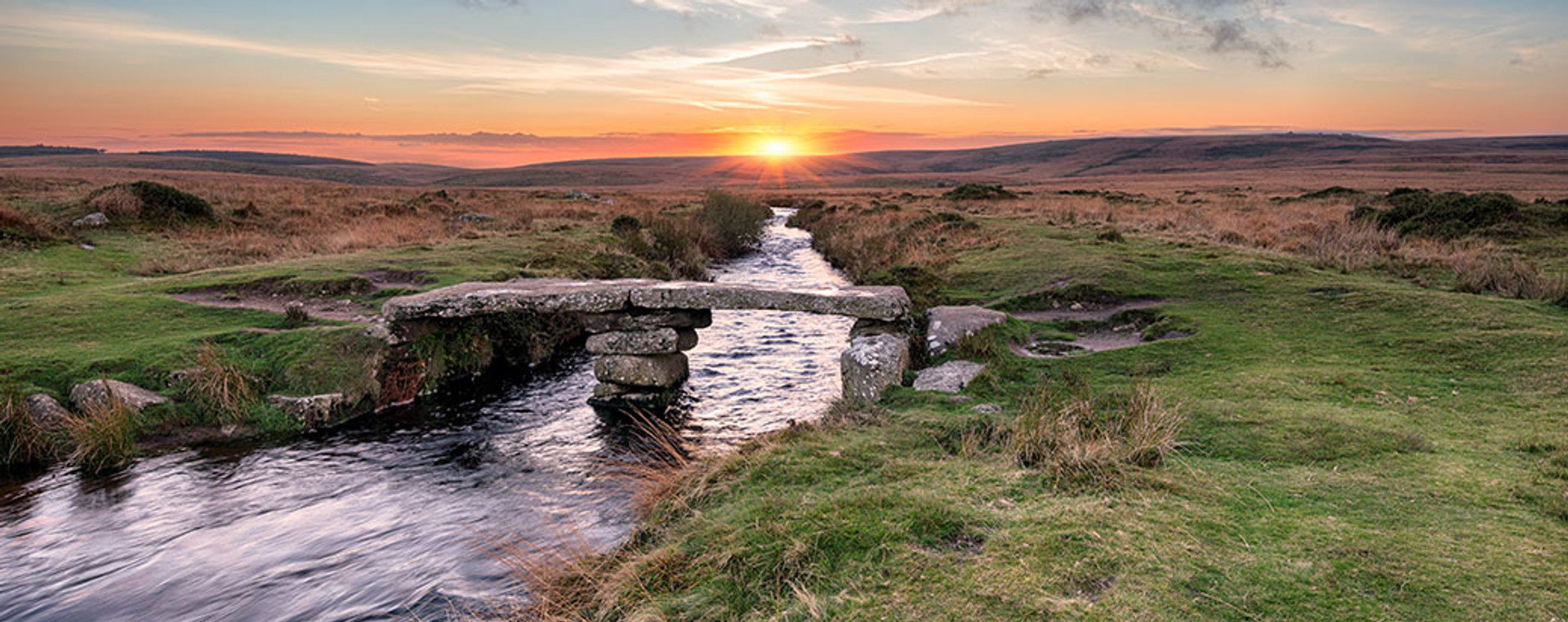
My only motive was the wish to see what so great an elevation had to offer.
Franchesco Petrarch – The Ascent of Mont Ventoux
The first time I heard about Mont Ventoux was in a history lesson at school when I was fifteen. The teacher was a distinguished mediaevalist called Dr Peter Partner and his area of specialisation was Italy during the Italian Renaissance. The lesson included a synopsis of Jacob Burkhardt’s “Civilisation of the Italian Renaissance” and his claim that by climbing Mont Ventoux in May 1336, the Italian Humanist Franchesco Petrarch became the first modern man.
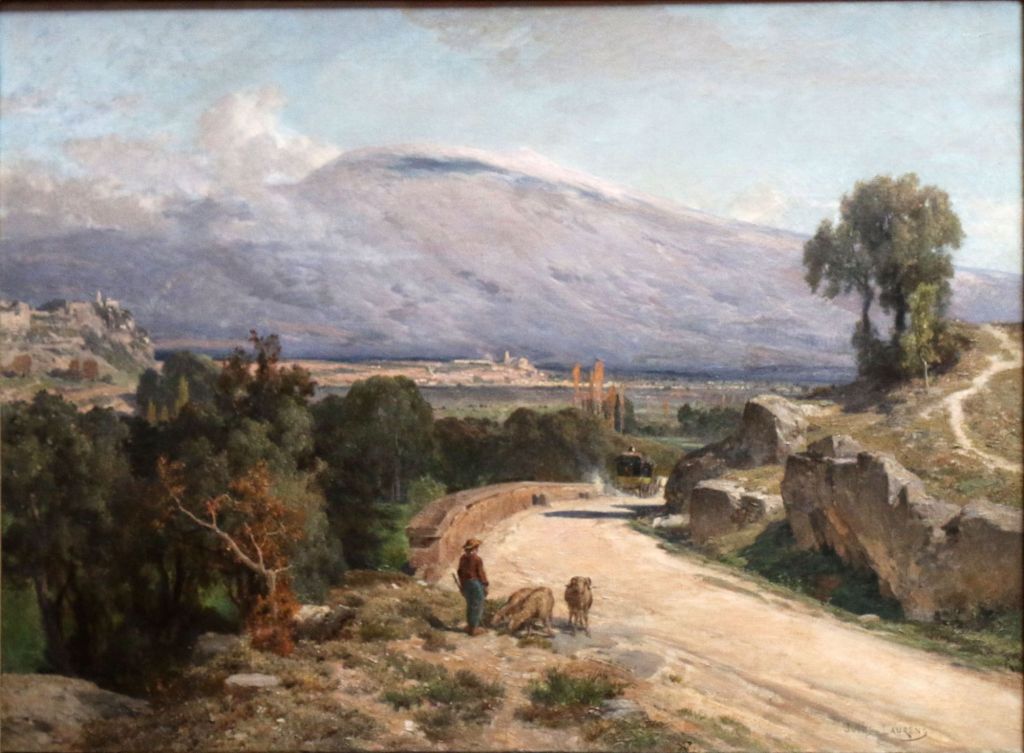
Petrarch was the last thing on my mind as I lay awake in my Airbnb, early in the morning, listening to the thunder and the rain lashing down outside. The summer’s drought had well and truly broken. The only pity was that it had happened on the day I was due to ascend Mont Ventoux, at 1,910m, the highest peak in Provence!
Over a cup of coffee, my Airbnb host Martine, bemoaned the summer heat. At times the temperature had reached 45C and the morning’s rain was the first since May.
Martine had grown up in the mountains and confessed not to being a great fan of cities. She had visited London once for three days, but wasn’t a fan. The food had been appalling apparently and London had been noisy and polluted. I suspect that her visit had been some years ago – she mentioned being bemused at the sight of punk rockers. I tried to persuade her that British cuisine had improved over the last half a century since her visit, but she seemed unconvinced!
I headed off into Sault shortly after 8am. The rain had begun to abate and Martine had headed off for an appointment in Saint Christol where she ran a retirement home for 80 residents. I’d only just bought myself a pain au chocolat in the village boulangerie but who should I see waving to me from a café across the street but Martine!
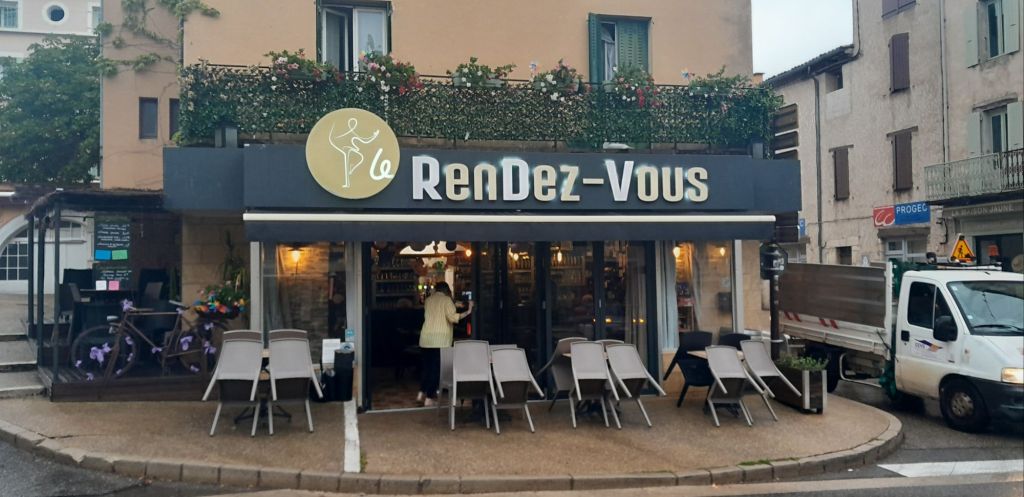
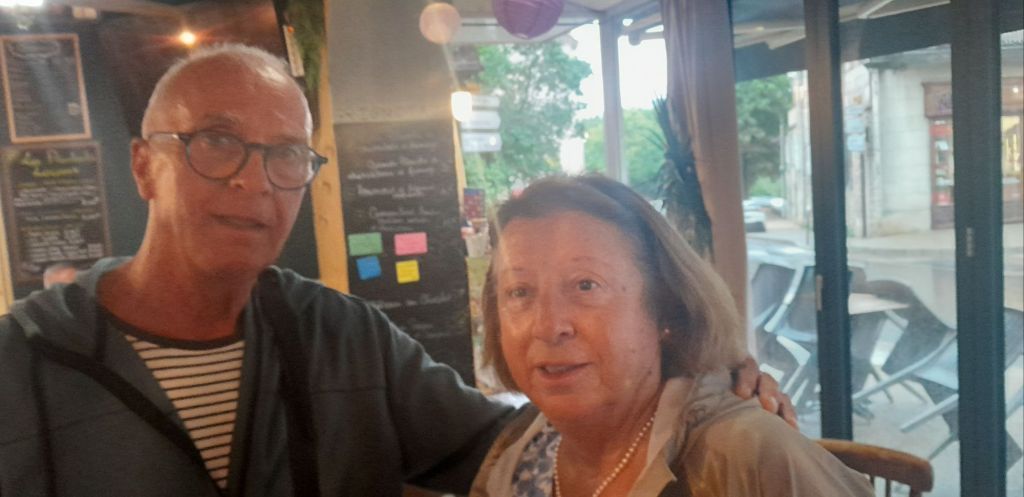
Martine was due to meet her swimming instructor for a quick coffee before heading off to her appointment. I joined them for a coffee. As well as discussing how Martine’s crawl was getting along, the previous week’s lavender festival was a subject of much debate. This year’s harvest had taken place much earlier than normal in June due to the intense summer heat.
My ascent of Mont Ventoux should have been a straightforward affair. It proved anything but!
I followed the instructions in the guidebook to a T, made my way to a small village called Loge and found the start of the route up Mont Ventoux. Twenty minutes later and I was lost. No sign of any red and white signs marking the GR4 and no sign of Mont Ventoux which was shrouded in cloud.
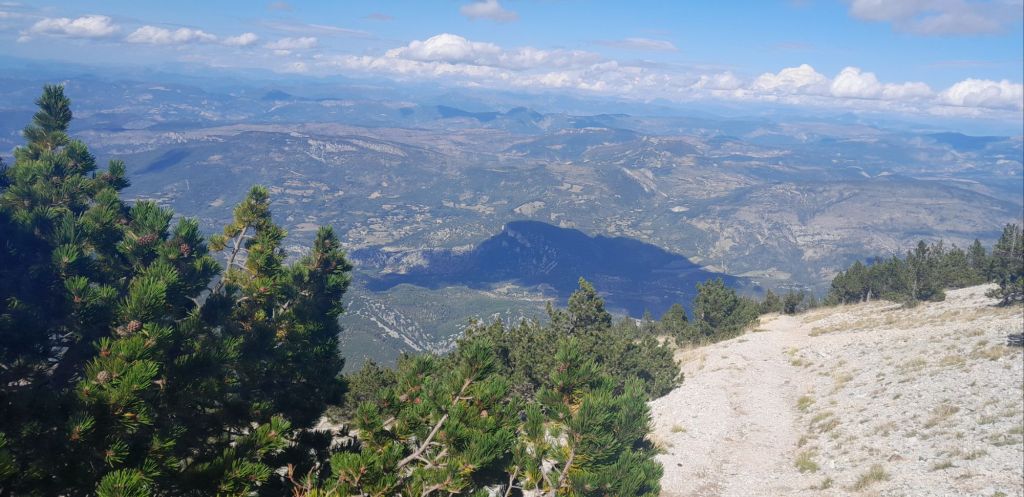
After following a small mountain track, with the help of a GPS signal on my phone, I eventually managed to make my way onto a farm track which led to a tarmac road up to Mont Ventoux. It was a much longer route to the summit than following the GR4, but at least I wouldn’t get lost. That was the idea!
The climb was slow and steady and it took me the best part of four hours to reach the summit. After two hours I tried to rejoin the GR4 and make my way to the summit via the ‘Route of the Tempests’. However, once again the route markers petered out and when I finally encountered a couple of hikers enjoying their lunch they had no idea where the GR4 was. It seemed sensible to do a u-turn and retrace my steps to the main road!
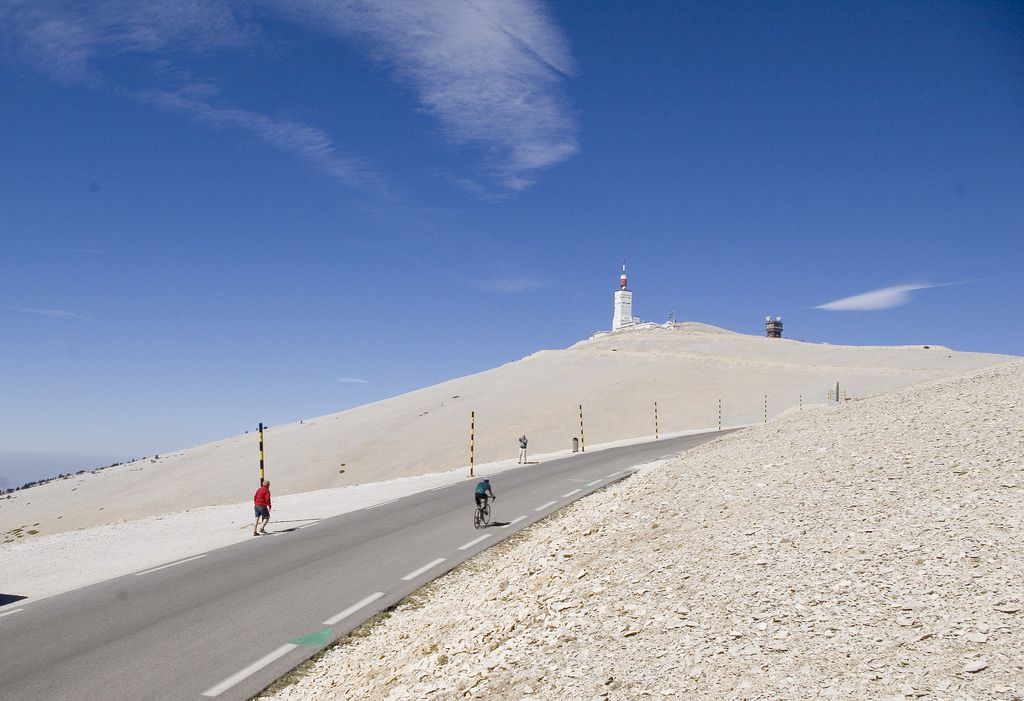
I was passed by cars, bikers and cyclists. Mont Ventoux has been a stage on quite a few Tours de France, and as a result it has become something of a mecca for lycra clad cyclists trying to emulate the feats of legendary Mont Ventoux stage winners like edfie Merckz, Marco Pantani and Chris Froome.
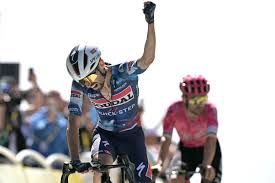
As I slowly climbed the road up to Mont Ventoux, my thoughts turned to Franchesco Petrarch and his ascent in 1336.
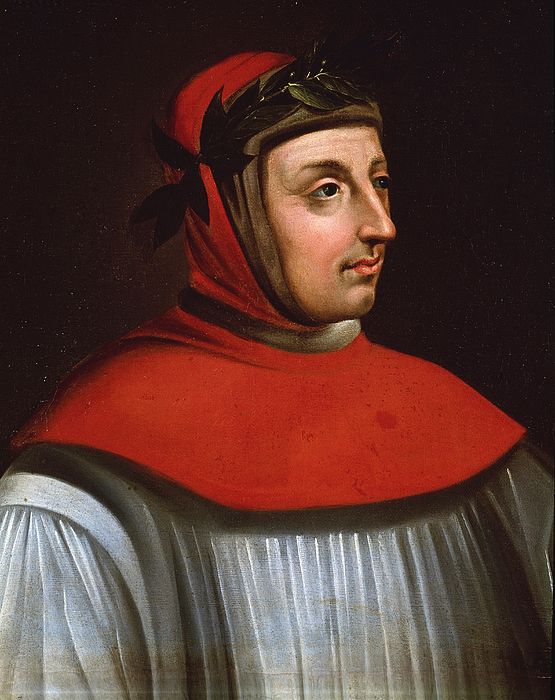
For the modern mountaineer, Mont Ventoux offers a sturdy workout but little in the way of actual climbing. It was different, however, for the Italian humanist and poet Franchesco Petrarch (July 20, 1304 – July 19, 1374), who climbed the mountain simply because, as British mountaineer George Mallory described Mount Everest in the 1920s, it is there. Petrarch, while certainly not the first human to climb a mountain for fun and to reach its summit, instead became the spiritual “father” of alpinism while slogging up to Ventoux’s summit, meditating on his experience, and then writing a celebrated 6,000-word essay-The Ascent of Mount Ventoux -after his descent. As Petrarch wrote in the essay, actually a letter to his former confessor, “My only motive was the wish to see what so great an elevation had to offer.”
The great psychotherapist Carl Gustav Jung said that Petrarch’s ascent marked the start of a new age, The Renaissance because it was with the documentation of his climbing experience that men began to see the world in a new way. In 1860 Jacob Burkhardt wrote in his book The Civilization of the Renaissance in Italy, that “The ascent of a mountain for its own sake was unheard of.” He also linked Petrarch’s impractical ascent, a climb for fun and views rather than hunting or gathering plants or military purposes, as the start of a shift in attitudes toward nature, leisure, and the place and purpose of humans in the world.
Petrarch was poised at the end of the medieval age and the start of The Renaissance―enlightenment that saw nature in a new and enlarged view of the earth and the universe.
As I neared the summit I came across a group of medics caring for a young girl who had fallen off her bike on the descent. Covered in a metal body bag there was little sign of life but one of the medics assured me that she was still alive.
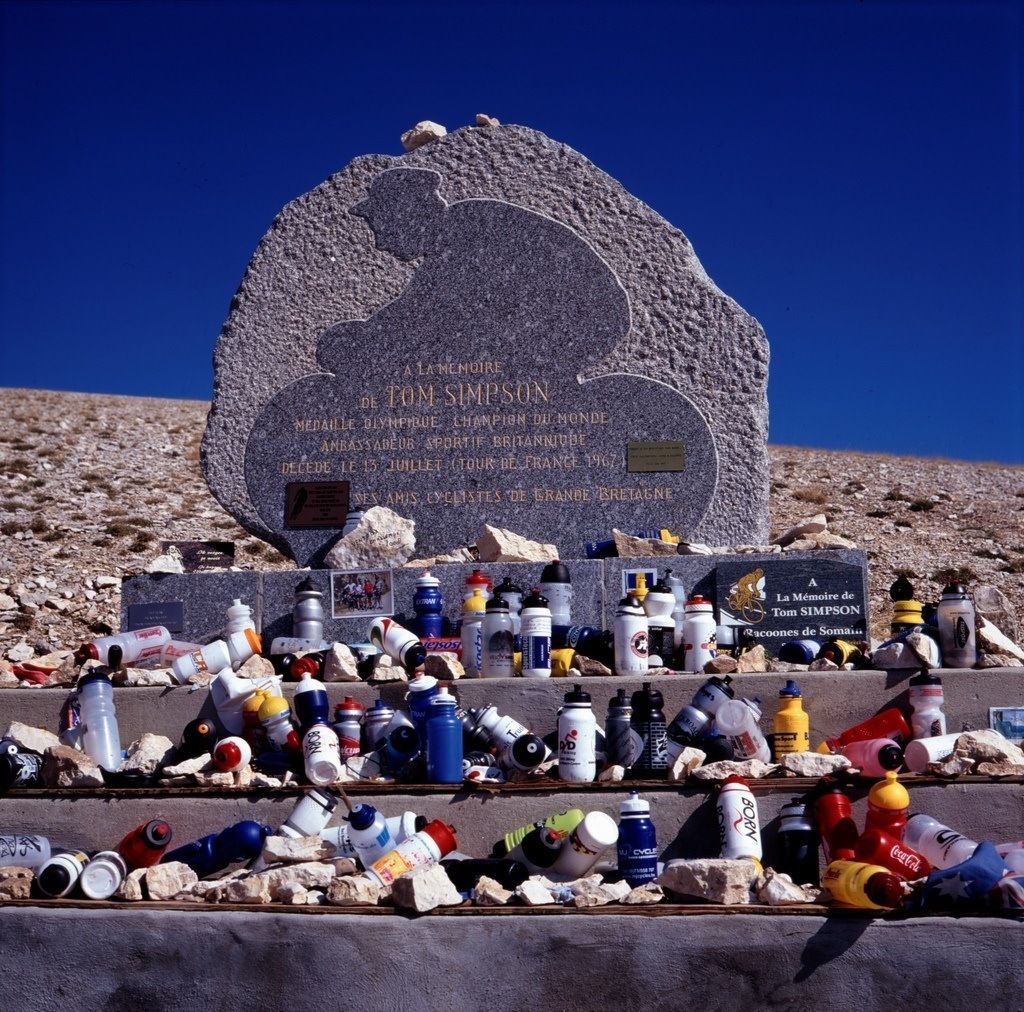
A little further on I passsed a memorial to the British rider Tom Simpson who died on the ascent of Mont Ventoux during the 1967 Tour de France – one of the most terrible tragedies during the entire history of the Tour.
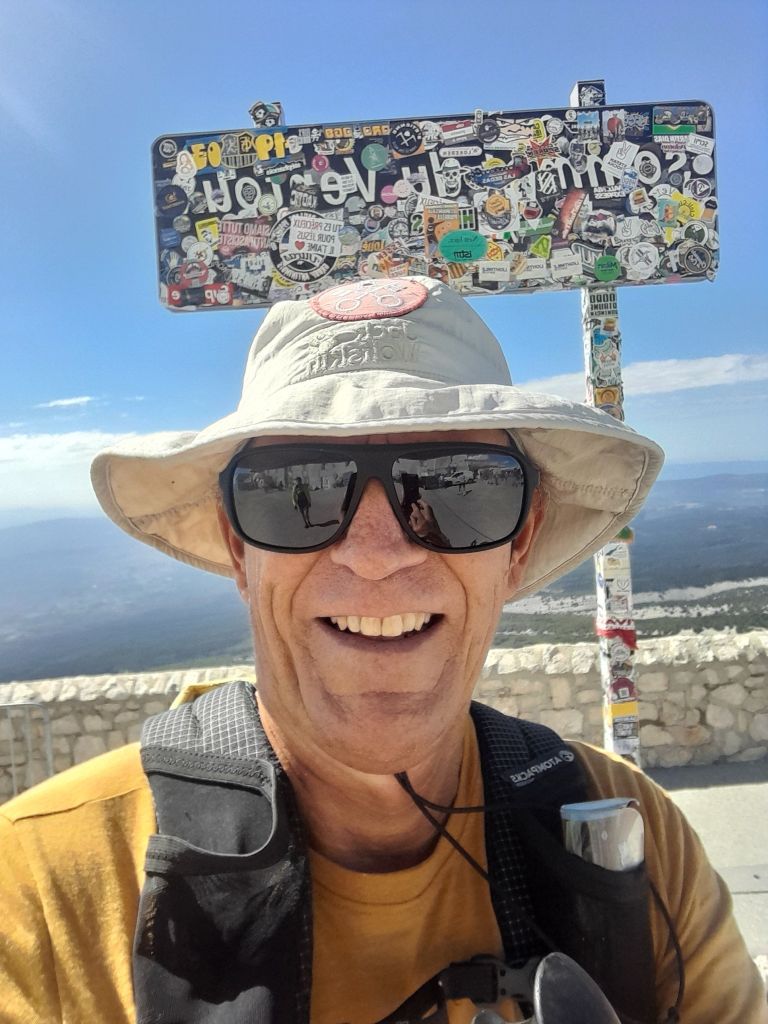
Shortly after 4pm I finally made it to the summit – almost 700 years since Francesco Petrarch had first made the ascent and marked the start of the Italian Renaissance. I had followed in famous footsteps, now I just needed to find my way off the mountain and my accommodation for the night at Mont Serein!


Leave a Reply