It is of immense importance to learn to laugh at ourselves
Katherine Mansfield
In 1920, the New Zealand writer Katherine Mansfield came to stay in the French resort of Menton as a valetudinarian, a person seeking health. The word comes from the Latin valere, to be well, but it is easy to misunderstand the etymology and imagine it as a person saying vale, farewell. In its heyday as a sanatorium Menton was naturally filled with people doing both. Its reputation for the mildest and most curative winter climate on the Riviera made it a destination for those consumptives of northern Europe, and especially of Britain, who were rich enough to afford a villa or a long stay in a hotel.
A Manchester doctor, James Henry Bennet, established Menton’s popularity with the sick by publishing Winter and Spring on the Shores of the Mediterranean in 1861. It ran to many editions and translations. Bennet himself had come “to die in a quiet corner”, so he was living proof of the climate’s effects. When Bennet first arrived in Menton it was a small town in a sheltered bay which grew, and exported lemons. By the time Mansfield came to live there, it had 75 hotels, two Anglican churches and one Presbyterian, tramways, tennis clubs and hundreds of palm-surrounded villas that spread east to the new suburb of Garavan and the Italian border.
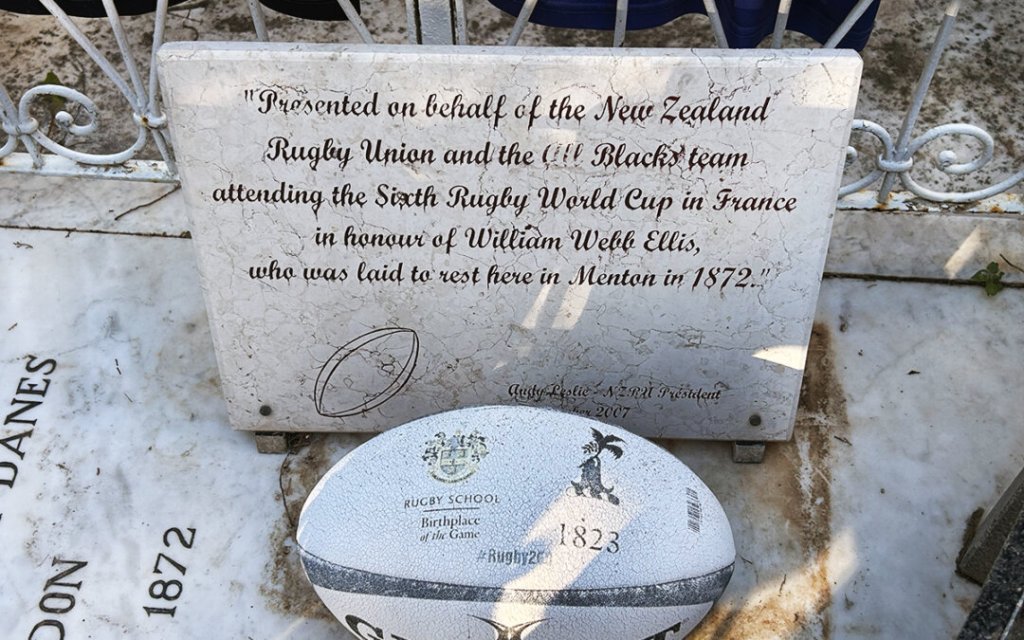
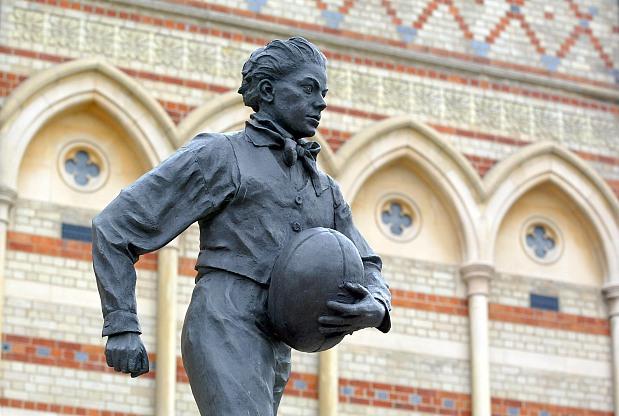
Today Menton has streets named after its British benefactors and publicists. There is a Rue JH Bennet and a Rue W Webb Ellis (the alleged inventor of rugby is buried in Menton’s cemetery), the latter running past Garavan’s railway station to join the Rue Katherine Mansfield, which at this point disappears under a low railway bridge to continue up the steep slope from the sea. The house Mansfield lived in, the Villa Isola Bella, is on the other side of this bridge and close to the railway line. The villa has two bronze plaques to Mansfield on its wall; the name of her husband, John Middleton Murry, and one of her stories, “Bliss”, can just be made out.
Mansfield was 31 when she came to the villa in September 1920, and when she left it for Switzerland in May 1921, had only 19 months left to live. She was dying of tuberculosis, the culmination of many illnesses – peritonitis, arthritis, a weak heart – which, according to Claire Tomalin’s fine biography, began when she caught gonorrhea soon after her miscarriage (her troubles never arrived singly) in 1909. Mediterranean villas were far beyond the reach of her earning power as a writer of reviews and short fiction, but her father, Sir Harold Beauchamp, was a prosperous New Zealand banker and businessman, and his cousin Connie and her woman friend were rich enough to own more than one house in Menton. However much Mansfield disliked and opposed her father, and however much her way of living antagonised him, she owed him her comforts: without his stipend and connections and the constant devotion of her companion since girlhood, Ida Constance Baker, she might have struggled to reach 34.
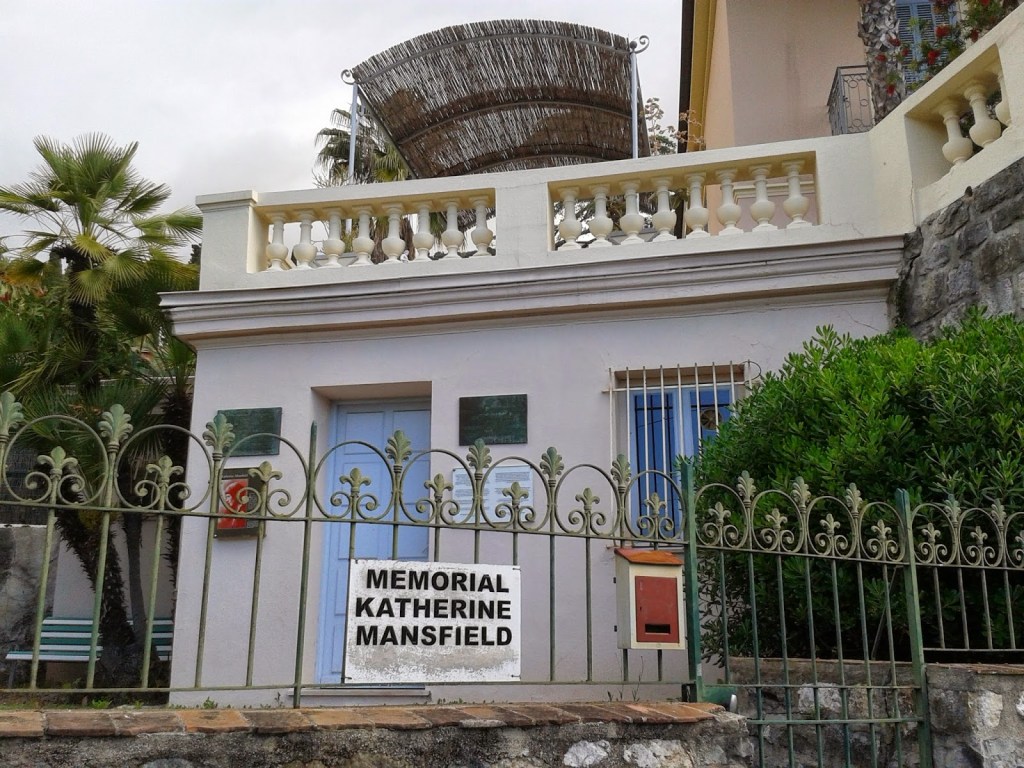
The Villa Isola Bella delighted her: “the first real home of my own I’ve ever loved”, she wrote to Middleton Murry. She had a cook of her own and a chaise-longue on the terrace. She worked on some of what proved to be her best stories, among them “The Daughters of the Late Colonel”. Cold frightened her: “It is ominous. I breathe it and deep down it’s as though a knife softly pressed in my bosom had said ‘Don’t be too sure’ … One knows how easy it is to die.” In Menton, on the other hand: “I’ve just been for a walk on my small boulevard and looking down below at the houses all bright in the sun and housewives washing their linen in great tubs of glittering water and flinging it over the orange trees to dry. Perhaps all human activity is beautiful in the sunlight.”
She was enchanted by the town, the climate, the people and the house. The view, she wrote to her husband John Middleton Murry the next day, ‘is surpassingly beautiful. Late last night on the balcony I stood listening to the tiny cicadas and to the frogs and to someone playing a little chain of notes on a flute’. She loved the garden, its ‘big silver mimosa showering across’ the path from the gate, the date palm below her bedroom balcony and a magnolia ‘full of rich buds’. There were artichokes and marrows, all ready to eat, and a tangerine ‘covered in green balls’. It was hot. ‘One can wear nothing but a wisp of silk, two bows of pink ribbon and a robe de mousseline’, declared Katherine.
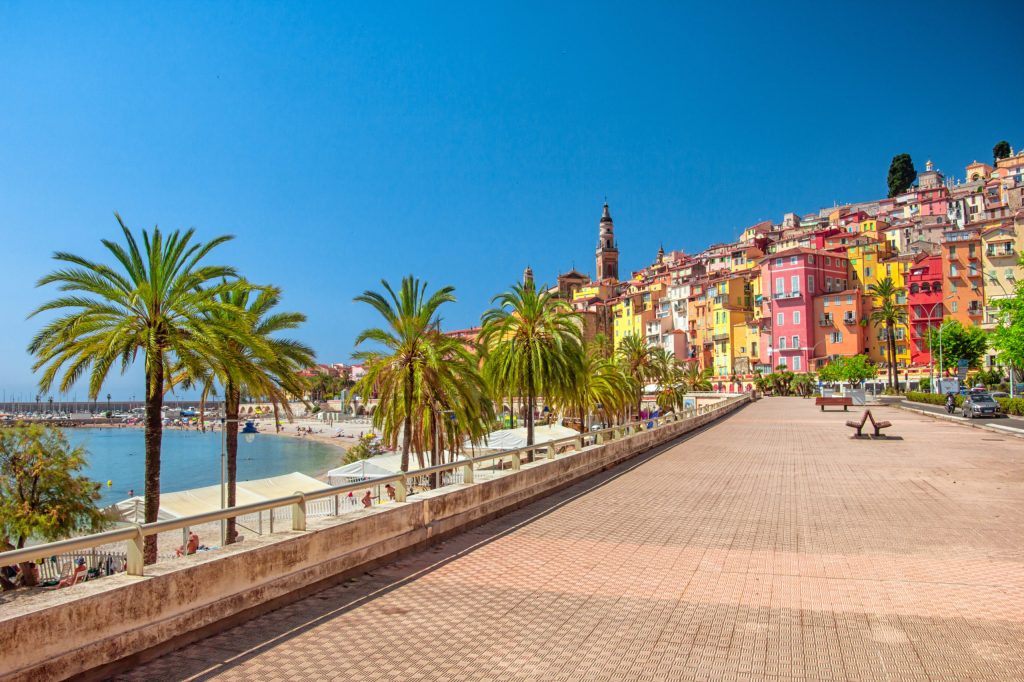
Before setting off on my walk across France tomorrow, I decided to spend a day looking around Menton and walking down the same boulevards that Katherine Mansfield must have trod over a century ago, thinking, yes, the sunlight certainly improves things even though it now glitters on the square-cut waters of the marina and the tops of Mercedes stuck at traffic lights.
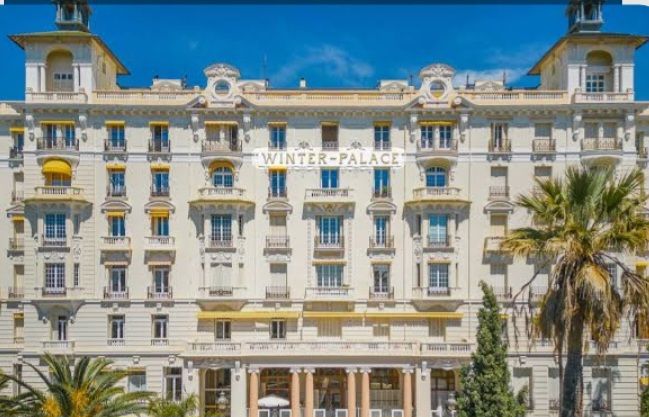
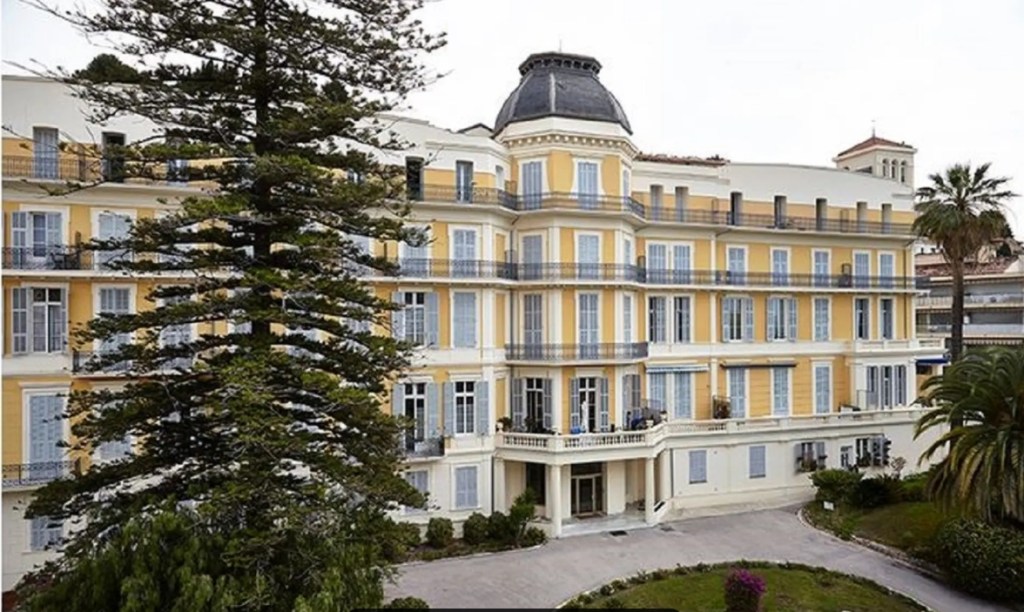
France isn’t what it was and neither of course is Menton. You go there partly to imagine what it must have been like, and sometimes, with a glimpse of the fantastical Orient hotel (now flats) at the end of its palm grove or the Winter Palace on its hill or the English church next to the casino, you are rewarded.
But it must also have been a sad place, a “stuffy morgue” as someone once described it, with a foreign population given over to the business of prolonging their lives in the pre-drug days when pulmonary disease was as mysterious as cancer. Rich invalids, or people who imagined themselves to be ill, were people of such immense care – like the wife in Giles Waterfield’s novel The Long Afternoon (the book most evocative of Menton) who spends a jour de repos in bed every week.
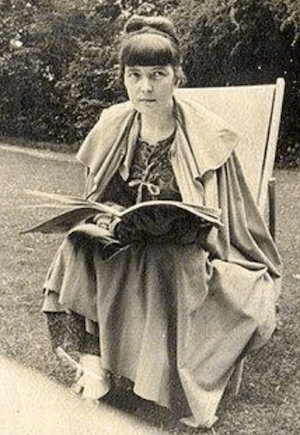
Mansfield was the opposite. She was first careless, then desperate. Looking for any cure – warm Menton breezes, clear Swiss air, radiation therapy – she died among George Gurdjieff’s mystic disciples at his “Institute for the Harmonious Development of Man” in a former monastery near Fontainebleau. Accounts of her life suggest she was tiresome and selfish. It doesn’t matter. She wrote some of the greatest short stories of the last century: “Bliss”, “The Garden Party”, “The Man Without a Temperament”.
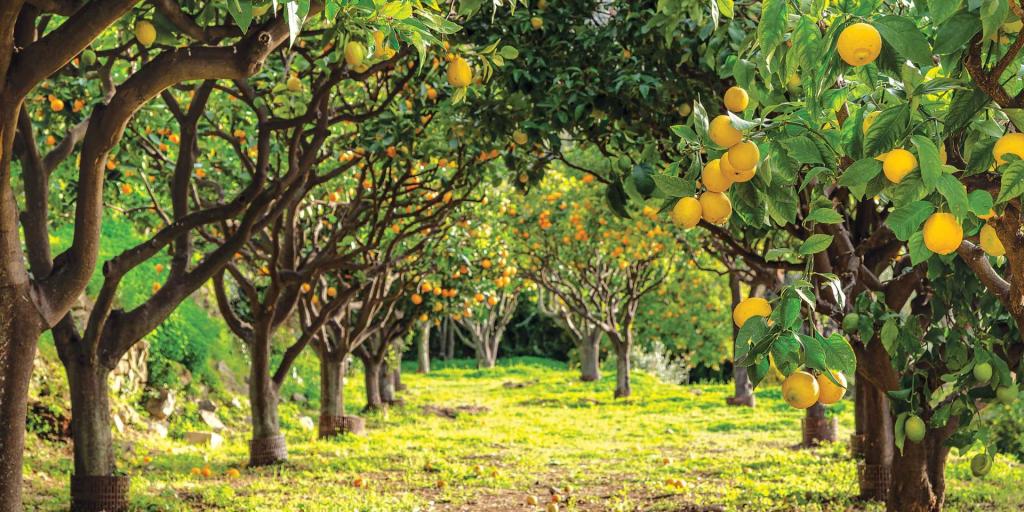
No visit to Menton would be complete without a mention of lemons! Starting in 1341, the people of Menton increased their olive production and the first citrus fruits appeared. In the 17th and 18th centuries, citrus growing in Menton really took off: the first legal texts regulated this crop and the lemon trade. Lemon growing reached its peak in the mid-18th to mid-19th centuries. So important were lemons that In 1671, Prince Louis I established a Magistrate of Lemons! Some 35 million lemons were exported annually, mainly to England, Germany, Russia and even North America. The fruit then went into decline until it was revived in the 1990s, when it obtained its PGI in 2015.
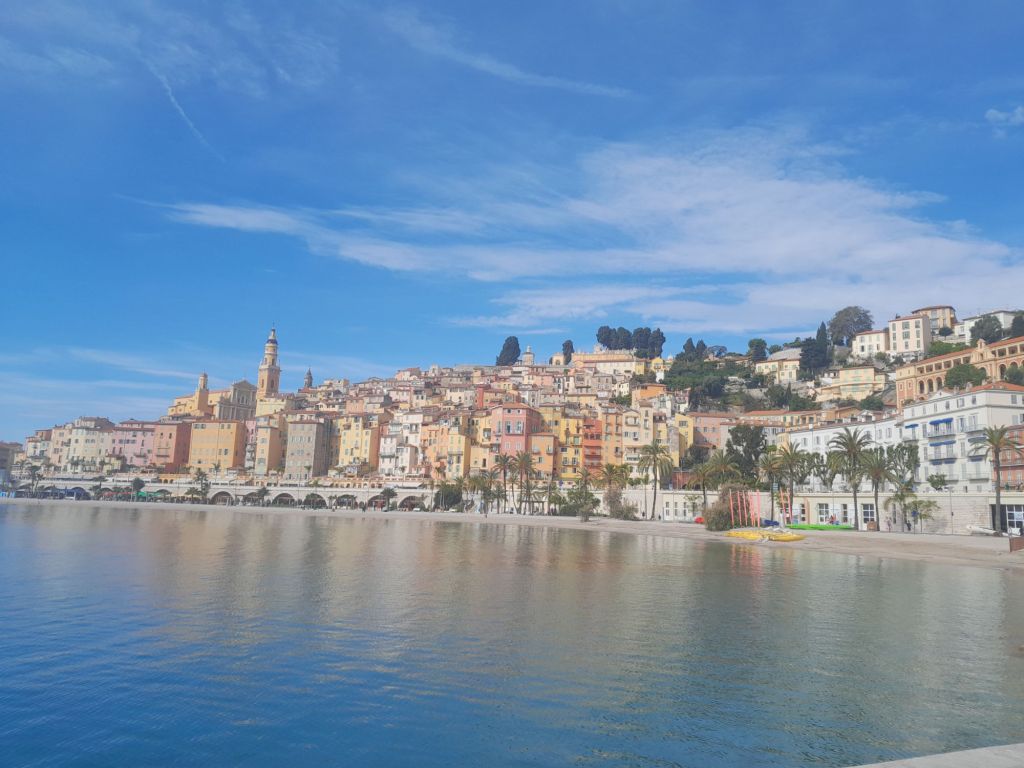
So what makes Menton lemons so special. Well they benefit from Menton’s climate – it enjoys an average of 316 days of sunshine a year! In addition The Menton Lemon is distinguished from other varieties by its oval shape, its fragrance, mild acidity, the thickness of its skin and its colour which changes according to the season. It is pale yellow at the start of its life and becomes bright yellow when ripe. Grown following the traditional methods of past generations, the Menton Lemon is picked by hand. It does not undergo any chemical treatment after harvesting and is not coated with any wax.
In the 14th century, Menton was actually part of Italy—or more precisely, the Republic of Genoa—only officially becoming part of France in 1861 (rather reluctantly, through annexation). Today, the Italian influence is everywhere in Menton, but most prominently in the cuisine. Apart from it’s lemons, Menton is perhaps most famous for Pichade, a savory tart made with a bread dough base and tomato-onion sauce, black olives, and anchovy fillets as a topping. It evolved in Menton’s local bakeries, where abundant summer tomatoes and anchovies informed this regional variant of flatbread, and over time, it became a marker of the area’s culinary identity.

Pichade makes any trip to Menton worthwhile. Before heading off to the Anglican church for the Sunday morning service, having wandered up to the cemetery to see the grave of William Webb-Ellis (it was closed!) and made my way to see the villa where Katherine Mansfield had stayed (also closed!)
I dropped by the covered market to search out some Pichade. I was in luck. A lady was selling it from a stall that had been operating since 1950. I waited patiently in line behind a finely boned and exquisitely coiffured and dressed Italian lady. I was almost tempted to reach out and touch her extravagantly coiffured hair such was it’s exquisite beauty but restrained myself.
The pichade was well worth the wait – an intense savoury blast of anchovies and rich sun baked mediterranean tomatoes that was infinitely superior to any johnny come lately Italian pizza.
I can’t say I’d like to live in Menton. The beaches are pebbly and uninspiring. Designer shops abound and there are flaneurs aplenty promenading along the beach esplanades in the shadow of the impressive 19th century hotels that welcomed the great and the good of the Eurooean beau monde in the years before the Great War. Aging French couples parade their bichons frisés, Italians prefer dalmations while British couples with Essex accents parade dogless along the promenade their muscled upper arms tattood with statements of love and regret.
Menton is a shadow of it’s former self – tattoos, pizzas and a plethora of T shirts and trainers.
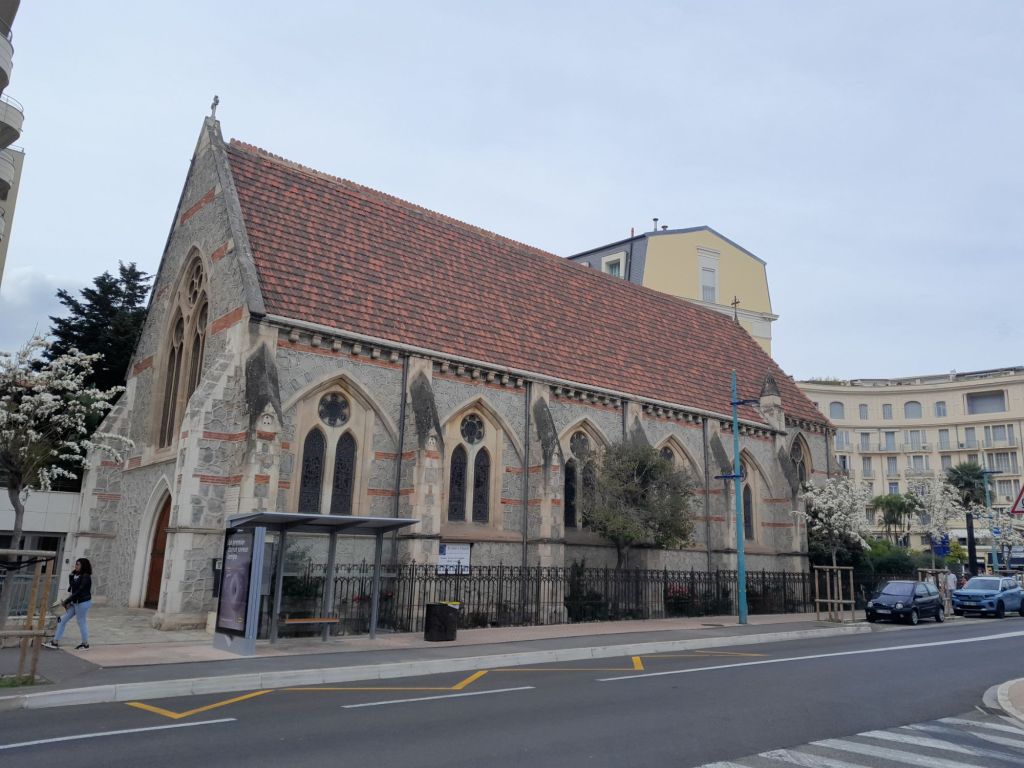
The Anglican service at St John’s Church was the highlight of my day in Menton. There was organ music, there were familiar hymns, there was a service in English and there were familiar figures who could have been beamed in from the home counties – white flannel jackets, red cords, ties, floral dresses and an Anglo-Saxon reticence about approaching a new member of the congregation who was wearing a pair of hiking trousers and a t-shirt. The lady next to me responded to my smiley greeting with a look of grand hauteur and infinite disdain!

The service itself was superb and the sermon cleverly explained the readings and tied them into the concept if how fear can shape our lives and what we can learn from past experiences. What on earth this anglican priest was doing in Menton was anybody’s guess. He would have been a shoe in for a bishopric if I’d been running the C of E!
After the service ended the congregation were offered a glass of proseco and a slice of quiche. Suitably armed, I ambled over to the priest and struck up conversation with him.
Chris was originally from Liverpool but had made his way to Menton via New Zealand, Oxford and a French wife. He’d been in Menton for 3 years, was a keen hiker and had the perspicacity to notice that I was wearing a T-shirt made of merino wool! I mentioned that I planned to walk across France from Menton to Cap de la Hague starting tomorrow. He wished me luck. It seemed like a good way to start my walk across France.


 Pilgrim's Progress - Long Distance Walks in Europe and the UK
Leave a reply to oliviadutton Cancel reply