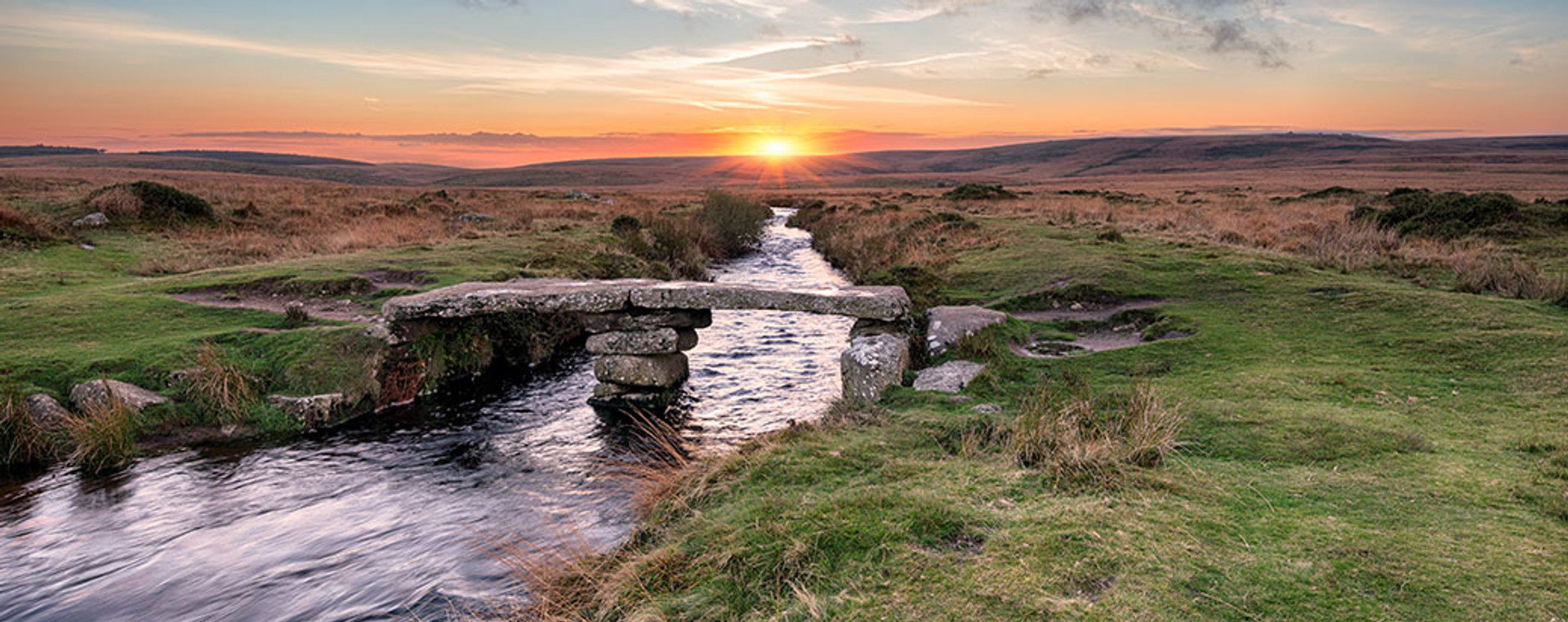
You must have your own pace, and neither trot alongside a champion walker, nor mince in time with a girl
Robert Louis Stevenson- Travels with a Donkey in the Cévennes
Pradelles is apparently one of the most beautiful villages in France. In mid September with the mercury barely into double digits and the majority of restaurants and cafés firmly closed, Pradelles had lost some of its magic.
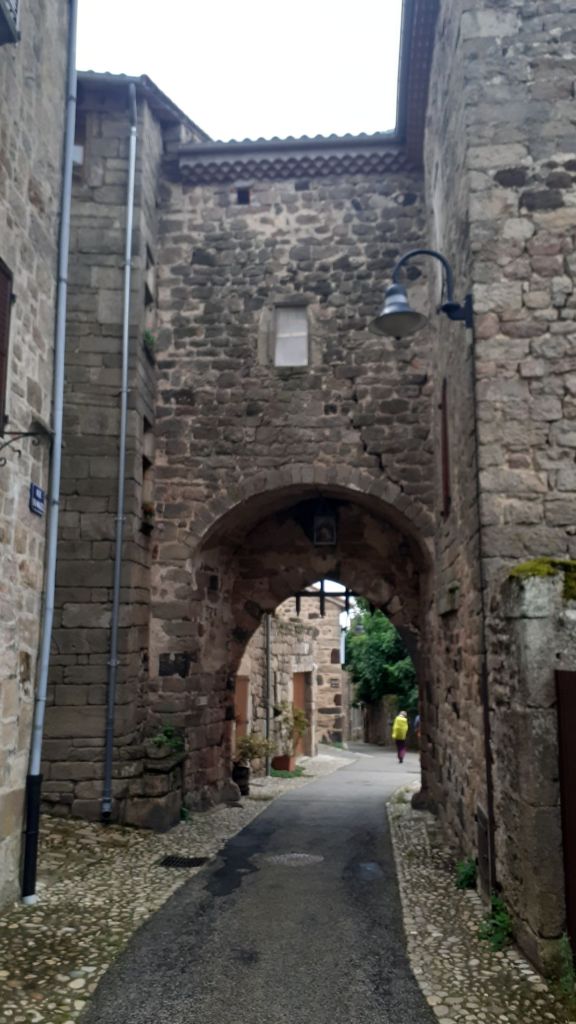
In the middle ages Pradelles played a role as the site of a medieval hospital for pilgrims travelling along the Path of Saint Gilles. As the sign on the site says today, “Even if charity required us to shelter pilgrims as they passed, prudence about bandits and plagues advised us to keep them just outside our walls.”
I left Pradelles by the medieval gateway. In all probability Robert Louis Stevenson exited Pradelles with his donkey by the same route in 1878. He definitely had more luck finding board and lodging than me – none of the restaurants had been open the previous evening, so I’d had to make do with a couple of small quiches and a bottle of beer. I was so knackered after my 42km yomp from Le Puy, that I promptly fell asleep in my walking clothes!
In all honesty, not a huge amount of interest happened today. After walking over 400km in the last 12 days, I felt rather weary for most of the day and ended up taking a short cut to La Bastide Puylaurent which shaved 9km off the official route.
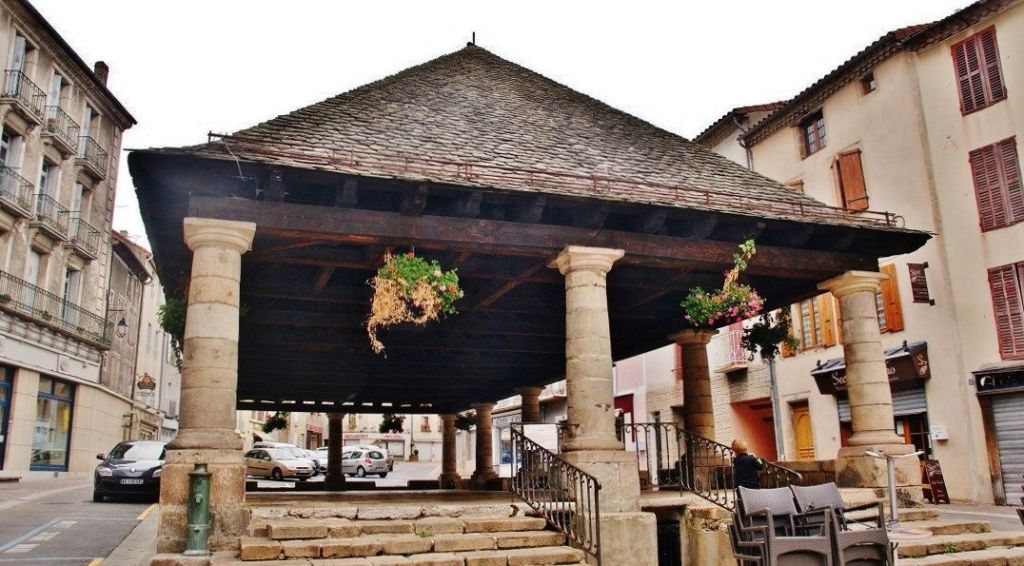
Langogne was a bustling town with a lovely 18th century covered market. A hub for walkers, I spotted a shop selling all sorts of hiking gear including walking boots. With my Meindl boots continuing to deteriorate alarmingly, I was sorely tempted to buy a new pair but I eventually decided to risk continue wearing my Meindl boots and hoping and praying that they don’t fall to bits before I reach Le Grau-de-Roi in a week’s time.
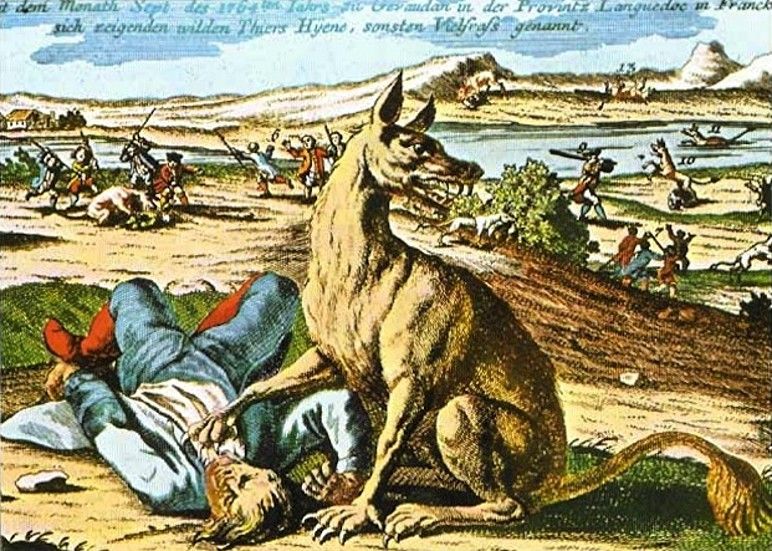
Langogne en Gévaudan, to give it its full name, is perhaps most famous for its connection to the famous beast of Gévaudan which terrified this area of France between 1764 and 1767, in the process killing over 100 people. In 1764 a huge wolf was reported in the area. For three years the Beast of Gevaudan ravaged the land, reportedly killed over a hundred women and children. A wolf was found and killed, but the attacks continued. The King of France was so alarmed that he sent an expert hunter, who tracked down and shot a second beast and the attacks finally ceased
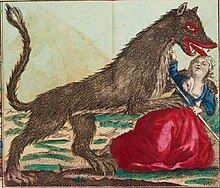
The Beast was consistently described by eyewitnesses as something other than a typical wolf. It was as large as a calf or sometimes a horse. Its coat was reddish gray with a long, strong panther-like tail. The head and legs were short-haired and the color of a deer. It had a black stripe on its back and “talons” on its feet. Many drawings of the Beast at the time endow it with lupine characteristics. Was it a wolf, an escaped lion or a hyena? Nobody can be certain but the attacks provoked a global media sensation that was covered in newspapers from Brussels to Boston.
Much of the day was spent walking through pine forests on sandy forestry tracks. With very little in the way of scenery, my thoughts turned to Robert Louis Stevenson and his walk through the Cévennes in 1878.
Having bought a donkey called Modestine for 65 francs and a glass of brandy, Stevenson set off from Le Puy on 22 September 1878. Over the next 10 days he covered 120 miles and passed through many of the places I walked through during the lasy 2 days including Le Puy, Pradelles, Luc and La Bastide Puylaurent.
Stevenson chose this mountainous, backward area because it was almost the only part of France where protestantism still prevailed after the Wars of Religion and the purges of the seventeenth century.
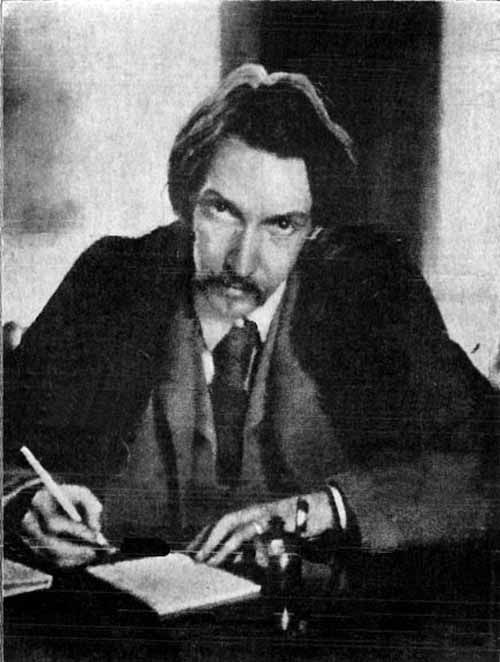
To Stevenson these so-called Camisards were the French equivalent of the persecuted Covenanters of his own country. The book he wrote describing this expedition, “Travels with a Donkey in the Cévennes”, made him well-known for the first time and was arguably the genesis of long distance walking as a recreational activity.
Although he was a sociable soul, he preferred to walk alone, because “you must have your own pace, and neither trot alongside a champion walker, nor mince in time with a girl”, and in order to “surrender himself to that fine intoxication that comes from much motion in the open air, that begins in a sort of dazzle and sluggishness in the brain, and ends in a peace that passes comprehension”.
Stevenson’s walk through the Cévennes also led him to become the first person to use a sleeping bag! He designed a six-foot square sleeping sack, made of “green waterproof cart-cloth without and blue sheep’s fur within” for sleeping out under the stars!
I reached La Bastide Puylaurent shortly after 3pm. The temperature in the village which is perched at an altitude of just over 1,000m was just 12C. With a cold northerly wind blowing for most of the day, at times it had felt as though it might snow.
The good news for me was that today there was room at the inn or more specifically the Gite-Hotel-Café-Restaurant La Grand Halte. What a relief and lasagne on the menu for supper to boot. ‘All good things come to those that wait’ as the old saying goes!


 Pilgrim's Progress - Long Distance Walks in Europe and the UK
Leave a reply to Jonathan Dutton Cancel reply