Sur le pont d’Avignon,
On y danse, on y danse,
Sur le pont d’Avignon,
On y danse tous en rond.
Traditional French children’s song

Ready to set off on another pilgrimage across France
Spring has arrived (somewhat soggily and belatedly) in the south west of France. Training, in the guise of twice daily walks with Puzzle. our working cocker, have been completed.
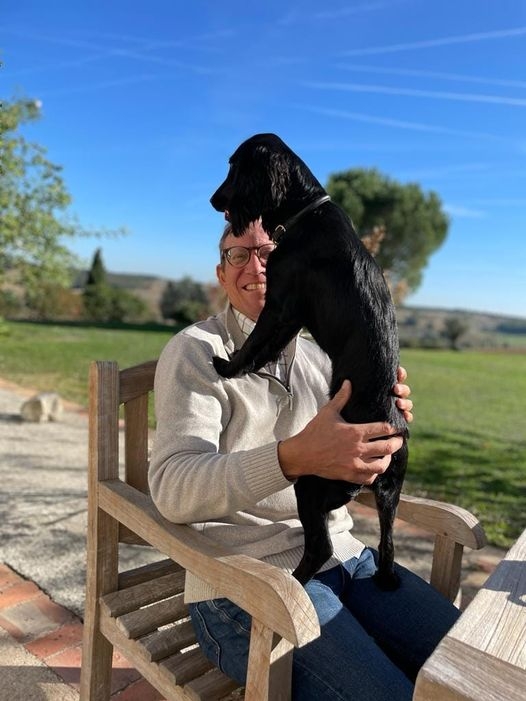
So its time to brush off my walking boots and set off on another pilgrimage across France, armed with a pilgrim staff, a 5kg backpack, a change of under wear, a cork screw and a liberal amount of hope and prayer.

Travelling light – On a wing and a prayer
After a few changes of itinerary, on Friday 9th May I’m planning to walk 750km from Cluny to Avignon in 3 weeks. My walk will take me on the Via Cluniacensis (GR765) from Cluny to Le Puy. From there I’ll join the Sentier de St Jacques (GR65) and walk across the Aubrac to Nasbinals where I will join the Chemin Urbain V (GR670) which will take me to Avignon.
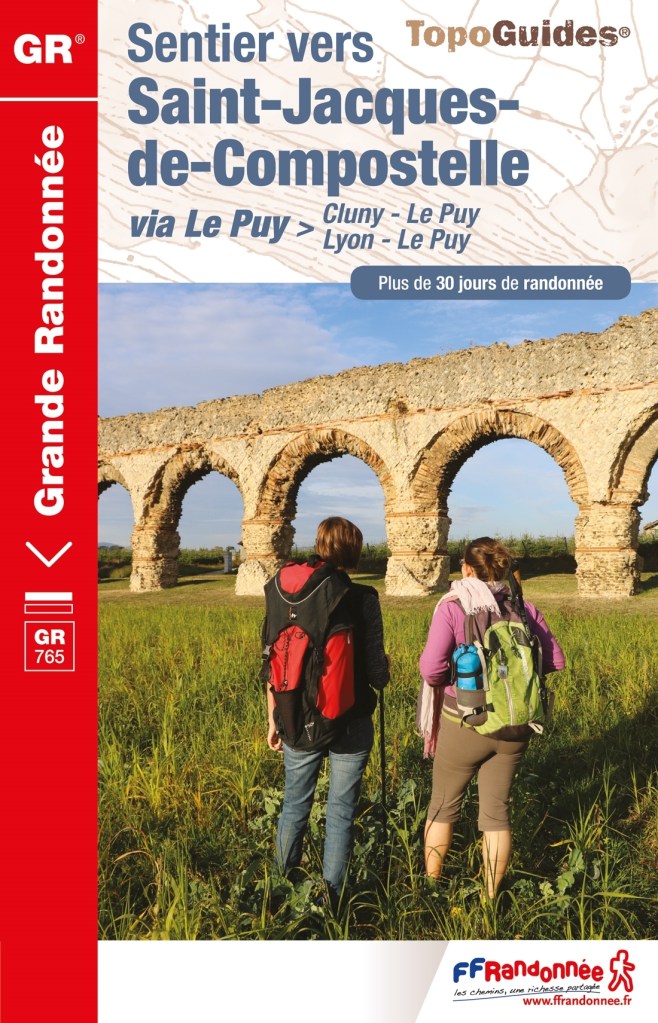
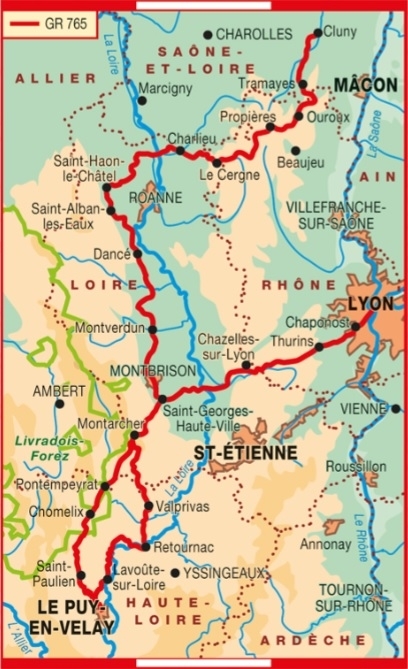
Via Cluniacensis (GR765)
So why walk from Cluny to Avignon? There is no single footpath linking the two cities. I’m not actually sure that anybody has ever walked the route I’ll be taking which joins 3 long distance footpaths into one 750km walk. So why bother? More pertinently perhaps, why leave the comforts of home in the south west France, a loving wife, and a comfortable bed for yet another gruelling journey into the unknown? Turning 60, maybe it’s yet another mid life crisis unfolding!
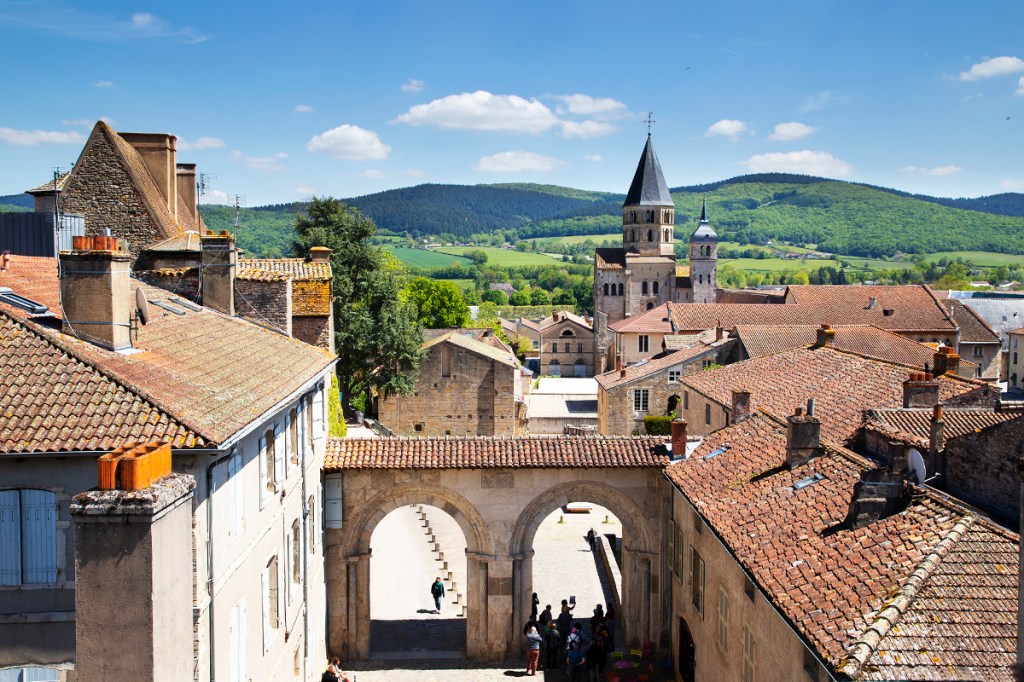
Modern day Cluny
Well Cluny seems a good place to start for the simple reason that before St Peter’s in Rome was rebuilt in the sixteenth century, the Abbey of Cluny was the largest Church in Christendom. For centuries, Cluny was the centre of European Christendom, in some ways surpassing the influence of Rome.
In 910AD , a house was established at Cluny by Duke William of Aquitaine with the stipulation that the monks were to answer only to the Pope and not to the local benefactor or to the local diocese. This set on foot a revolution of sorts among European monasteries, many of which sought to connect themselves to the Cluniac reform. At the height of its influence something like 1200 monastic houses comprising 10,000 monks were part of the Cluniac family, all of which looked to the Abbot of Cluny as their superior. It was the first religious order to develop in the Western Church.
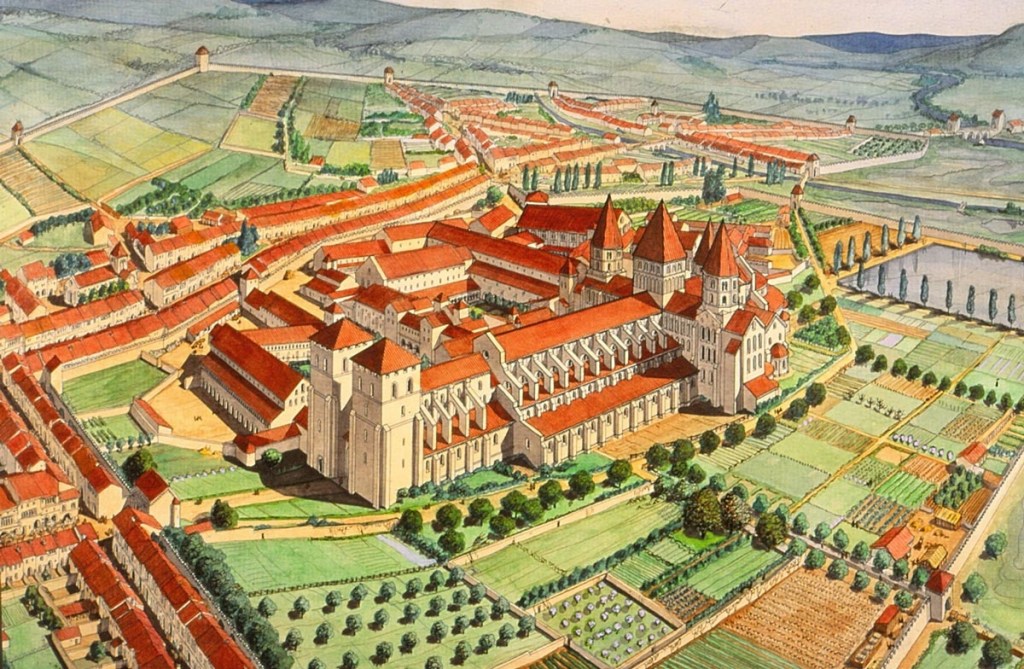
Cluny as it appeared at the height of its influence
The monks of Cluny re-established the Benedictine rule in greater purity and were especially influential in adorning the liturgy. They also fully developed the architectural style called Romanesque, and erected at Cluny a huge Romanesque Church that spoke of Cluny’s place as the spiritual center of Europe. Sadly little remains of the Abbey today – as with so much of Christian Europe it was sacked and destroyed by French revolutionary armies and its stone used as a quarry.
From Cluny my walk on the Via Cluniacensis (GR 765) will take me 295km rom Burgundy, up the Loire valley to Le Puy-en-Velay, the departure point for pilgrims setting off on pilgrimage ( el camino) to Santiago de Compostela. En route I’ll be staying with pilgrim host families and hoping to improve my rusty French.
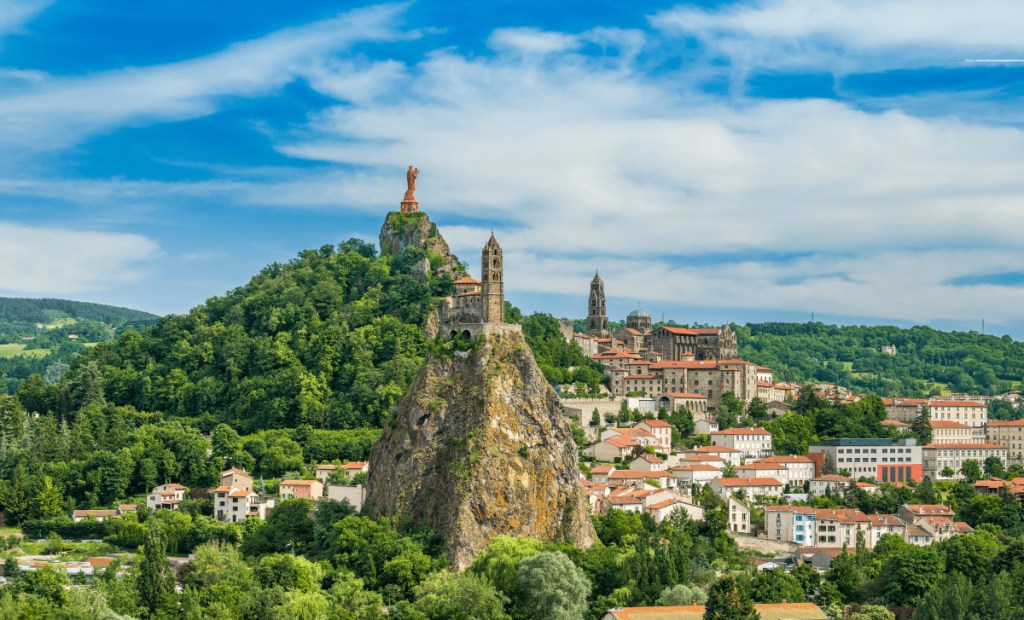
Le Puy-en-Velay
From Le Puy to Nasbinals my route will take me 90km through the Aubrac (a volcanic and granitic plateau that extends over an area of 1,500 km) on the GR65 to Nasbinals retracing a walk I made in 1989.
Needless to say the world has changed a lot since then (back then mobile phones and the internet didn’t exist and finding accommodation sometimes proved a challenge) but one thing hasn’t changed is the local delicacy – Aligot, a calorific bombshell cocktail of potato, cheese and cream which I am looking forward to reacquainting myself with!

Aligot – yum, yum/miam,miam
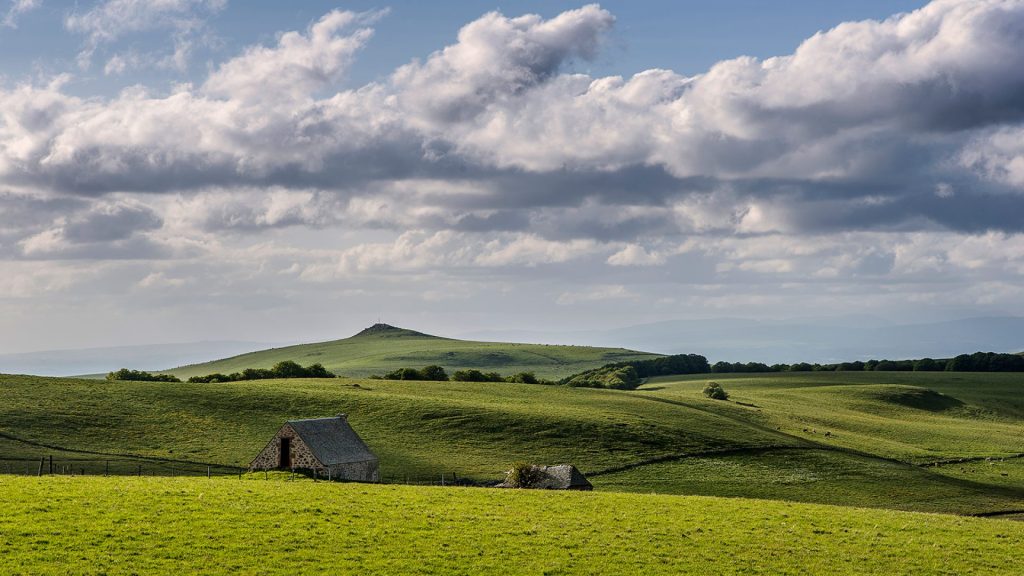
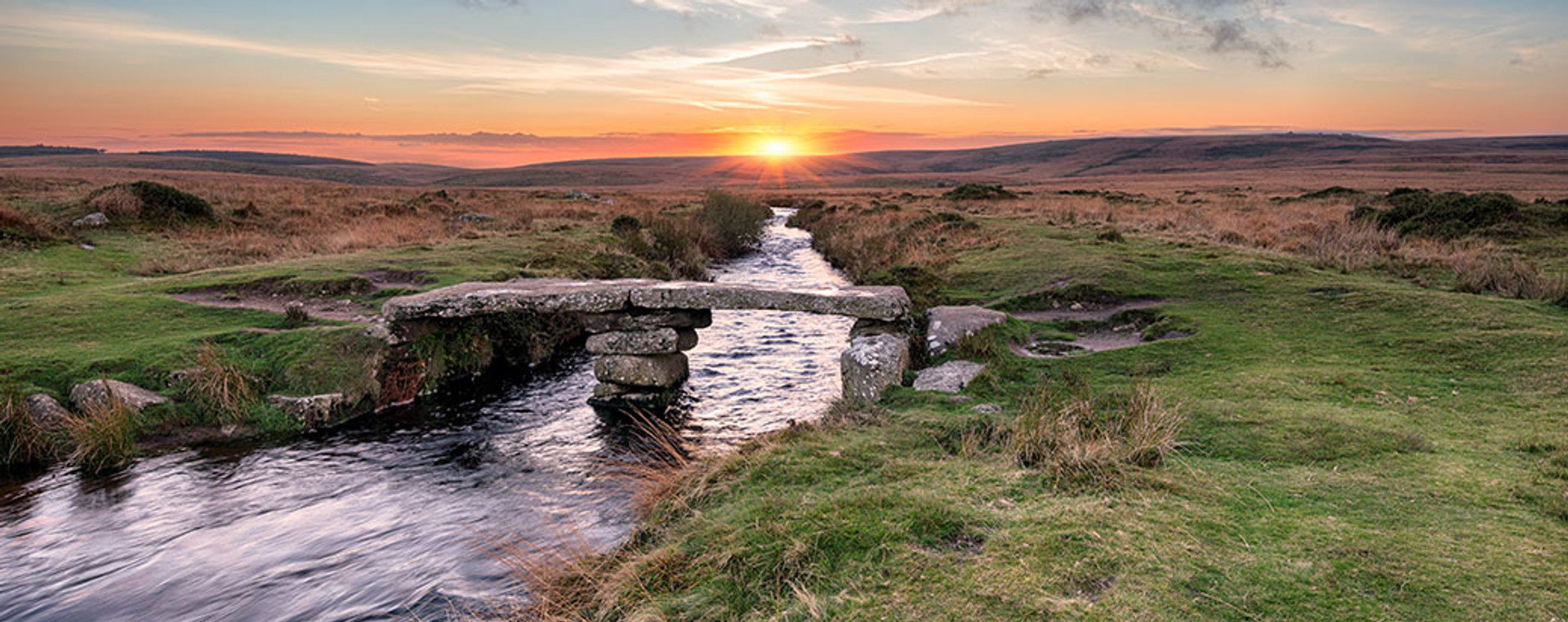
The Aubrac – French version of Dartmoor
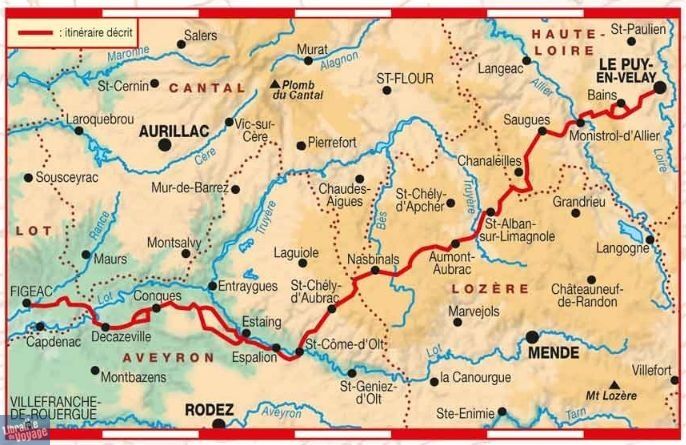
Le Puy-en-Velay to Nasbinals (GR65)
At Nasbinals I will link up with the Chemin Urbain V (GR670) which will take me 335km to Avignon, following in the footsteps of Urban V (born Guillaume de Grimoard), who was the head of the Catholic Church from 28 September 1362 until his death, in December 1370, a member of the Order of Saint Benedict and the only Avignon pope to be beatified! A worthy if obscure pope whom few but mediaeval historians or unreconstructured modern day pilgrim long distance walkers (of which I am one) will likely have heard of…..

Chemin Urbain V (GR670)
Passing through the Massif central, the southernmost part of the Cevennes, the gorges of the Tarn Valley, through the Rhone valley, past the Roman aqueduct at Pont du Gard, the route finishes in Avignon, seat of popes (Avignon hosted Popes from 1309 – 1376), somewhere I’ve always yearned to visit.
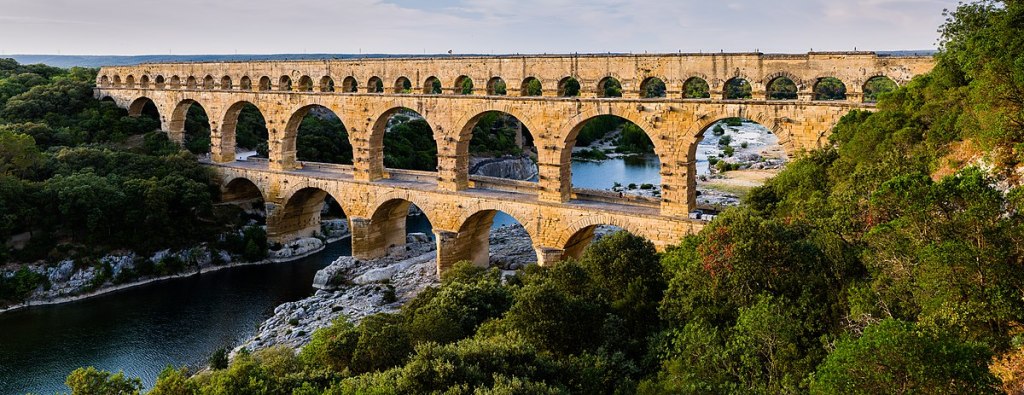
Roman aqueduct – Pont du Gard
Ok – a confession to make. My walk is a thinly veiled excuse to spend 3 weeks walking through La France Profonde to Avignon. I don’t really know what to expect or whether I will make it, but what the hell. Life is short. Nothing ventured, nothing gained. As they say in France – On y va!


 Pilgrim's Progress - Long Distance Walks in Europe and the UK
Leave a comment