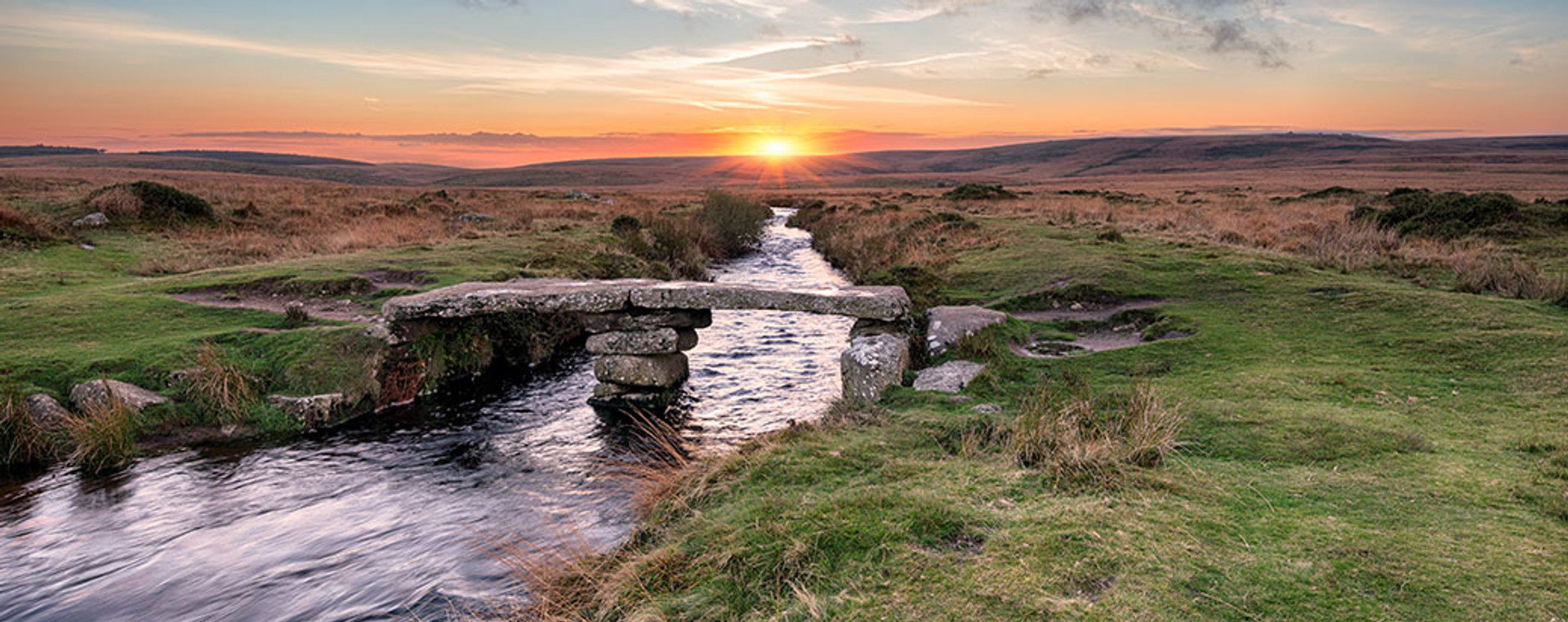
If one keeps on walking, everything will be alright.
Danish philosopher Søren Kierkegaard
When you turn 60 (in my case on 7 Nov 2023, ie today!) you are allowed a day of unashamed self indulgence! Getting up late; having a lunch time drink; not doing any gardening and dreaming up new challenges for the next 12 months as a newly minted sexagenarian.

Over the last 60 years I’ve had a lot of dreams. Most of them have been realised, including hitting the big six zero reasonably sound in body and mind (some might quibble about the latter!). But one dream remains unfulfilled: to walk the length of Britain, from Land’s End to John O’Groats (LEJOG). A journey of 1,200 miles, the challenge of a lifetime.
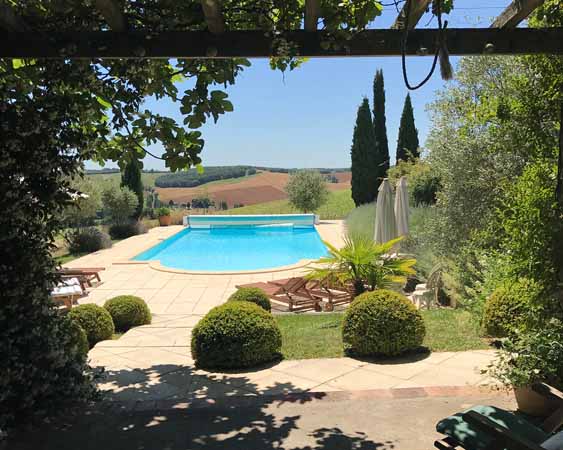
In all honesty I’ve been debating the pros and cons of doing LEJOG in 2024 for a couple of months. On the one hand its an iconic walk that I’ve always dreamed of doing. On the other hand there are a host of reasons not to embark on the challenge – fear of failure (injury/illness), inclement weather, cost, the time involved and the availability of other long distance walks nearer home including the possibility of completing the Via Francigena from the Col St Bernard (where I left off my walk in 2021) to Rome. So what finally tipped the balance in favour of embarking on LEJOG in 2024 rather than relaxing by the pool in SW France?
Well there are a few reasons (apart from the fact that many would say that I’m exhibiting the classic symptoms of a mid life crisis!). First and foremost, my wife Olivia, very generously agreed, as a 60th birthday present, to give me two months off next year to complete the walk. You could call it being granted French leave!

Secondly, I came across a LEJOG blog by a chap called Dave Felton, documenting his walk from Land’s End to John O’Groats in 2017. (www.daveslejog.co.uk).
The photos he took were simply sublime and the blog was brilliant as well – unflinchingly honest, upbeat and amusing. To quote Dave: “I worried before setting out that LeJog would test my physical and emotional limits. While there were undoubtedly tough days, for the most part the walk was fantastically good fun. I’m convinced that with a sensible schedule most walkers in reasonable shape and with the right commitment, time, budget and attitude can walk – and love walking – LeJog. If you are considering a LeJog journey yourself (Do it! Do it!) “
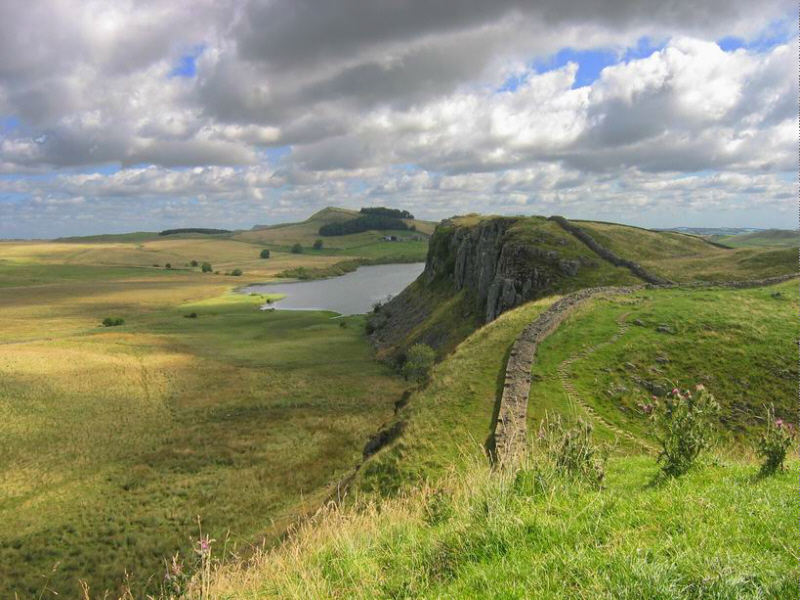
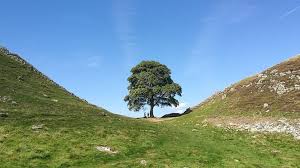
Thirdly, I was shocked by something that happened unexpectedly at the end of September, something that appeared out of the blue and when the news arrived was like a blow to the solar plexus. It was the felling of an iconic 350 year old sycamore tree standing defiantly in a gap in Hadrian’s Way near the Pennine Way in Northumberland. I must confess that I don’t remember having seen the sycamore tree when I passed it walking from coast to coast along Hadrian’s Wall during a long Bank holiday weekend in August 1986. But now, the tree has gone, I wish I had. One of the most photographed trees in the UK, to me it symbolised man’s fragile co-existence with nature and its felling seemed akin to a sacrilegious act of senseless nihilistic vandalism – like the Taliban dynamiting the Buddhas of Bamiyan.
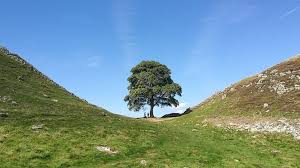
Of course my LEJOG walk won’t bring the fabled felled sycamore back to life. Nevertheless I’d like to revisit the place where it so recently stood. A symbolic act of homage. The tree of life, Yggdrasil, beheaded but not forgotten.
The fourth and final reason for choosing LEJOG was related to the tragic felling of the iconic tree in Sycamore Gap. It reminded me of my own mortality. When you hit 60, you realise, that the proverbial clock is ticking and time is not on your side. Who knows whether I’ll be able to do LEJOG in 10 years time. So as far as a 1,200 mile walk from Land’s End to John O’Groats is concerned, it’s a case of striking while the iron is hot!
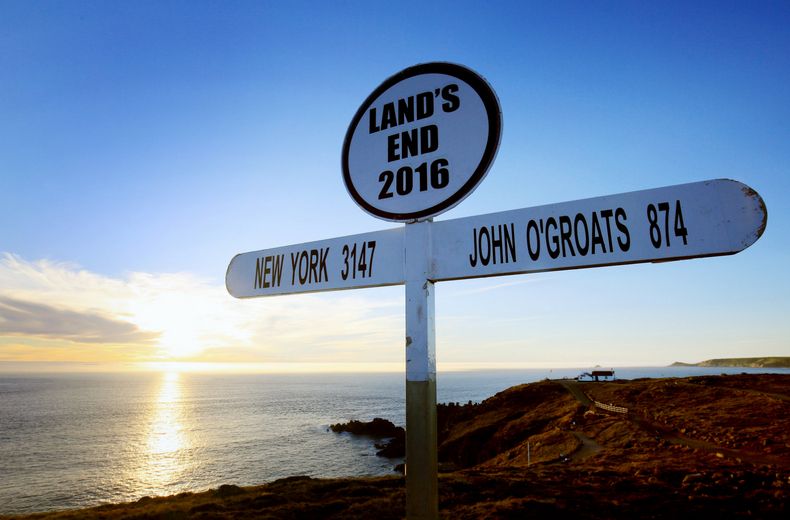
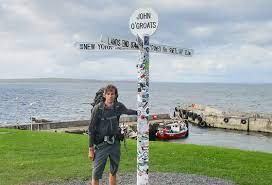
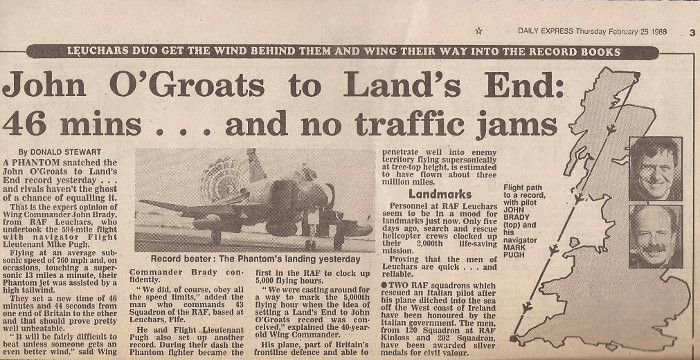
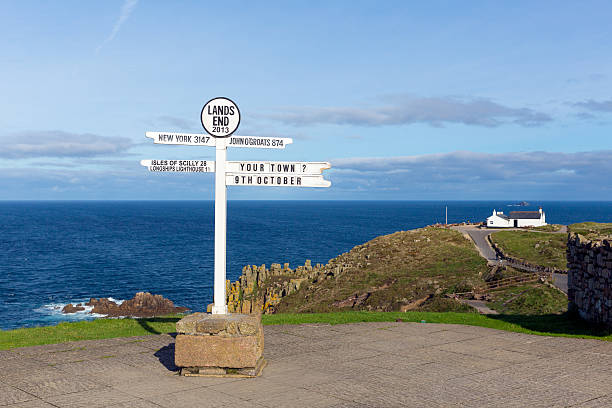
So what exactly is LEJOG? Simply speaking its the acronym which describes walking from Land’s End to John O’Groats or vice versa (JOGLE). As the crow flies there are 603 miles between Land’s End and John O’Groats and by road the distance is 837 miles although, somewhat confusingly, the signposts at Land’s End and John O’Groats suggest that the distance is 874 miles! Like many things about LEJOG, the exact distances involved are clouded in a certain amount of uncertainty!

One of the great things about walking from Land’s End to John O’Groats is that you make all the decisions yourself, from where you walk to how long you take. The only rule (apart from never taking a ferry at any point of the walk) is to start from one end and finish at the other, but in between you can take absolutely any route you like. How far you eventually end up walking on LEJOG, depends very much on which footpaths you decide to follow, as well has how good a map reader you are!
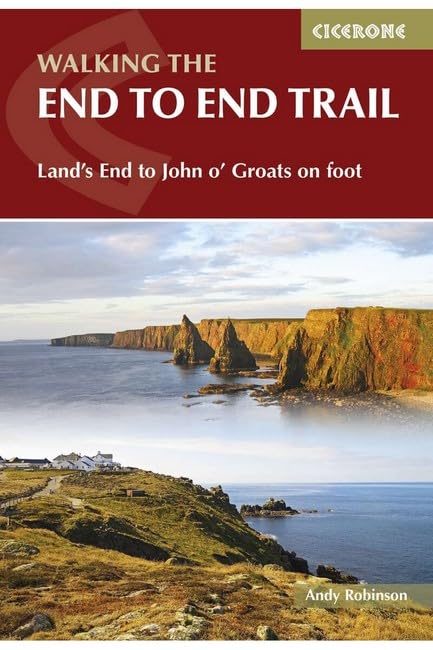
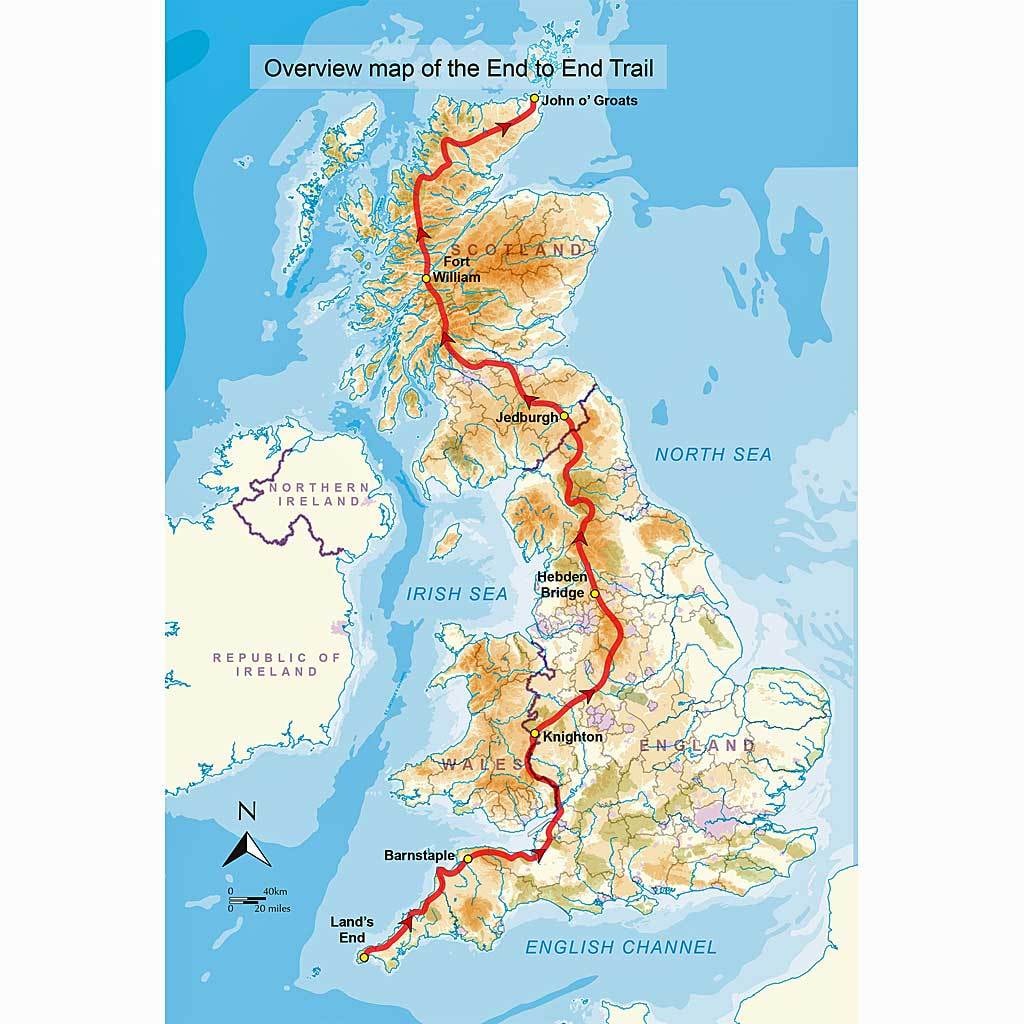
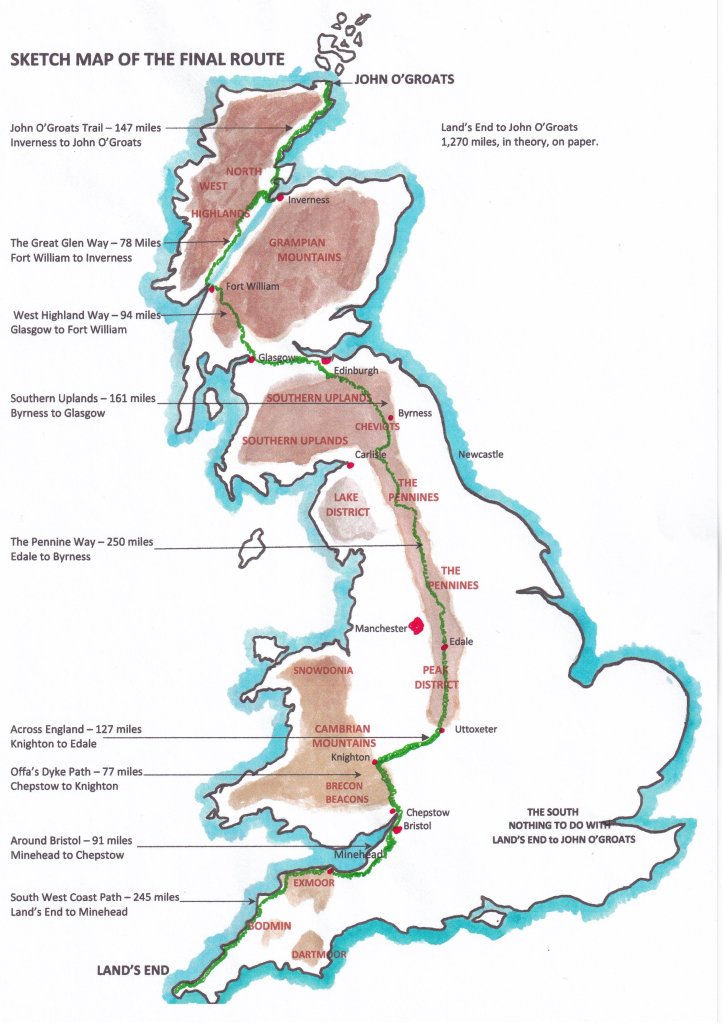
A lowland LEJOG route which goes via Bodmin Moor, the Cotswolds, the Midlands and the Industrial North while avoiding the Cornish and Devon coast, Welsh borders and the Pennines could probably be completed in a little over 1,000 miles. However, if you follow more scenic routes (The South West Coastal Path, Offa’s Dyke Path, Pennine Way, West Highland Way, Great Glen Way and the John O’Groats Way) you are probably looking at walking nearer 1,200 miles. In fact that’s the route I plan to follow, as outlined in the End to End Trail by Andy Robinson.
Walking prodigious distances in the UK used to be a way of life 4,500 years ago. Analysis by archaeologists of the strontium isotope levels in pig bones found in feast pits at Durrington Wells near Stonehenge reveals that our neolithic hunter gatherer ancestors walked 650 miles of more from as far afield as North East Scotland to attend the Winter Solstice celebrations at Stonehenge. However, the subsequent transition to an agrarian economy and the imposition of draconian vagrancy laws in medieval Britain, led to the decline in the popularity of long distance walks like LEJOG for many years.

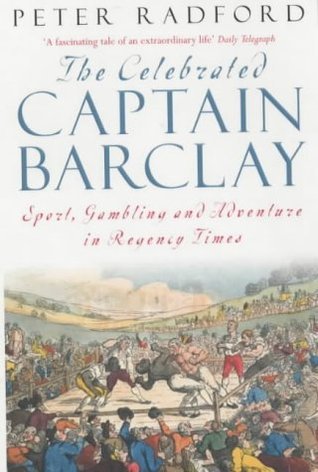
If you are interested in the history of long distance walking I can recommend the story of Captain John Barclay. In 1809 he completed a walk of 1,000 miles in 1,000 hours for a bet of 1,000 guineas and in the process (with side bets worth 14,000 guineas) won the equivalent, in today’s money, of £20mn!
For those interested in history, the first persons known to have walked the length of Britain and recounted their journey were the Naylor brothers (John and Robert) who completed a 1,372 mile walk from John O’Groats to Land’s End in 1871. Although the brothers made notes at the time of their walk, the book about their walk was only published 45 years later in 1916.
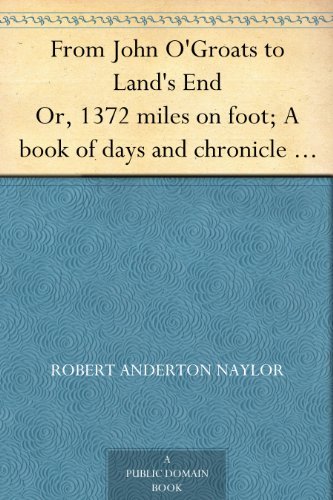
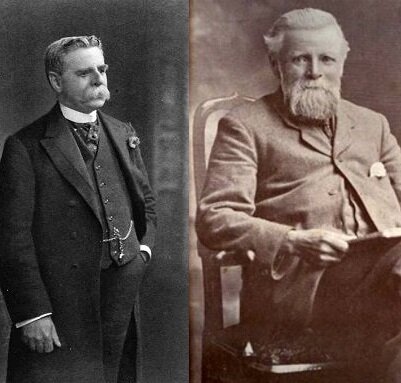
The Naylors were clearly incredibly fit, and thought nothing of major diversions (all on foot) to see places of particular interest, keeping up a daily average of 25 miles per day and often much further! They were also highly religious, ensuring they attended not just one but two church services on Sundays!
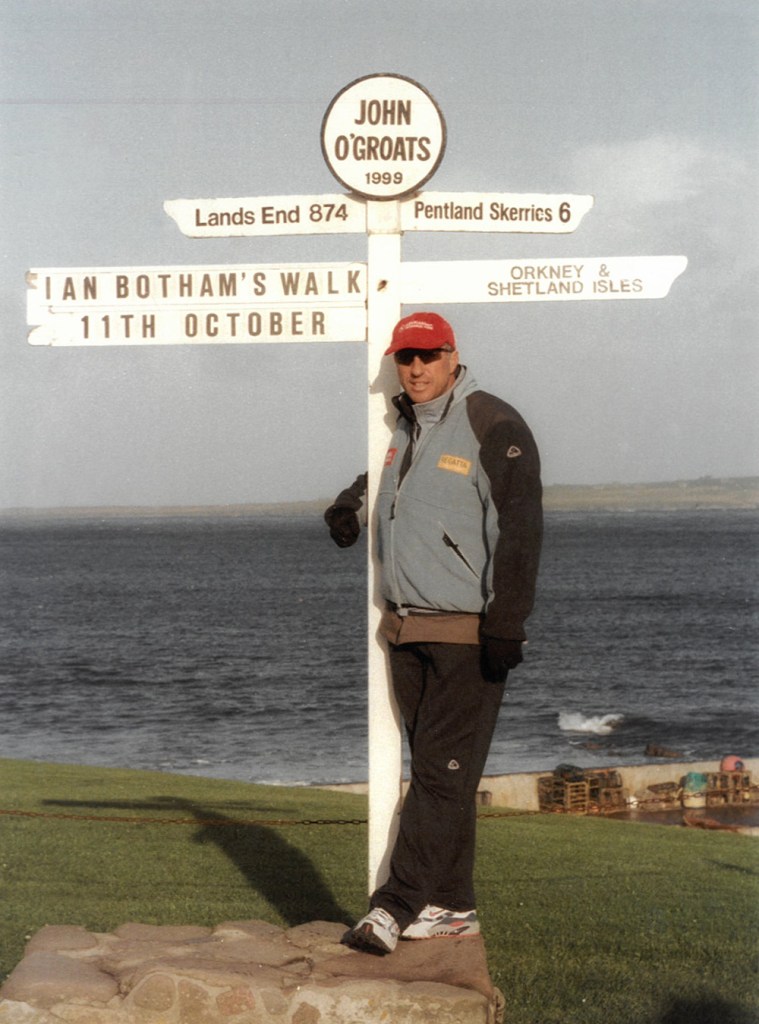
Amongst celebrities who have undertaken LEJOG, perhaps the most famous was Ian Botham, the English Test cricketer, who completed the walk twice for charity in 1985 and 1999 although on both occasions he walked on roads with a full back up team to support him.
You don’t have to be mad to walk LEJOG but it certainly helps! In 2020 Mick Cullen walked over a 1,000 miles from Land’s End to John O’Groats clad only in a a skimpy pair of speedo swimming trunks. The feat was all the more remarkable by dint of the fact that he completed his LEJOG walk in bleak midwinter, in the process raising over £300,000 for ‘The Speedomick Foundation’, a fund he set up to give grants to small charities supporting those with mental health issues, disadvantaged young people, and the homeless.
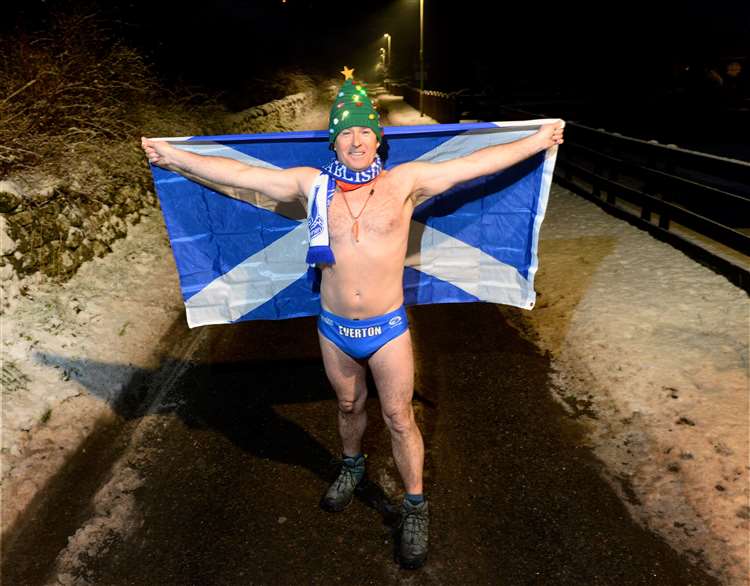
So how many people (apart from Sir Ian Botham and Mick Cullen) successfully walk LEJOG/JOGLE each year? Its a good question and nobody really knows the answer. In 1980 16 people completed the walk. Since then the popularity of the walk has increased with many doing it to raise money for charity. A best guess is somewhere between 50-100 people complete it each year.
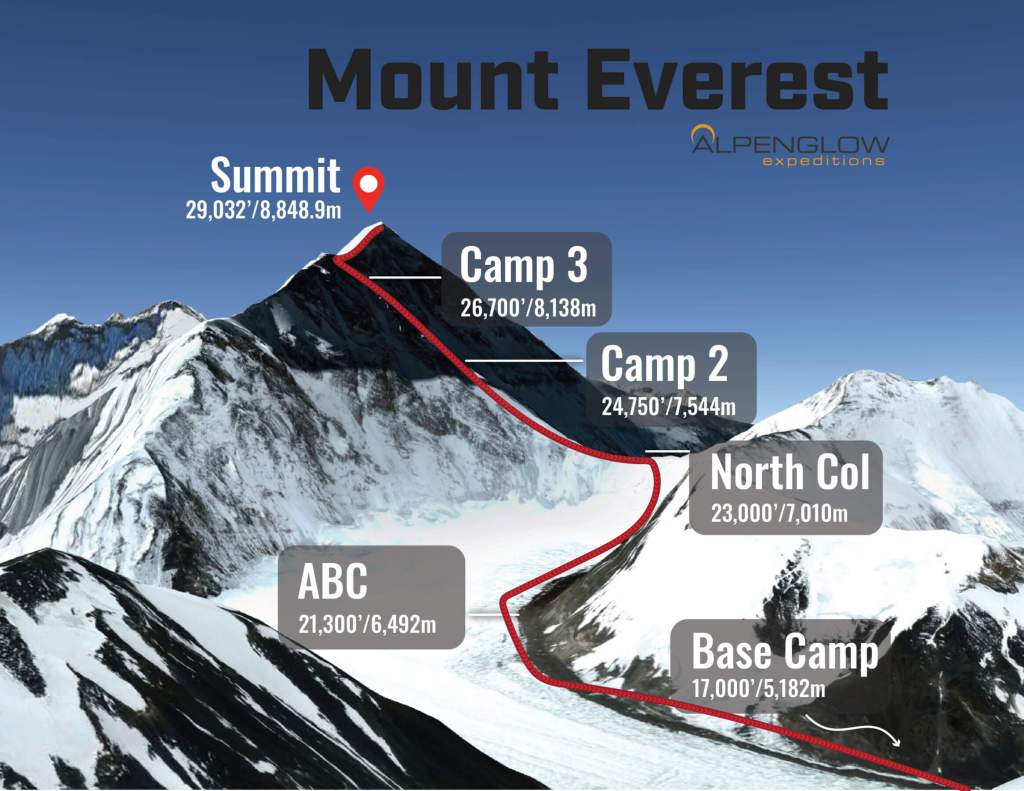
That’s significantly fewer than summit Everest (500) every year! As a veteran lejogger told me recently “climbing Everest is easier, in my opinion, than walking end to end. All your gear is carried by others.It only takes a week or two. It’s cheaper, by far, than an end to end. The weather is likely to be better. You’re on a foreign holiday. Everest isn’t for the serious backpacker.”
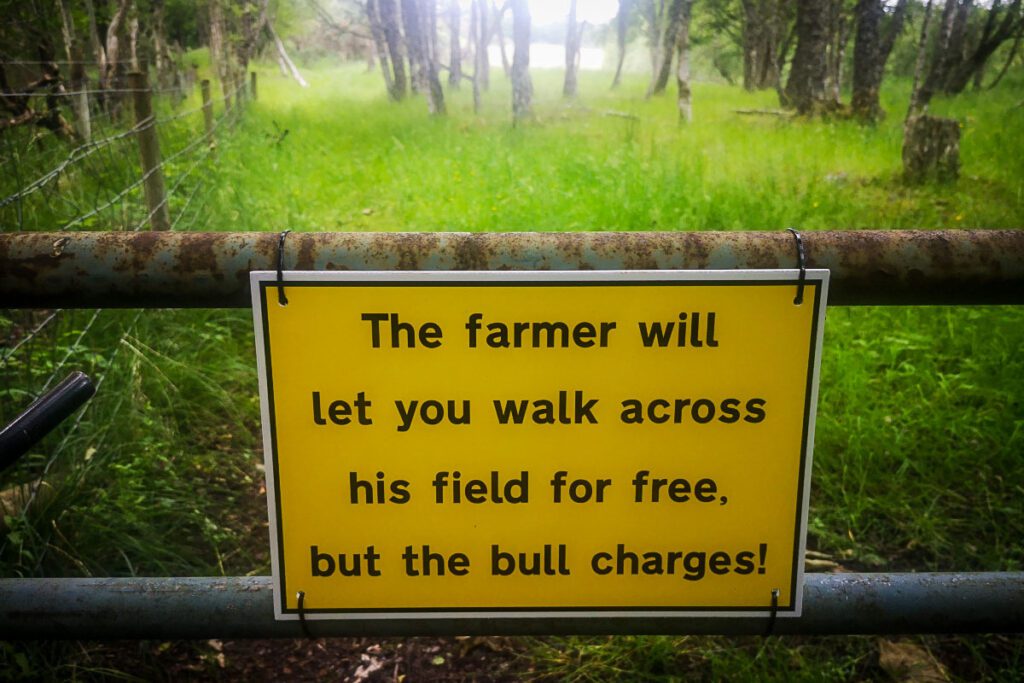
Challenges on LEJOG abound – from the notoriously fickle British weather to the occupational hazards of keeping to public rights of way in England and not being eaten alive by swarms of voracious midges, clegs and mozzies north of the border!
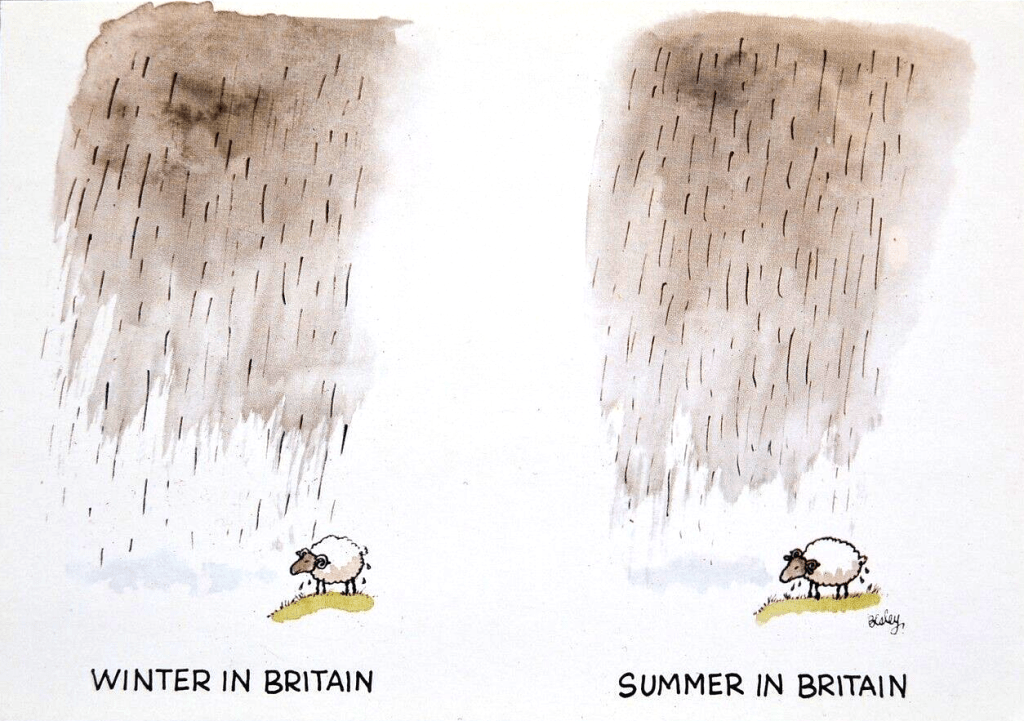
Slice it or dice it any which way you want, completing LEJOG, solo and off road on foot, is a significant achievement. Which rather begs the question, who in their right mind would be mad enough to embark on such a challenge, particularly bearing in mind the UK’s record of inclement weather? When the Greek philosopher and physician Hippocrates came up with the catch phrase “Walking is Man’s best medicine” 2,500 years ago, he was doing so from the sun kissed beaches of southern Greece rather than the rain sodden hills of upland Britain!
Walking from one end of one’s country to the other is a peculiarly British phenomenon. In France the distance from the most northerly point (Bray-Dunes near Dunkirk) and the most southerly point (Lamanère in the Pyrenees) is around 940 miles yet I’ve only been able to track down two people who have ever walked it! Perhaps that’s because compared to LEJOG much of the route compared is just plain boring. Or maybe its simply just because French long distance walkers prefer hiking in beautiful areas like the Pyrenees or the Massif Central!
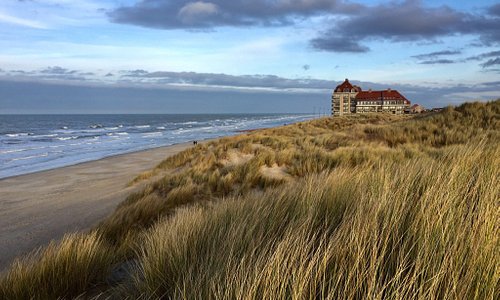
LEJOG is a walk I’ve wanted to undertake since I first read ‘Journey through Britain’ nearly 50 years ago. Published in 1968 it recounts the walk from Lands End to John o’Groats , by John Hilllaby, a 50 year old journalist interested in history and geology.
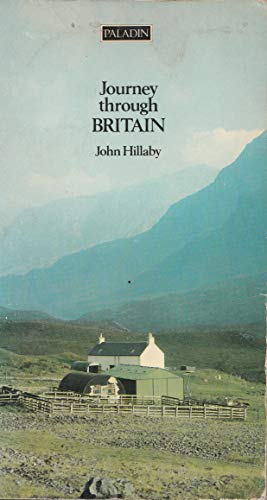
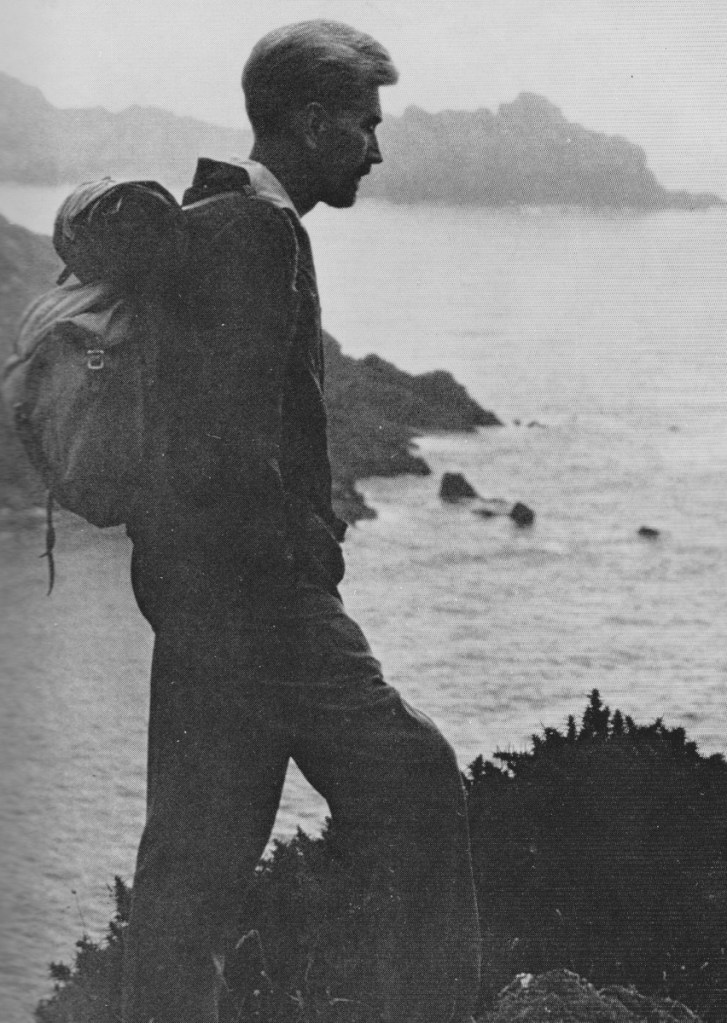
When he set out to walk from Land’s End to John OGroats in 1968, John Hillaby was by no means the first to do the walk. What made his walk different to his predecessors was that he decided to avoid all roads and turn the walk into a beautiful and inspiring experience. He was the first to make the walk into a shared experience. In doing so he was probably responsible for inspiring hundreds of walkers (including me) to follow in his footsteps and undertake the challenge of completing LEJOG.

Hillaby summed up beautifully why walking from Land’s End to John O’Groats remains such an iconic walk for long distance walkers such as myself: “For me the question wasn’t whether it could be done, but whether I could do it. I’m fifty. I’m interested in biology and pre-history. They are, in fact, my business. For years I’ve had the notion of getting the feel of the whole country in one brisk walk: mountains and moorlands, downloads and dales. Thick as it is with history and scenic contrast, Britain is just small enough to be walked across in the springtime. It seemed an attractive idea. There was a challenge in the prospect.”

Amongst those he inspired was the American humorist and travel writer Bill Bryson who credits Hillaby as his inspiration saying: “As far as I regard myself as a travel writer I owe a great deal to a lot of other writers but none more so than to John Hillaby“
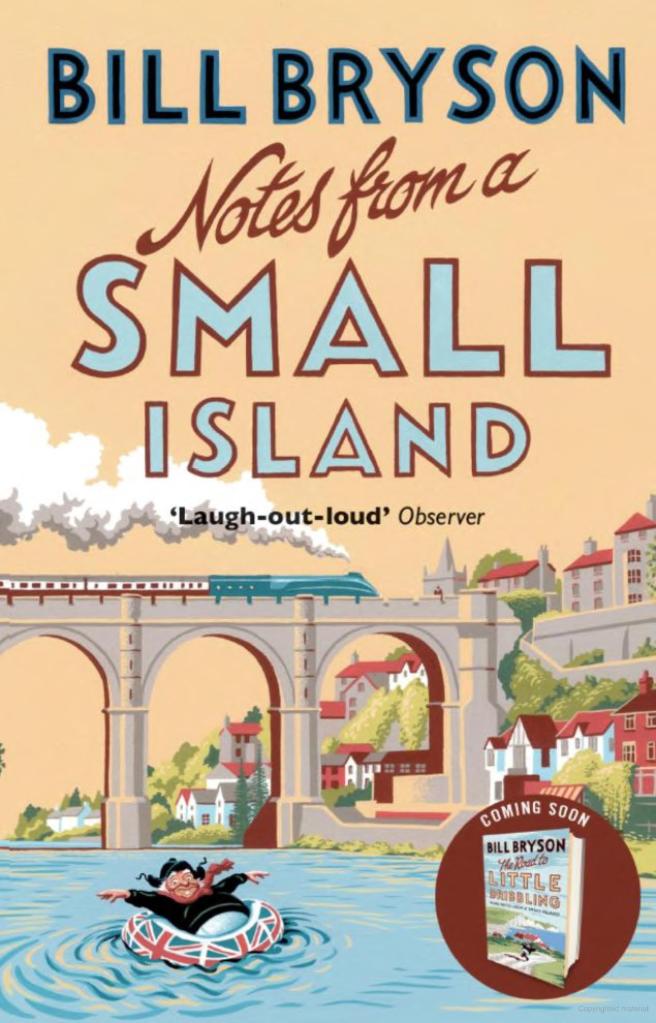
John Hillaby completed the walk in 55 days while lugging a backpack which weighed 15kg. I’ll be travelling a lot lighter (5 kg) but aiming to complete it in a similar timeframe (60 days). Hillaby has ten years on me though, and he was a Tough Tyke rather than a Southern Softie like me!
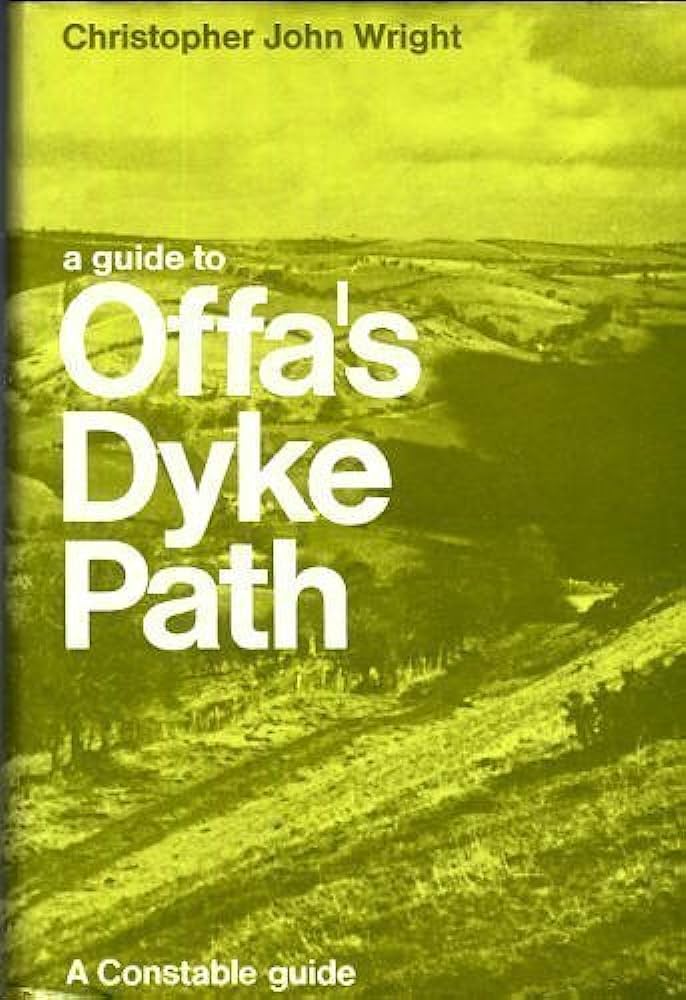
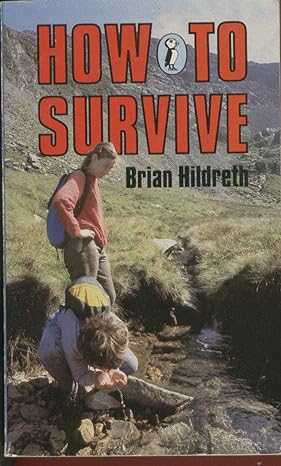
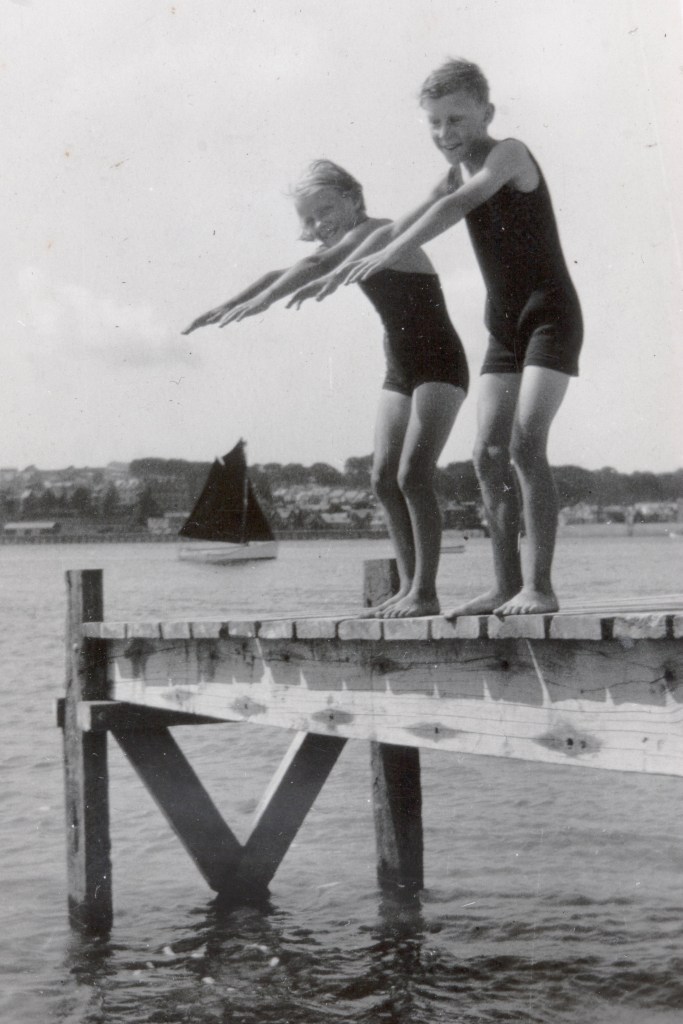
In the summer of 1980, as a 16 year old I embarked, with a school friend, on a foolhardy attempt to walk the length of Offa’s Dyke (186 miles). Kitted out at the local Millets store in Winchester with a fluorescent orange rucksack (that proved to be porous), a pair of heavy leather boots (which I hadn’t bothered to “break in” prior to setting off on the walk), and a Vango two man tent (which weighed a ton) we headed off from Chepstow towards Monmouth full of schoolboy optimism that we’d reach the end of Offa’s Dyke Path at Prestayn within a week. It would be a breeze.
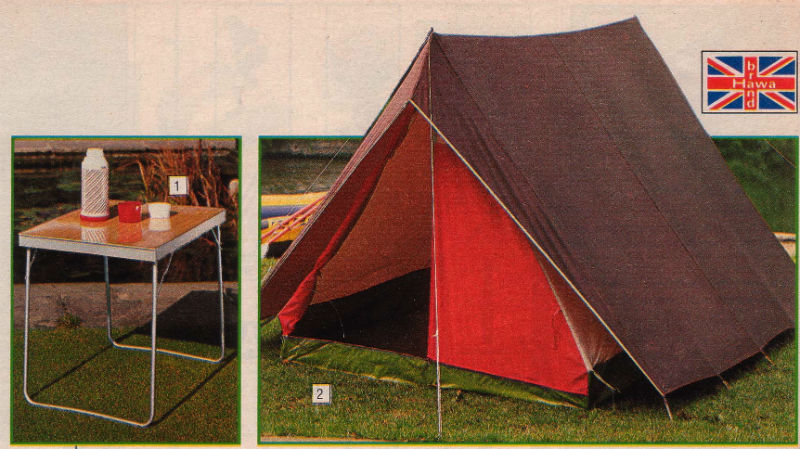
Things went pear shaped pretty quickly. We soon realised the error of stuffing our rucksacks with enough provisions to feed a small army including tins of Fray Bentos steak and kidney pudding and Heinz Treacle pudding. Having pitched our tent in a field near Monmouth on our first evening, we discovered to our chagrin that we’d forgotten to pack a tin opener! Two days later as we trudged through incessant driving rain beyond Pandy into the Black Mountains ,soaked to the skin with badly blistered feet, I was beginning to wonder why I’d ever thought long distance walking would be enjoyable rather than an exercise in extreme masochism!


By the time we got to Hay-on-Wye, drenched and despondent, my friend had had enough and decided to hot foot it back home to Kent. Abandoning the tent, I decided to continue, opting for a range of hotel accommodation in Hay-on-Wye and Hereford as well as a couple of diversions to stay with a friend whose parents owned a castle near Ross-on-Wye and another who owned a large stately home and estate near Shrewsbury! In all I probably walked no more than a 100 miles but the blisters on my feet finally got the better of me. I was forced to reluctantly abandon the walk and return home with my tail firmly between my legs. It was an inauspicious introduction to the joys of long distance walking!
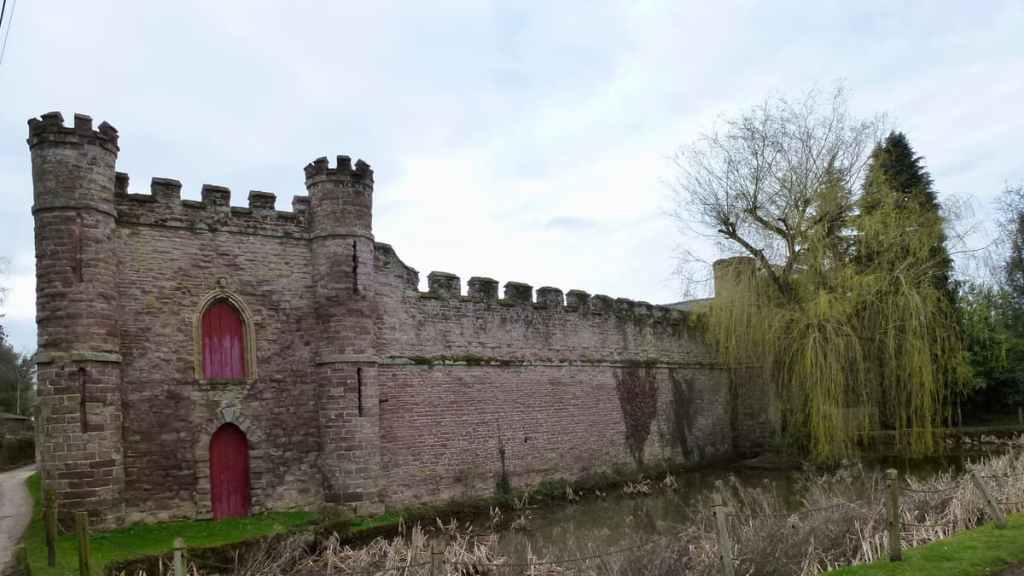
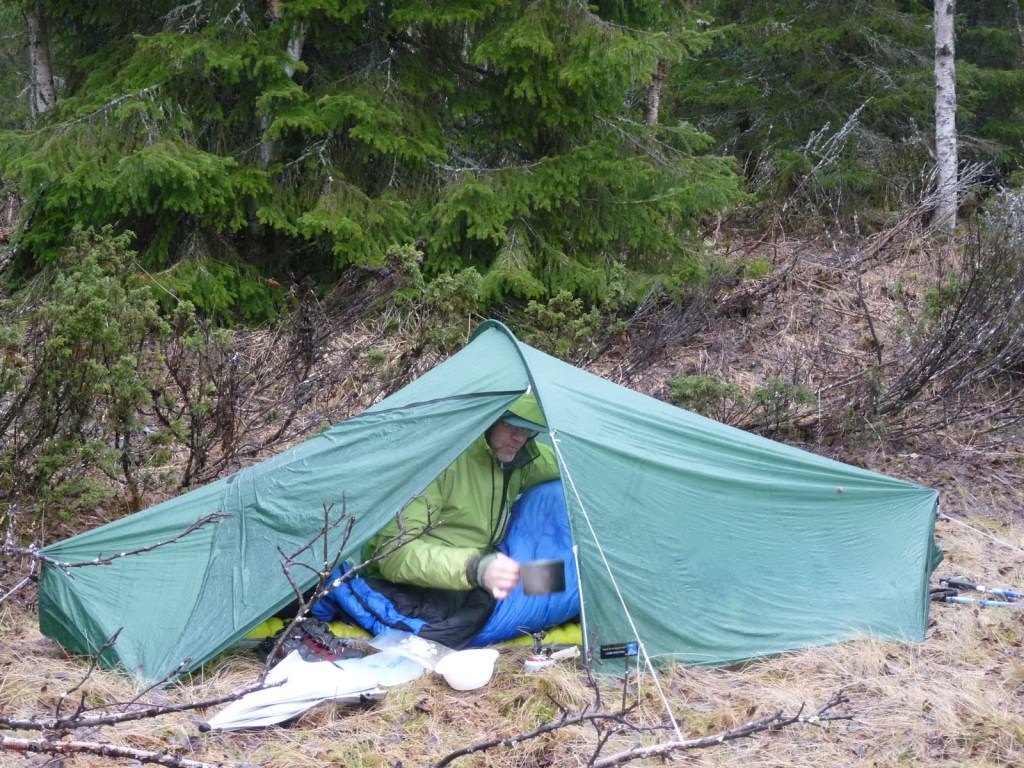
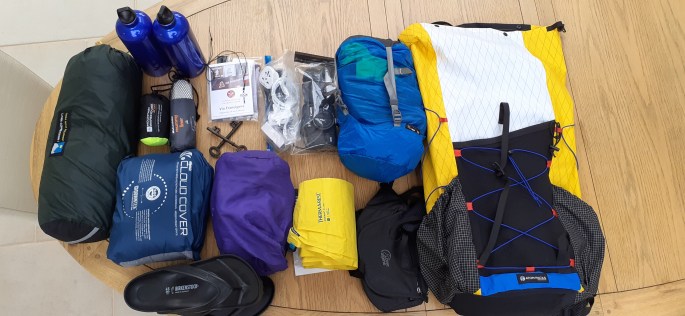
This time I’m hoping to do a little better. My boots have been broken in and upgraded. Just like John Hillaby I’ll be wild camping on much of the route. Although I’ll be taking a tent, sleeping mat, sleeping bag and cooking equipment with me, I’m still hoping to keep my rucksack weight down to around 5-6kg.
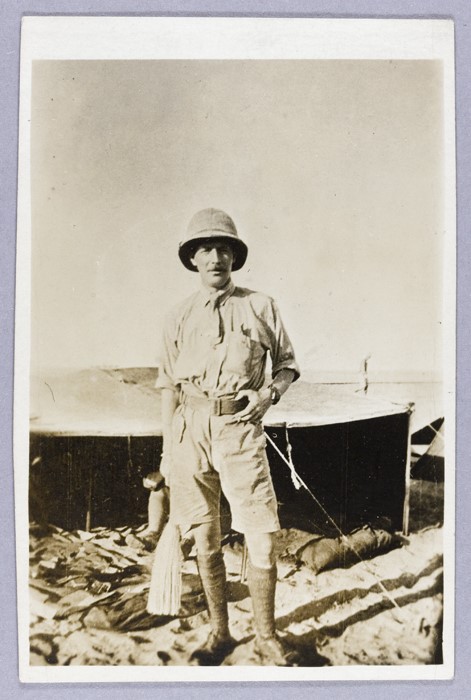
The walk will also be a personal pilgrimage for me, partly to commemorate the life of my grandfather, Harry St John Dutton who died prematurely a hundred years ago aged 46 in December 1923. Despite having survived the Somme offensive in 1916, having fought in Palestine and having liberated Jerusalem in 1918 with General Allenby he didn’t live to celebrate his 60th birthday. Neither my father (who was just over one year old when he died) nor I ever got to meet him properly.
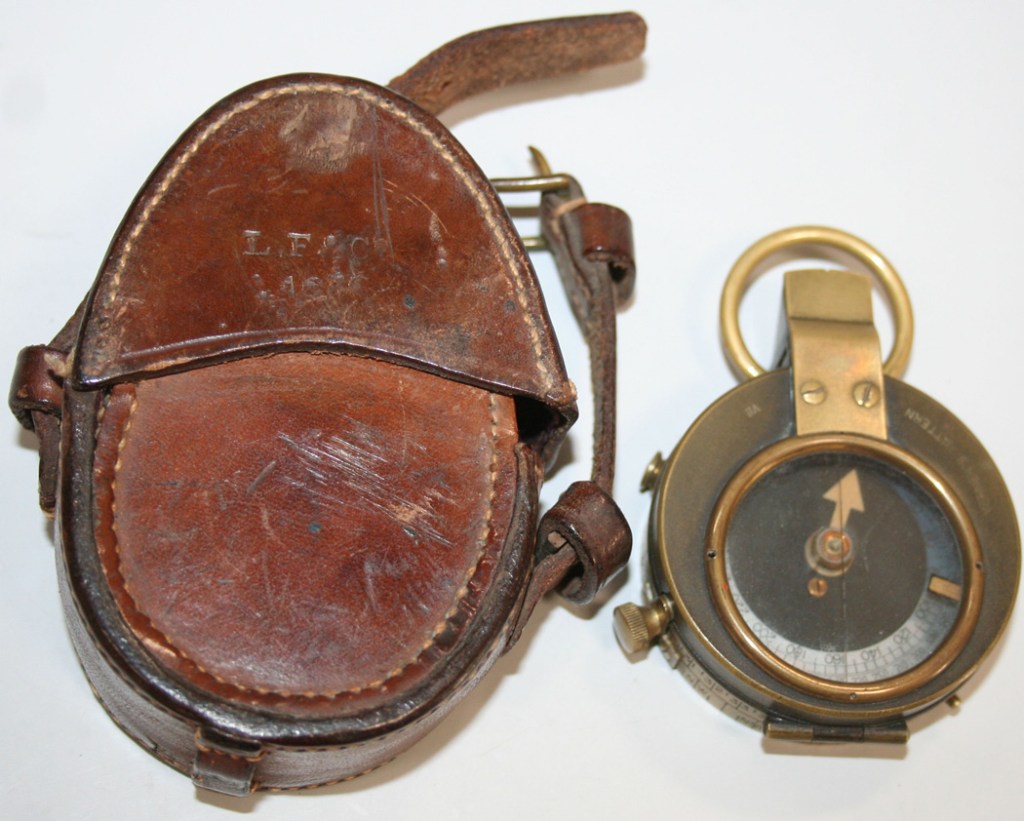
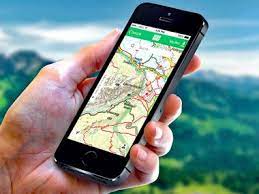
I’ve been sorely tempted to take my grandfather’s Cruchon and Elons field compass with me on the walk, but discretion has ultimately proved the better part of valour and I have decided to bow to the progress of technology and take a GPS enabled smart phone with me as a navigational aid together with downloaded OS maps.
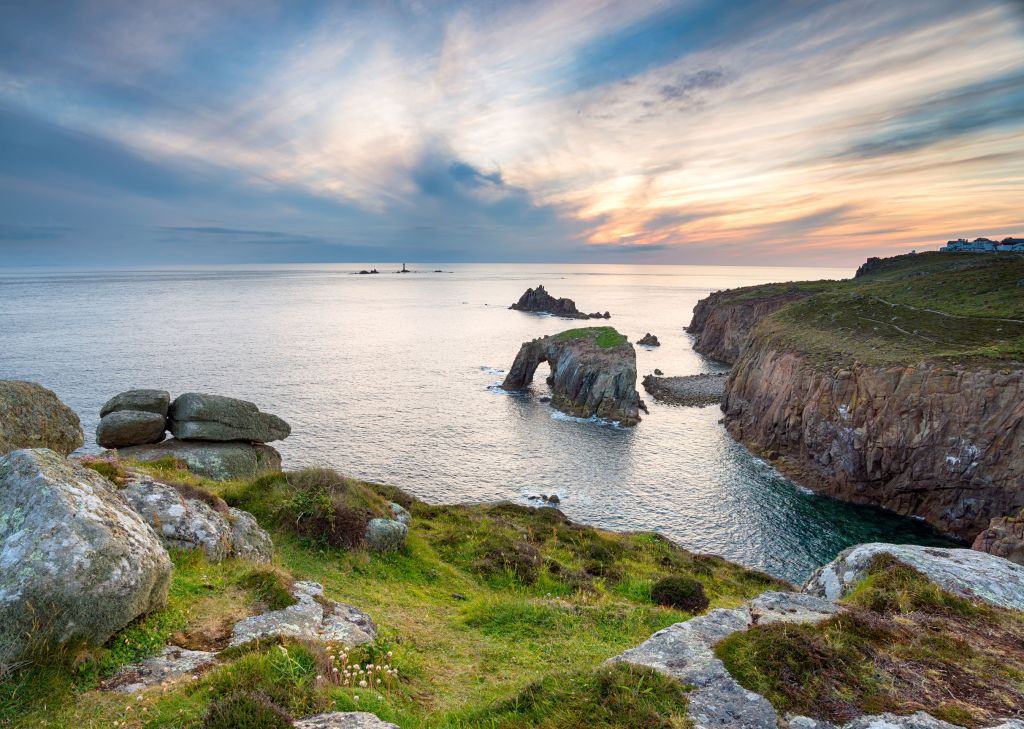
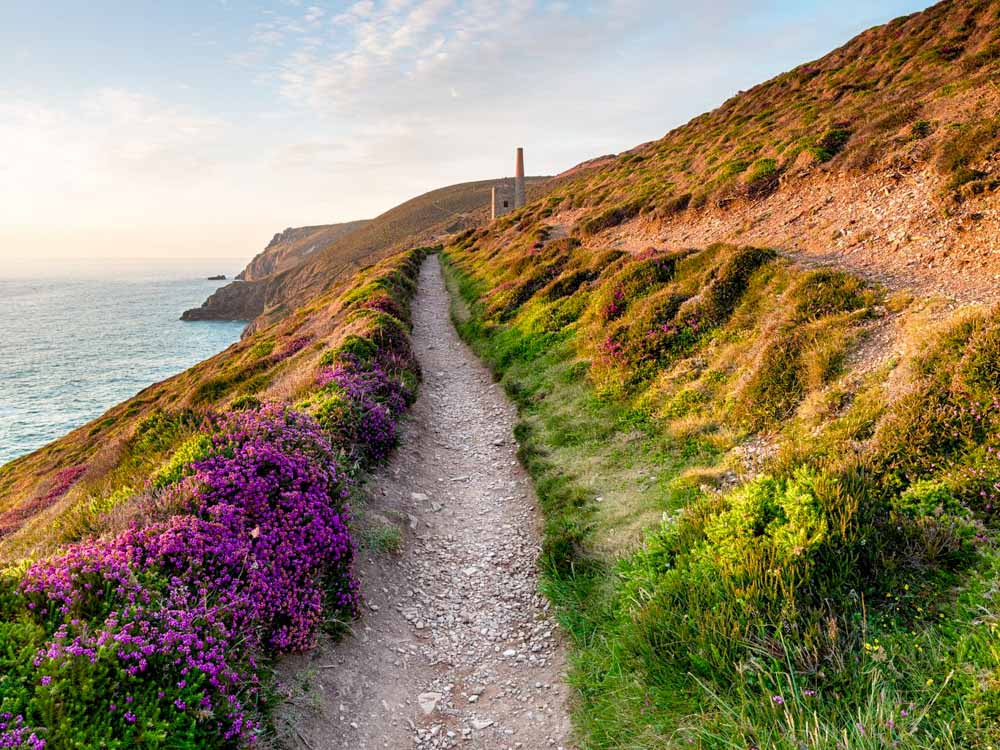
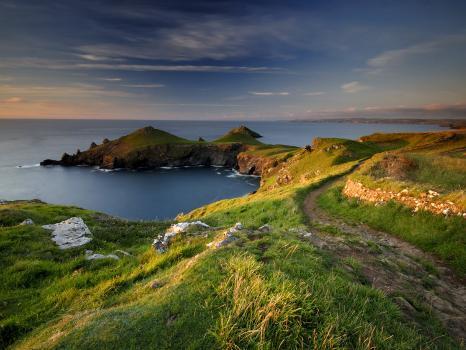
My LEJOG walk will take me along the north Cornwall coast, past Rock and Polzeath where my father was brought up in the 1920s and also give me the opportunity to re-visit some of the places he loved most in Cornwall including Pentire Point and Padstow Harbour. I’m sure there will be time for a pasty or two en route!
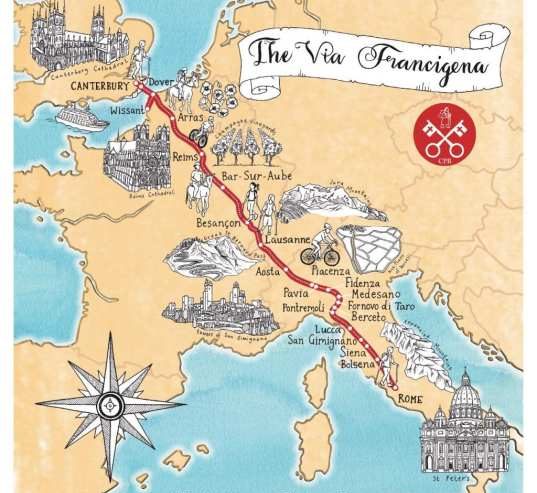
The longest walk I’ve ever undertaken was in 2021 when I walked nearly 1,000 miles from Wiltshire to the Col St Bernard on the Swiss/Italian border along the Pilgrim’s Way to Canterbury and then on the Via Francigena (History of the Via Francigena) through France and Switzerland. Yes, on paper it was a long way, but until I reached the Jura mountains most of the terrain was fairly flat and I had the luxury of staying with pilgrim host families along much of my route.
On paper LEJOG will only be 200 miles further than my 2021 walk, but that is where the similarities begin and end. Following the South West Coast Path from Land’s End, Offa’s Dyke Path along the Welsh borders, the Pennine Way up the spine of England , through the Borders (St Cuthbert’s Way, Southern Upland Way) picking up the West Highland Way, Great Glen Way and John O’Groat’s Trail through Scotland, my LEJOG route will take me through some of the most beautiful and remote parts of the UK.

One thing is for sure – LEJOG will definitely be no proverbial ‘teddy bear’s picnic’! It would be foolish to underestimate the level of fitness required to complete the walk. With this in mind, my training regime will begin in earnest with the target of walking 500 miles over the next 6 months, building it up to 300 miles over the 6 weeks before the walk starts.
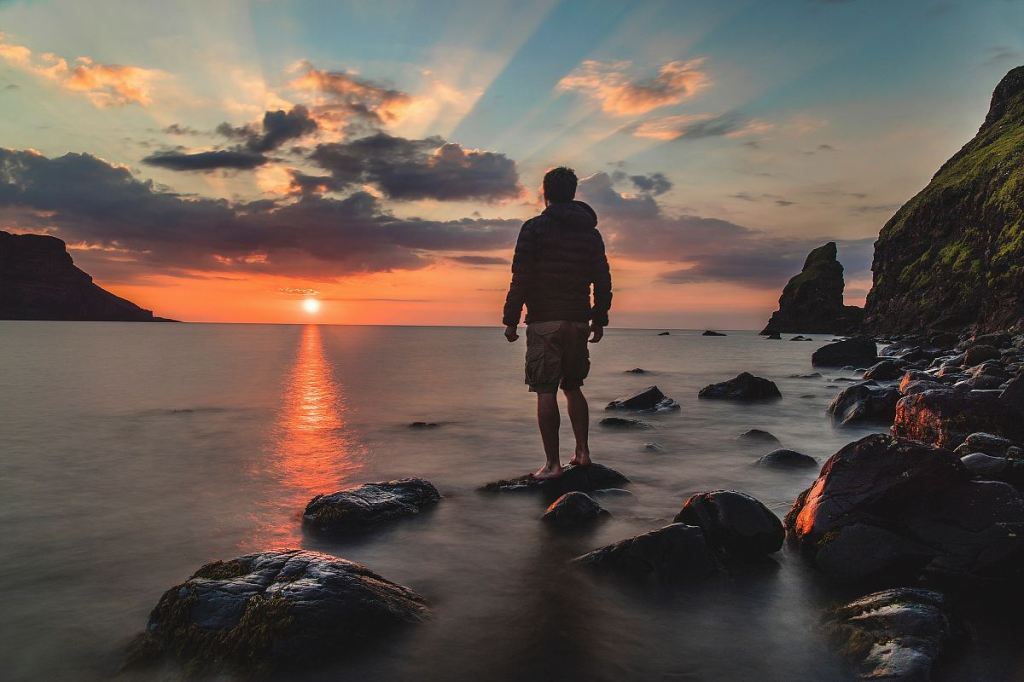
If all goes according to plan I’ll start off from Land’s End on 1 May 2024 and complete the 1,200 mile walk some 8 weeks later at John O’Groats. I just hope that the weather gods are smiling on me! There will be many ups and downs on next year’s LEJOG, of that I have little doubt. In fact I have a sneaky suspicion that completing the walk will be as much about over coming the psychological challenge of walking 1,200 miles on my own as the rather more prosaic challenge of avoiding blisters.

So with just under six months to go before I embark on my LEJOG journey, the clock is ticking! There is still a lot to prepare during that period, from fine tuning the route, to booking the accommodation and doing the background research on all the places I will visit. It’s certainly the challenge of a lifetime but one I’m looking forward to with relish. As the old saying goes, ‘Life begins at 60’!
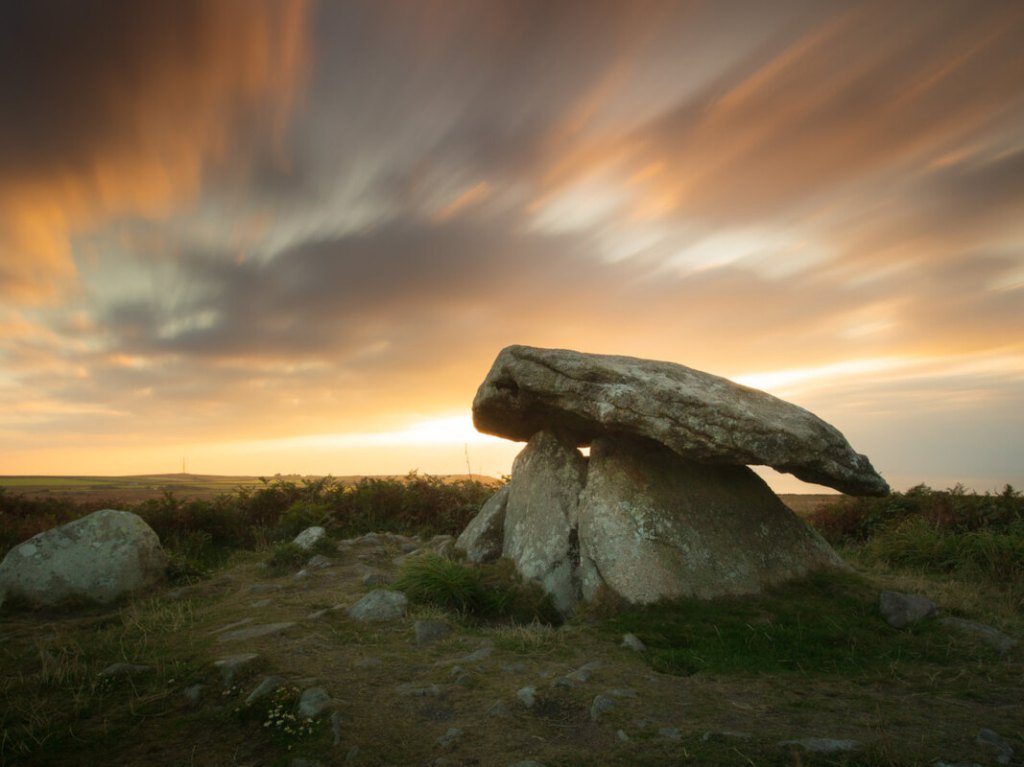
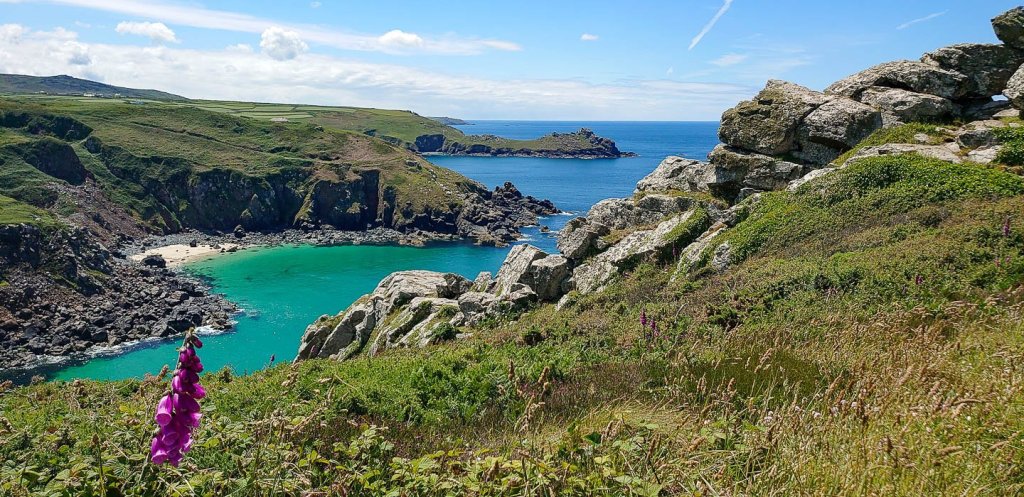
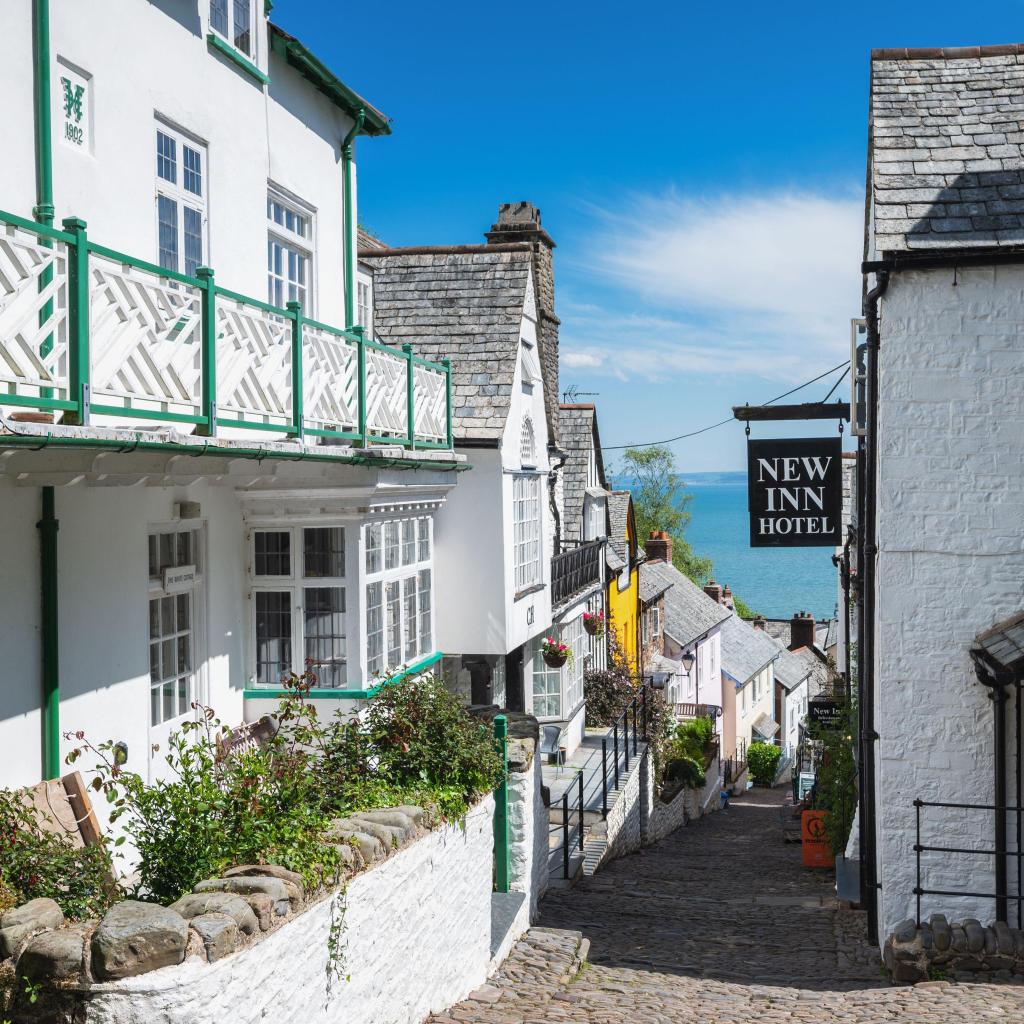
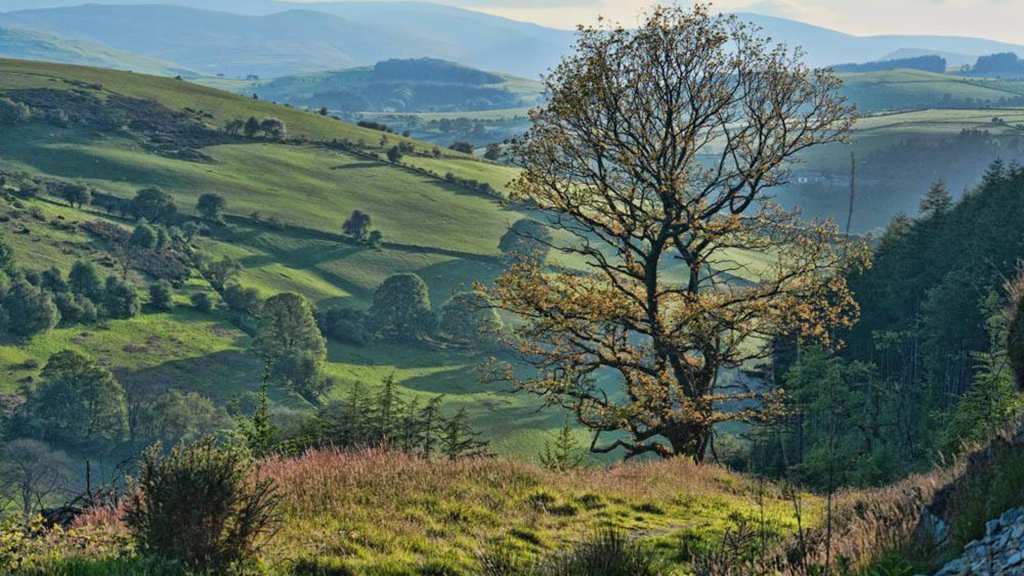
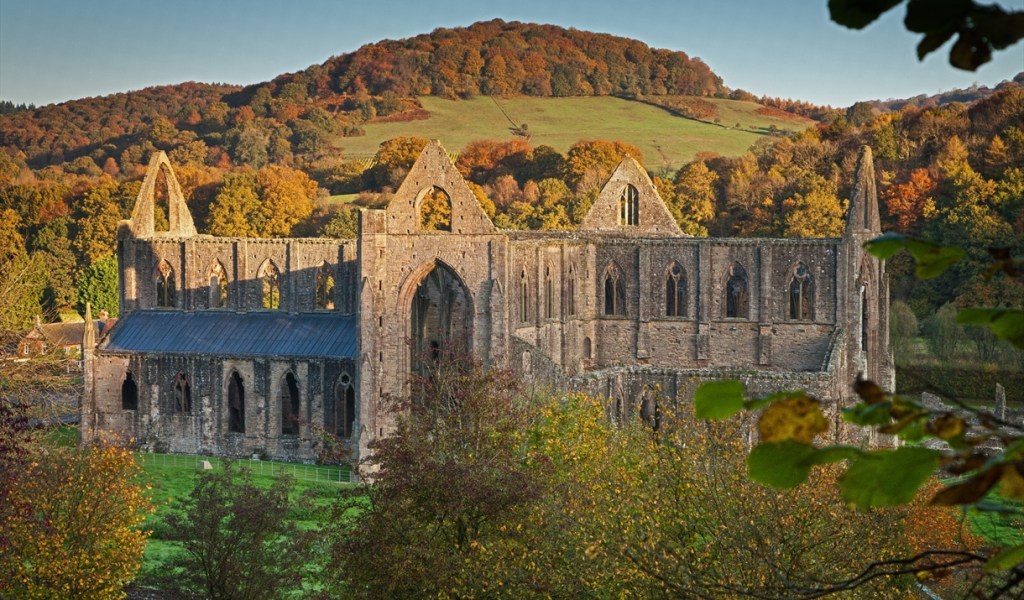
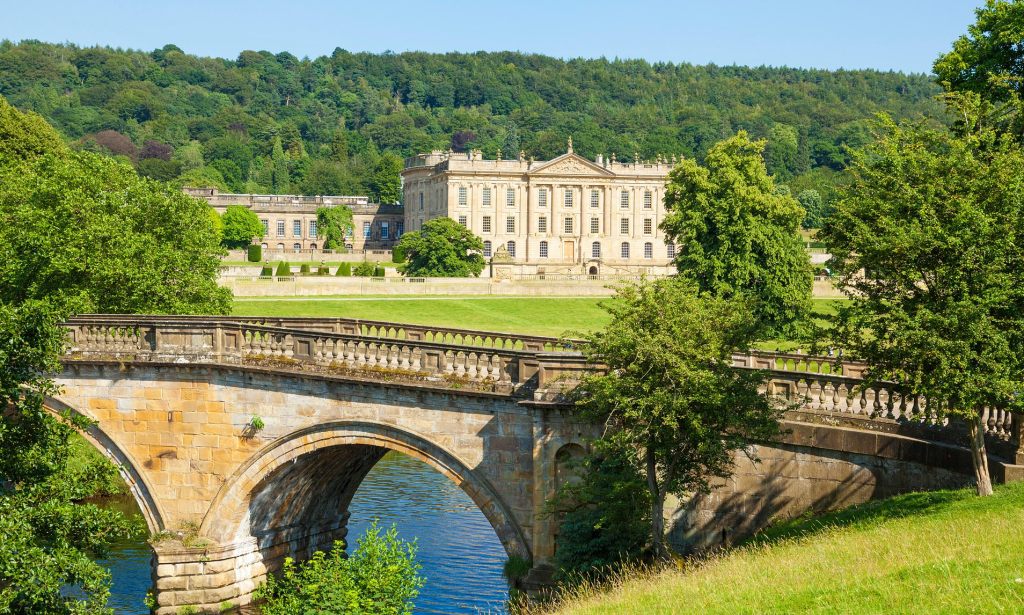
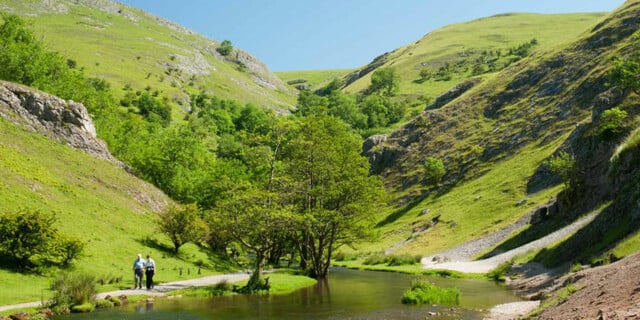
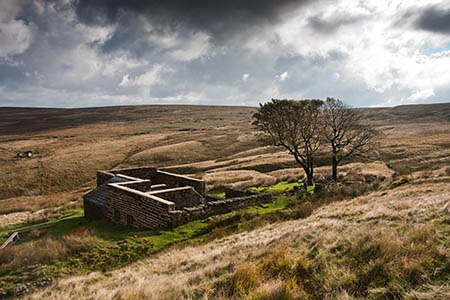
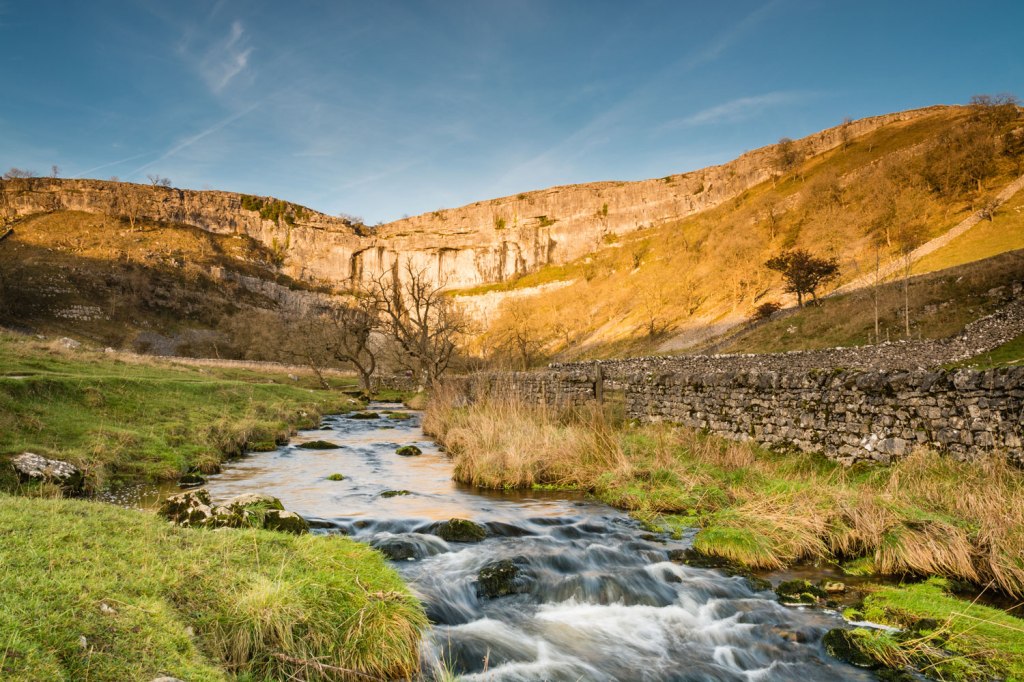
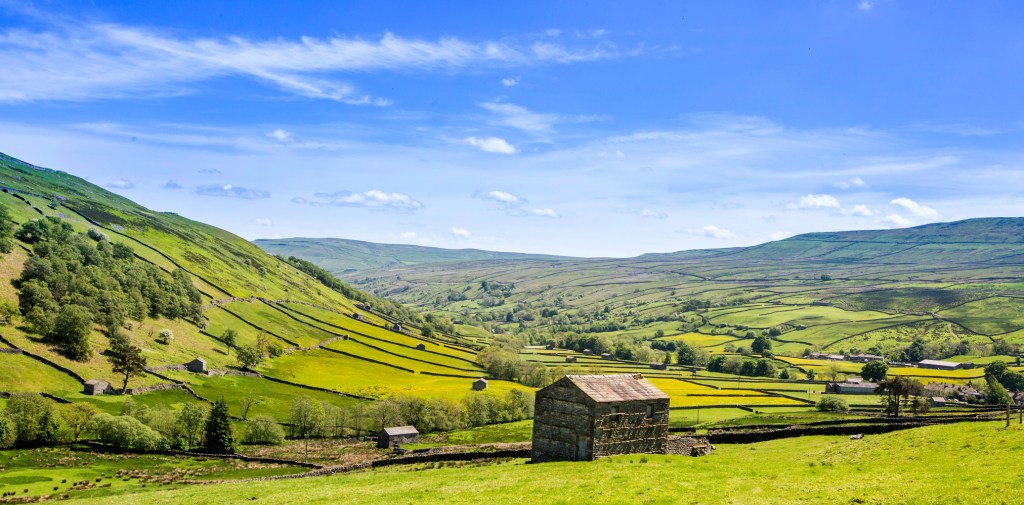
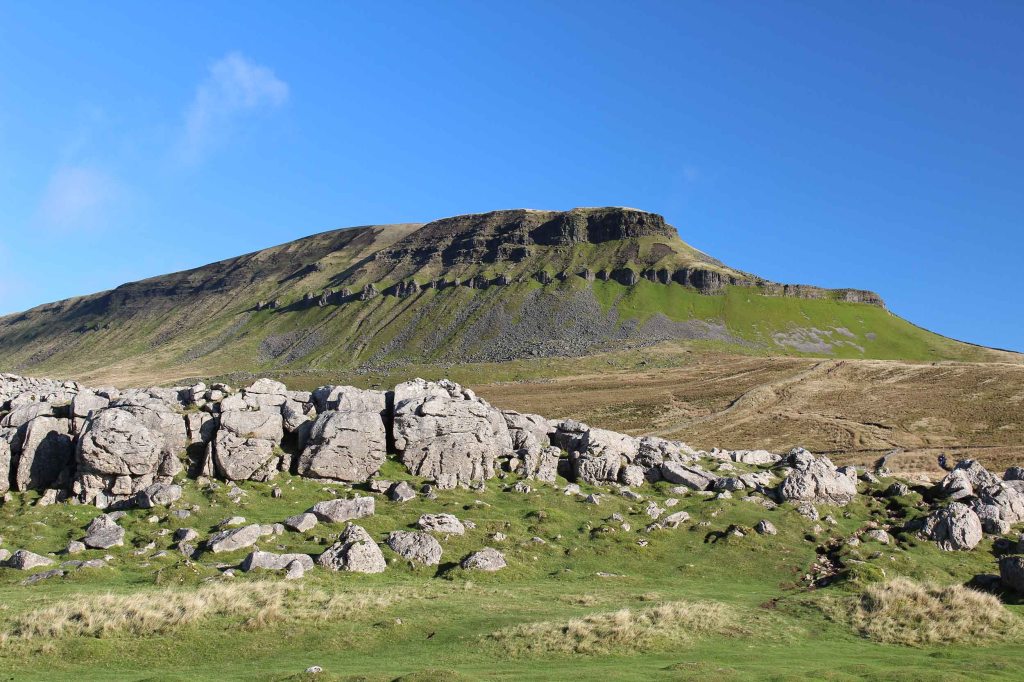
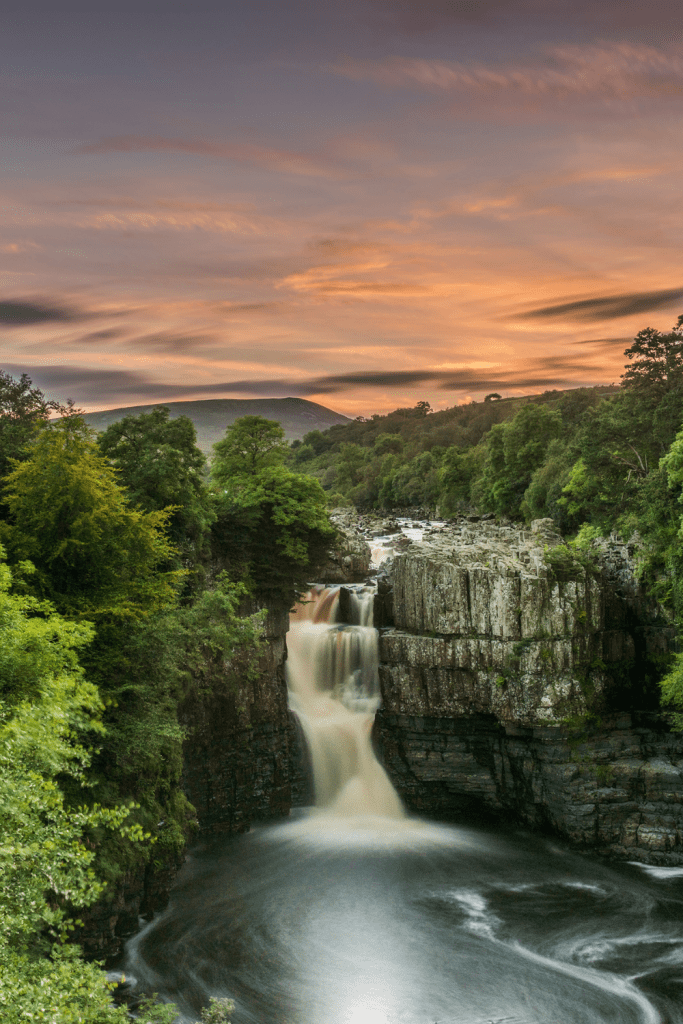
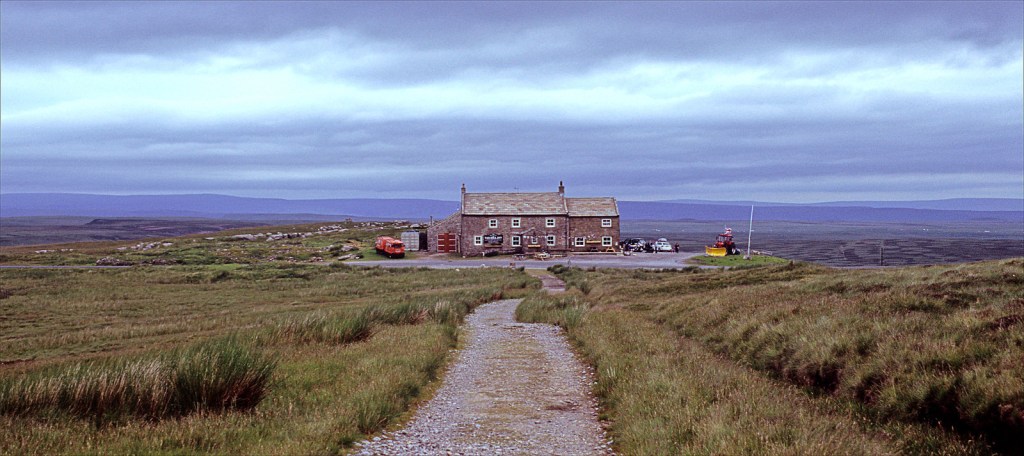
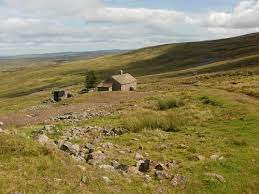
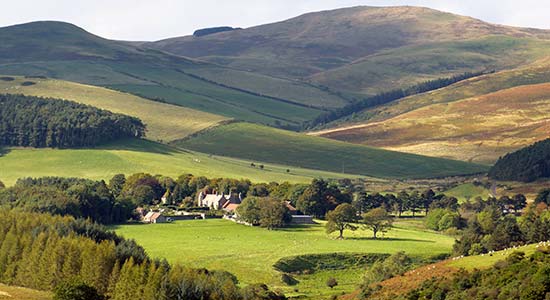
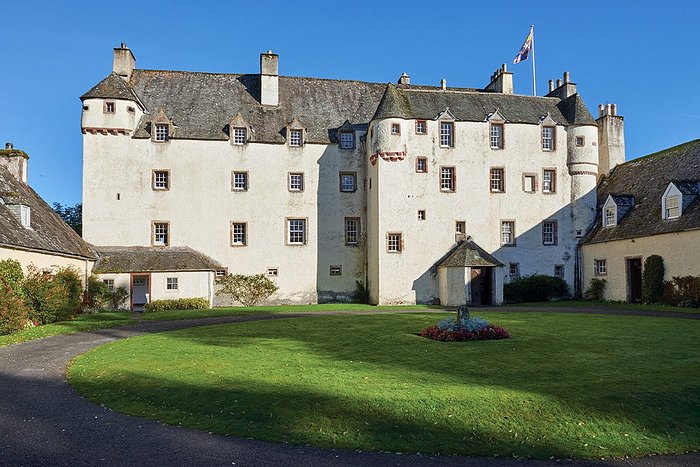
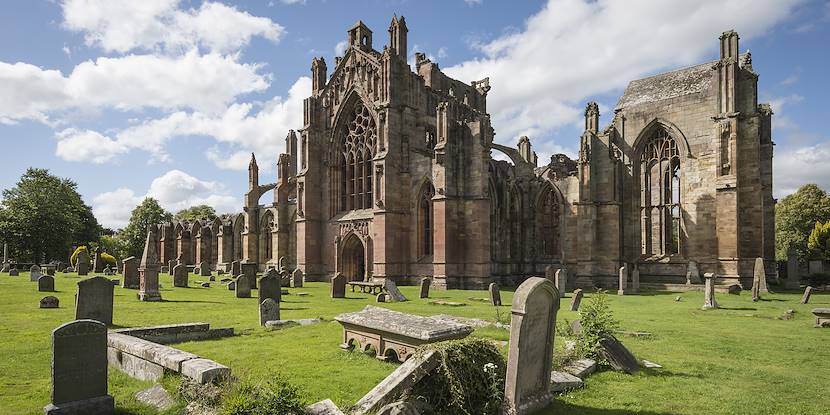
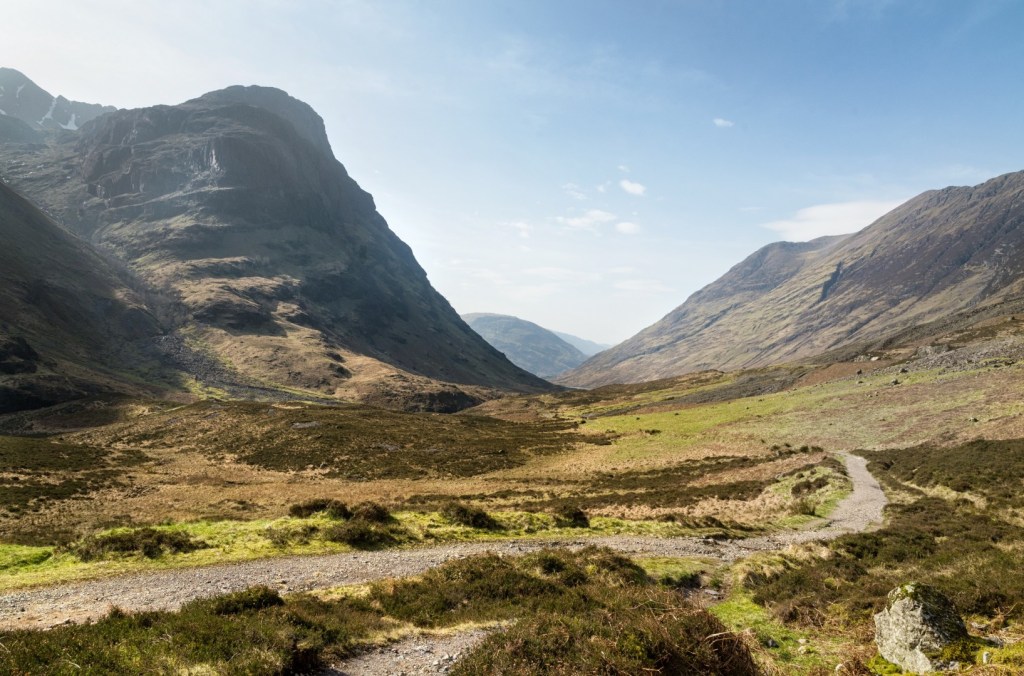
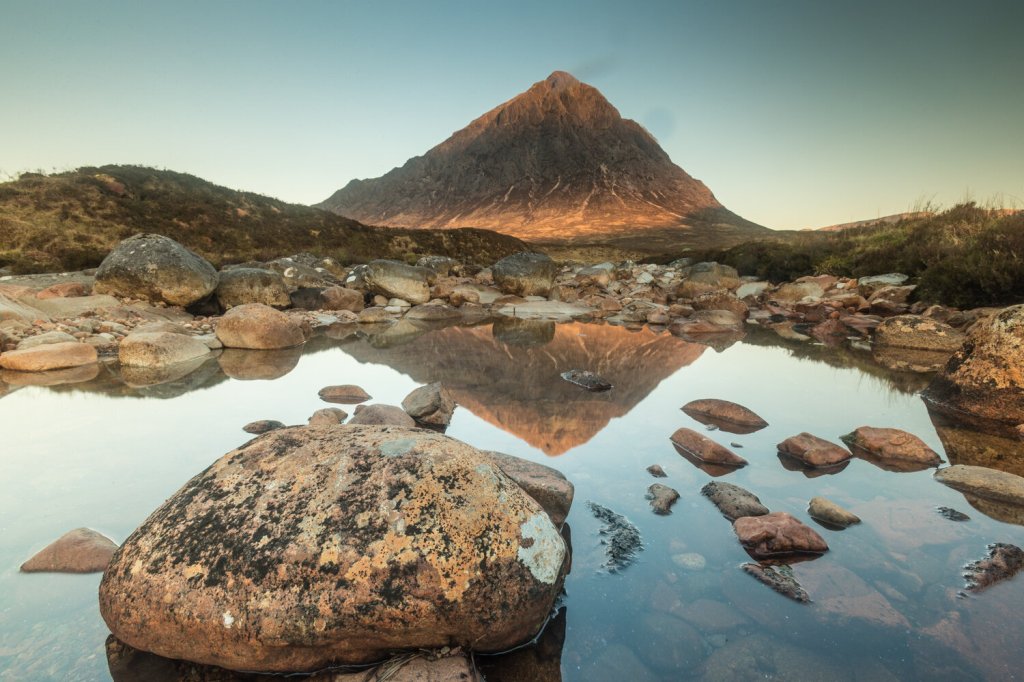
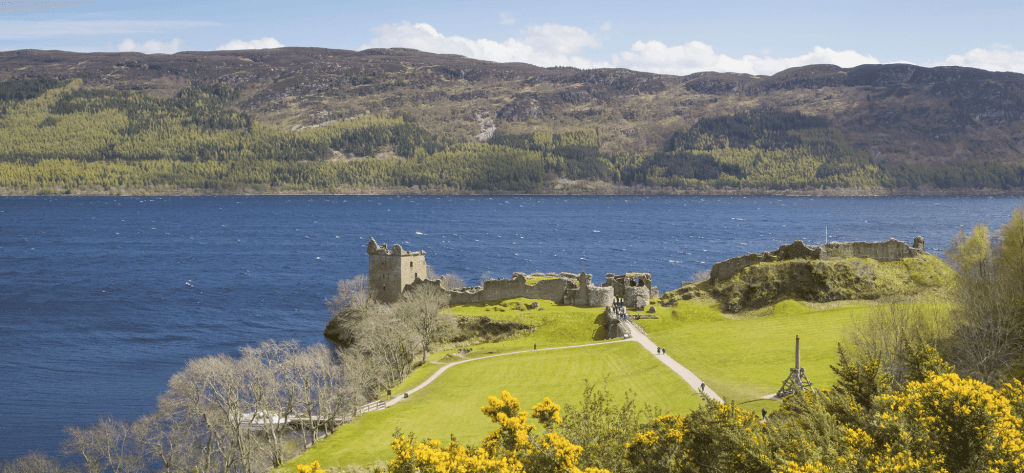
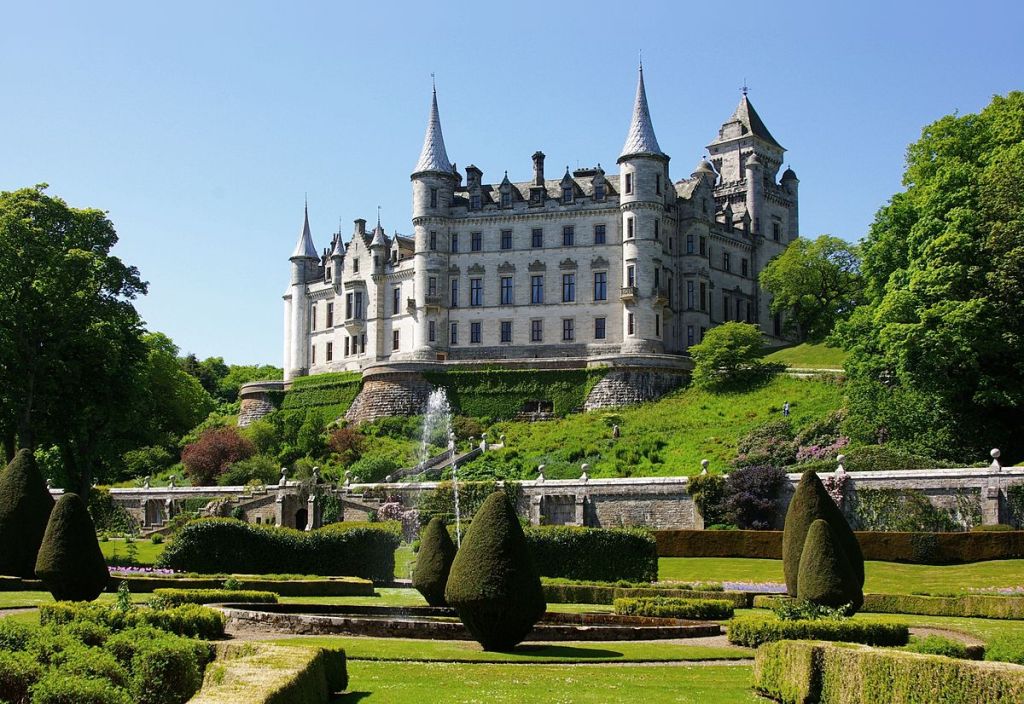
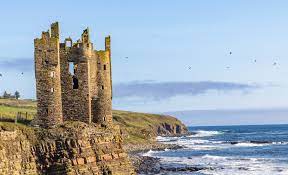
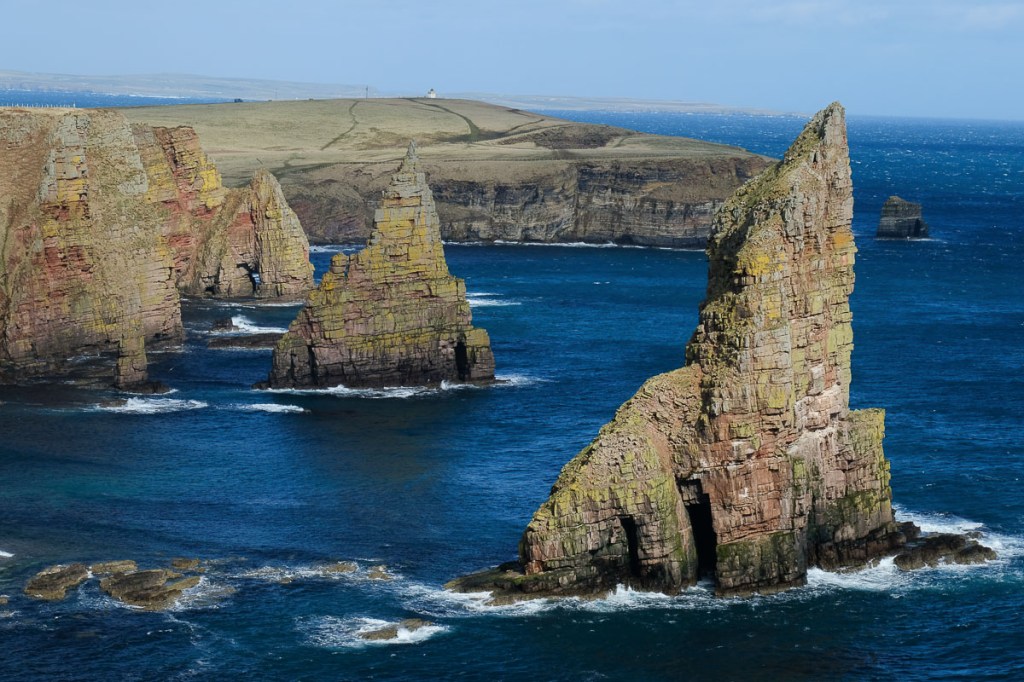
Highlights of LEJOG I’m looking forward to.




 Pilgrim's Progress - Long Distance Walks in Europe and the UK
Leave a reply to Life…One Big Adventure Cancel reply