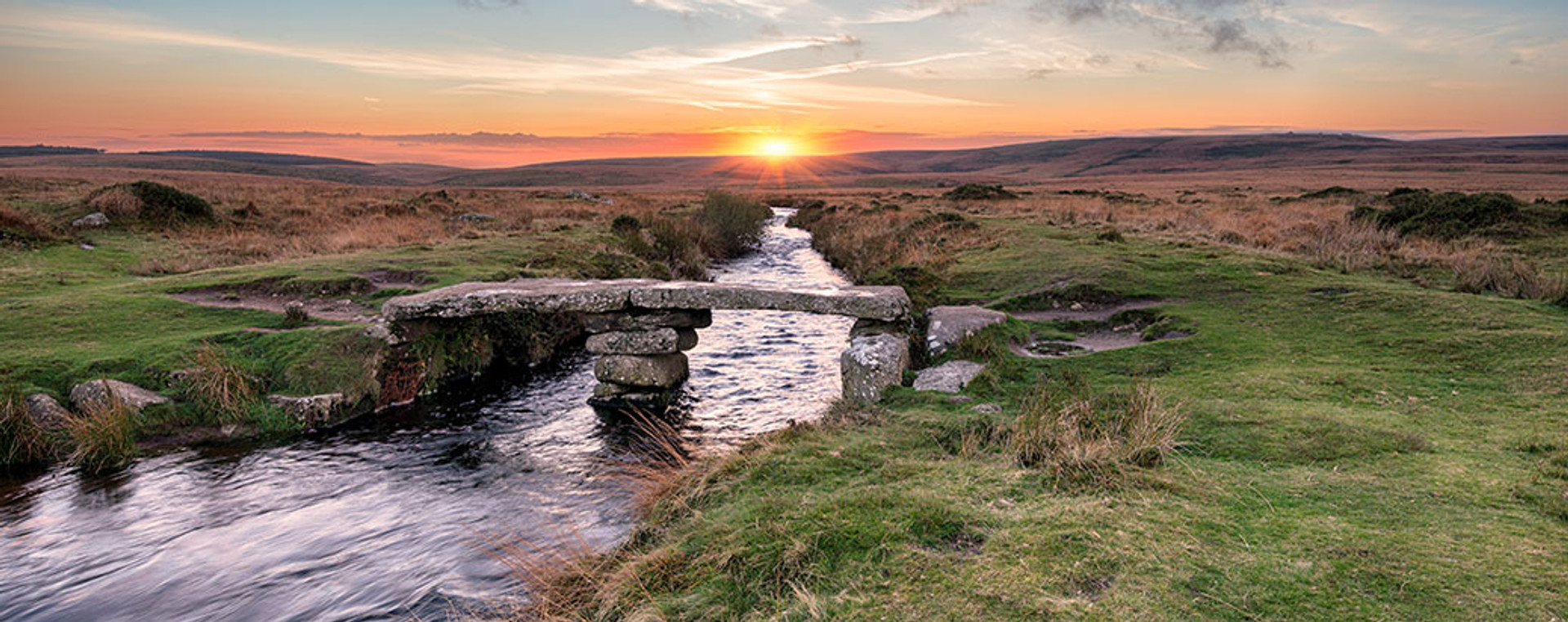
The magpies in Picardy
Are more than I can tell.
They flicker down the dusty roads
And cast a magic spell
On the men who march through Picardy,
Through Picardy to hell.
Magpies in Picardy -T.P. Cameron Wilson
It was raining when we left Péronne this morning. We didn’t hit the road until shortly after 10am, largely due to the fact that I’d ended up sleeping for 11 hours after feeling completely knackered after yesterday’s walk from Bapaume to Péronne. Maybe it was the marathon running equivalent of ‘hitting the wall’. The good news was that having suffered from a splitting headache for 12 hours, my mojo had returned this morning, probably partly due to the energy infusion from a couple of cups of strong coffee, a litre of orange juice and two pains au chocolat!

Thankfully the weather had improved sufficiently by mid morning for me to dispense with my wet weather gear.
Much of the morning was spent walking through woodland by the side of a disused railway line. The scenery wasn’t spectacular but at least we knew we were heading in the right direction.
Shortly before lunch we reached the village of Vraignes-en-Vermandois. It was more of a hamlet than a village but it boasted not one but two Picardy personalities of note who were both born in the village.
If you’d mentioned the word ‘Picardy’ a hundred years ago, then most people in Britain wouldn’t have any problem identifying its location. Mention Picardy nowadays and in all likelihood you’ll be met with blank incomprehension. The reason for the disparity can be summed up in a single phrase – The Great War.
Picardy, part of Hauts-de-France, is a historical region of northern France, stretching north from the suburbs of Paris and vineyards of Champagne to the beaches of the Bay of Somme on the English Channel. During the Great War it was the scene of some of the most devastating conflicts which involved British forces from Ypres to the Somme to Paschandaele. The word Picardy was etched into the British national psyche for the generation that took part in the Great War.
But apart from its association with the Great War conflict, how much do you know about the Picardy region. If you are visiting Arras and are offered a bottle of local beer called ‘Ch’ti’ what is the significance of it’s name?

Ch’ti , Chti or Chtimi , generally designates an inhabitant of the north of France. This onomatopoeic word appeared during the First World War, in reference to the Picard accent of the Northerners soldiers to say “c’est toi / ché ti” “c’est moi / ché mi” (“ ch’ti mi ”)
Nowadays, the best way to identify a local from the Picardy region is by how they pronounce certain words and in particular how they add Ch’ti and “ch” sounds to words that normally include ‘s’. Here are a few examples of the regional patois:
“Ça va” becomes “cha va” pronounced “sha va”. To make things even more complicated, words with “ch” in standard French, can have a ‘t’ added to them, like “tchien”. Even the basic tu and moi become “ti” and “mi” along with a huge glossary full of different words.
So what has Ch’ti got to do with the village of Vraignes-en-Vamandois, through which we passed today? The answer is that it’s 2 famous sons ( Hector Crinon and Raymond Beaucourt) wrote poetry in the Picardy patois that would now be described as Ch’ti.

Born in 1807, Hector Crinon is perhaps best known for his Picardy satires published in the 1850s. The two transcripts of one of his satires below illustrate the disparity between the Picardy dialect in which they were published and modern French.
Born in Vraignes-en-Vamandous in 1867, Raymond Beaucourt’s poetry extolled the simplicity of bucolic life in the same way as his famous predecessor Hector Crinon.
In the next village of Tertry we came across a strange looking playing field. At first I thought it must be where the village played pétanque.
Intrigued I went over to inspect the pitch more closely and discovered that it had nothing to do with pétanque and everything to do with a game called ‘ Longue Paume’
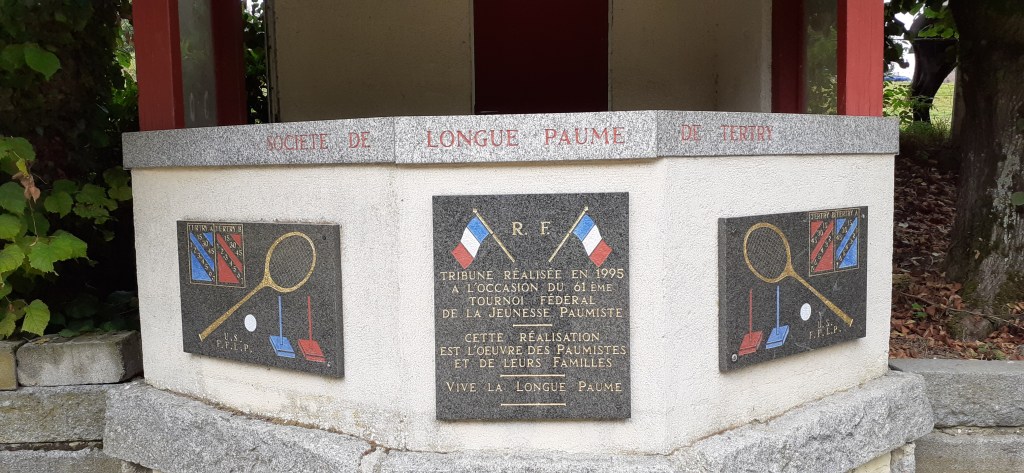
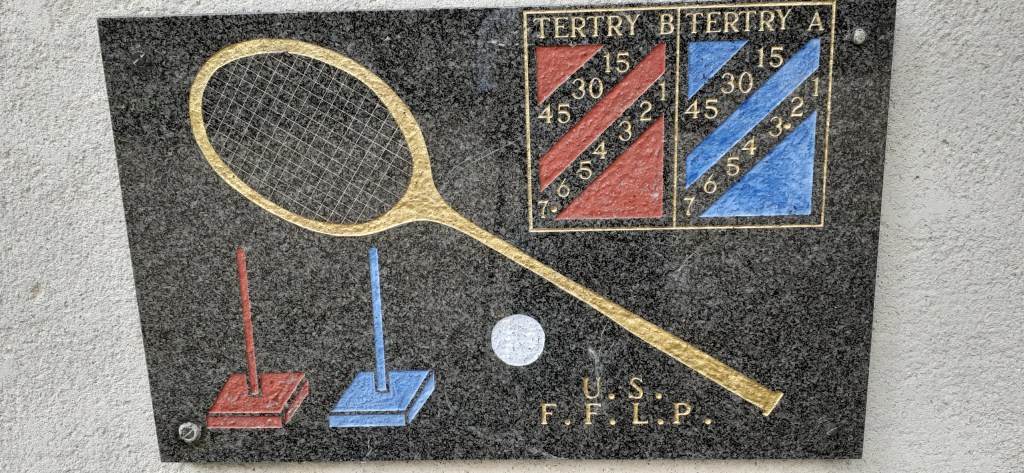
I must confess that I had never heard of Long Paume. I was even more surprised to learn that it featured at the 1900 Paris Olympics where the French team won the gold medal! Longue paume, or jeu de longue paume, is an outdoor version of jeu de paume, an ancestor of modern lawn tennis which the Kings of France were mad about. The game is way older than one might think too. It dates back to the 12th century and back then it was not played with rackets, but with the bare palm, hence the name: Jeu de paume means palm game. People played it everywhere – on the streets, on meadows, in gardens, on fields, in courtyards, before special areas for the game were created… and those were mostly indoors.
It quickly became a sport of the upper classes, who played in indoor salles du jeu de paume, either one against one or in teams of two. By then the game was not always played with the bare hand, but with leather gloves. Like today’s lawn tennis, the game consisted of sending a small ball, called an éteuf, from one side of the room to the other over a net or string. In contrast to the indoor version, the outdoor version, called longue paume, was played mostly by the lower-classes and without a net and by up to six people on each side.
The game became so popular among the French people, that rules were created towards the end of the 14th century to regulate not just how the game should be played, but who could play it and when they could play it. The common people were only allowed to play the game on Sundays in order not to harm business activities during the week. Needless to say, this regulation was completely ignored by most. A century later, clerics were forbidden from playing it at all because it detracted from their perceived aura of holiness! By the 15th century, only the nobility and royalty could play the game as and when they pleased. This was also the time, when the first versions of rackets entered the game. A few years later, the craze swept to England where it was called Real Tennis. At the start of the 17th century Paris had around 250 salles de jeu de paume.
Even the Kings of France became caught up in the craze for the game. Courts were built at most chateaux and royal residences during the 15th and 16th century. It became common practice for boys of the nobility to learn how to play from as early an age as possible because it was deemed to be good for their physical development and strategic thinking. Louis XIII learned the game as a child but preferred hunting. Nevertheless, he built indoor and outdoor courts at his hunting lodge at Versailles. The Sun King, Louis XIV, appears to have had minimal interest in the game which in turn led to a general decline in the popularity of the game in France.
As we were heading out of the village of Tertry towards Trefcon we bumped into Elfriede Coulerot who lived in the village and asked where we were heading. It transpired that she was virtually fluent in English having worked in the export department of a large local canned food company. We had a fascinating discussion about life in the village, her involvement in a local scrabble club for pensioners and the fact that her husband had known President Charles De Gaulle.

And so we headed on towards our final destination of Seraucourt-le-grand passing a number of varied hamlets en route.
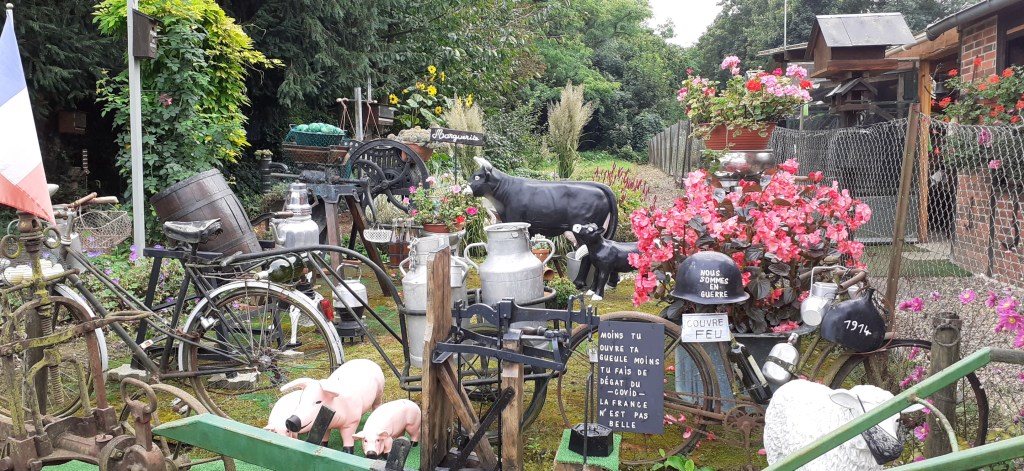
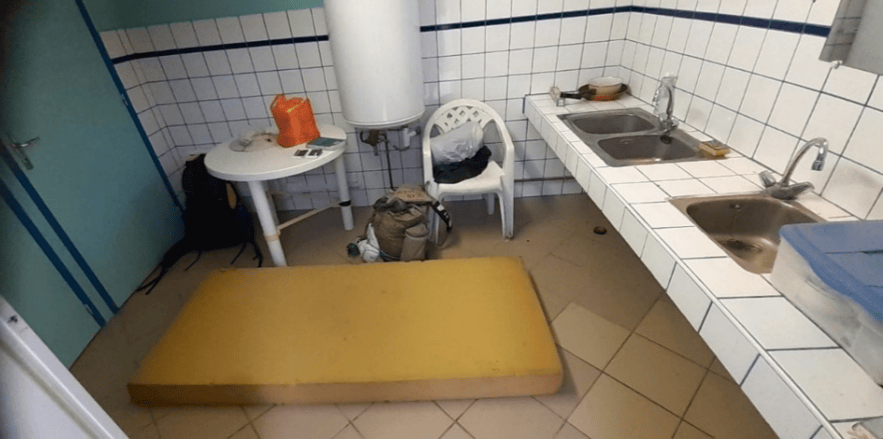
Our lodgings at Seraucourt-le-Grand can be charitably described as ‘basic’. In truth it’s more like the inside of a loo bloc than the Ritz but there is at least hot water, its dry and there is an electricity charge point which has enabled me to recharge my phone and post this blog!
As one of the signs outside a house we passed today aptly put it:
La vie est come un arc en ciel, il faut de la pluie et du soleil pour en voir les couleurs.


Leave a Reply