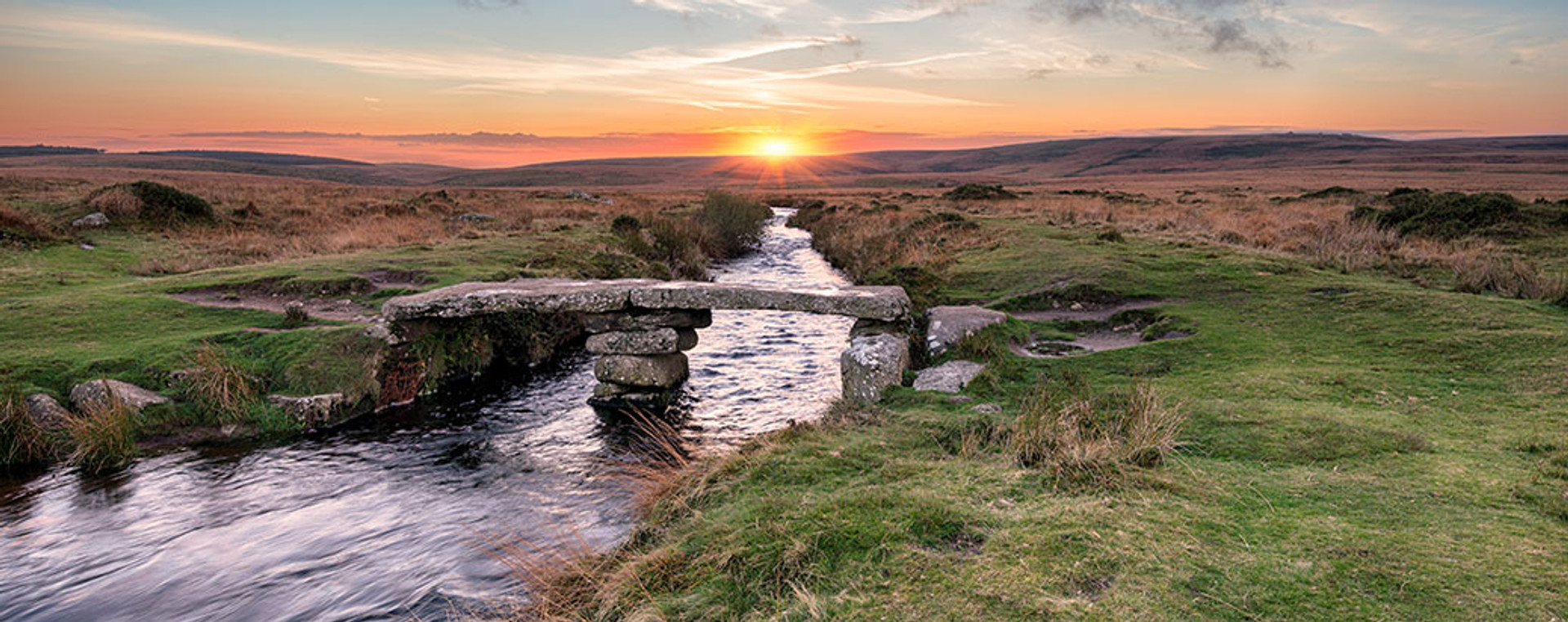
The pilgrim is humble and devout, and human, and charitable, and ready to smile and admire; therefore, he should comprehend the whole of his way, the people in it, and the hills and the clouds, and the habits of the various cities
Hilaire Belloc
One of the many treats of going on a 1,400-mile charity walk, is that it takes you out of your normal routine. Yesterday afternoon I unexpectedly bumped into a Bactrian camel and a flock of llamas on the way to Pitton. This morning found me sitting outside a tent in a caravan park cradling a mess tin brimming with spicy Korean ramyeon noodles, contemplating the day ahead!
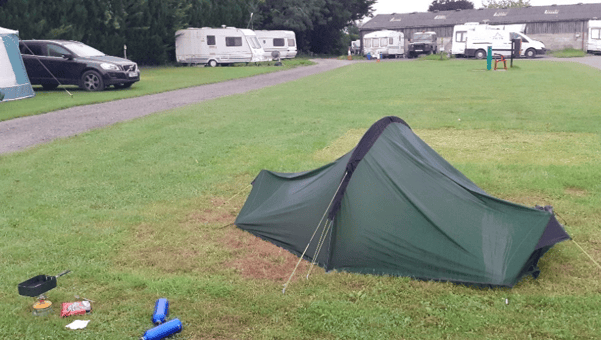
The morning didn’t get off to the best of starts when I emerged bleary eyed (a combine harvester had been active half the night in the adjoining field!) from my tent and headed over to the shower facilities which consisted of a couple of cubicles with a menacing looking nozzle jutting out from the wall above a rusty silver button. I optimistically pressed the latter and was met with a torrent of freezing water in my face! It was a rude wake up call I definitely didn’t need. I decided that a freezing shower at 6am in the morning wasn’t worth the risk of contracting double pneumonia and beat a hasty retreat back to my tent!
Spicy cheese ramyon noodles probably aren’t everybody’s idea of the perfect breakfast! I’ve been eating them on a regular basis for the last 30 years, from the time I was a research analyst based in South Korea, responsible for writing research reports on the company (Nongshim) that makes Shin Ramyon noodles. From eating them on freezing winter nights in Seoul with a bottle of the local hooch (soju) to serving them with Taimen to Mongolian nomads near the Russian border in Hovsgol province, I am a self confessed Shin Ramyon noodle addict. The good news is that you don’t have to buy them from South Korea by mail order anymore – even my local Tesco store in Amesbury stocks them nowadays!
There was a definite feeling that autumn was in the air as I headed out of Pitton under leaden skies. Olivia and I ate our first blackberries of the year on Sunday, harvested from a bush on a south facing wall in Laverstock.
Nowadays West Winterslow is a sleepy dormitory village, six miles northwest of Salisbury. It’s the sort of place where the residents put up road signs for elderly cats! 170 years ago, life was a lot grimmer. Much of the village was owned by St John’s College, Oxford. A newspaper article published in 1848 describes the poverty prevalent in the village which was badly affected by the Enclosures Act which deprived labourers of the right to work smallholdings and enjoy the use of common ground for cattle grazing and other agricultural pursuits. The article describes the exorbitant rents the villagers were forced to pay St John’s College and the miserable hovels in which they lived, some with the gables down, some without glass in the windows or doors. Inside one house, which didn’t have a proper front door, was a motherless family of six children rolling about on the floor in filth and rags. The house was the property of St John’s College, who exacted an annual rent of £4 from such a family living ‘like slaves’ in a hole and without any hope of ever having access to a decent education. Thankfully conditions in West Winterslow are significantly better nowadays!

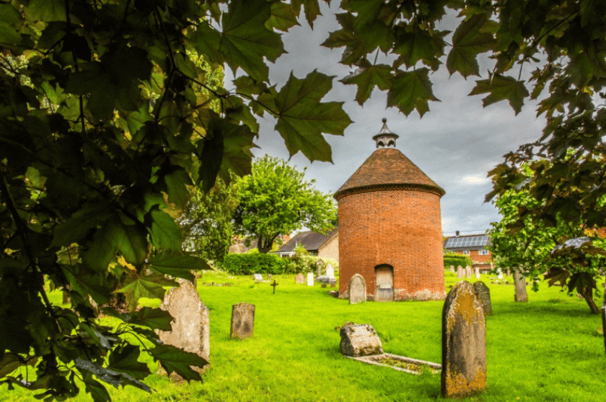
Neither the Church of All Saints at West Winterslow nor St Mary’s, Broughton were open for private worship this morning. Perhaps Covid restrictions were still in place. I couldn’t help admiring the dovecote in the churchyard of St Mary’s, the original of which was reputed to have been given to the church in the 14th century by King Richard III. In the Middle Ages dovecotes were a sign of social status as pigeons were a valuable source of meat, particularly in winter.
I met a lovely lady just outside Broughton walking her 3 dogs. She asked if I was walking far, and seemed quite taken aback when I replied that I was embarking on a 1,600 mile charity walk to Rome! “I wish I had some money on me”, she said, “because I’d really like to donate something to help”. The kindness of strangers never ceases to amaze me.
The Clarendon Way crosses the River Test at Houghton. Most walkers probably don’t attach much significance to this stretch of chalk stream. But if you are a dry fly fishing aficionado (as I am) then the words ” River Test” and ” Houghton” go together like champagne and caviar. The River Test is the country’s preeminent chalk stream and Houghton is the country’s pre-eminent fishing club.

Founded in 1823, the Houghton Fishing Club (HFC) is the oldest private fishing club in the world. The club has exclusive fishing rights to 13 miles of the River Test near Stockbridge. Money can’t buy you membership of the HFC. The current elected membership is restricted to 25, and includes the likes of Lord Tanlaw, Lord Tryon and the Duke of Northumberland. And the President of the club? Well that is none other than HRH Prince Charles for whom there is a changing area especially reserved. The 13 miles of fishing are valued at £600 a foot! It probably means that the trout that are caught on the Houghton beat of the Test are worth more than their weight in gold!
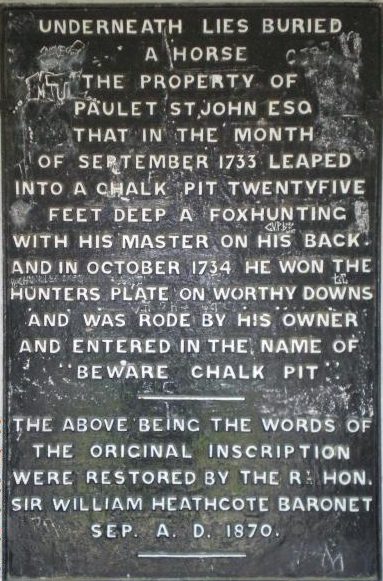
Farley Mount is the highest point in Hampshire but the major point of interest is not a trig point but a monument which is dedicated to a horse called ‘ Beware Chalk Pit’.

The impressive pagoda-like monument commemorates a horse owned by Paulet St John, the 3rd Earl of Bolingbroke which plunged into a chalk pit while its owner was out hunting in 1733. The horse and rider were survived their misadventure, and the following year the horse was entered in a race and given the name ‘ Beware Chalk Pit”. Needless to say Beware Chalk Pit carried his owner to victory and a memorial was erected in its honour by its grateful owner when the trusty steed died.
At around 4pm the sun finally came out from behind the clouds as I descended from Oliver’s Battery into Winchester. I dropped off at the Abbey of St Cross and was given a pilgrim’s dole – a mug of beer and a crust of bread. The Hospital of St Cross has maintained this tradition for helping wayfarers since their foundation in 1136. It’s also the origin of the term, ‘to be on the dole’.
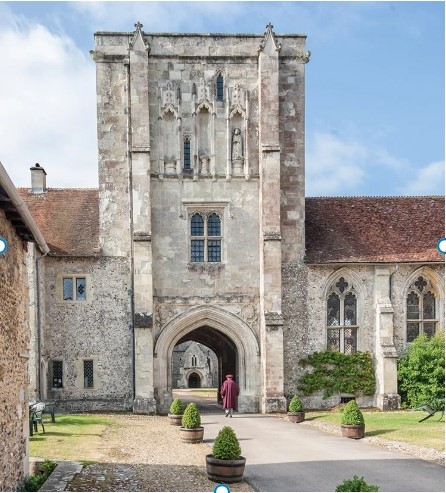
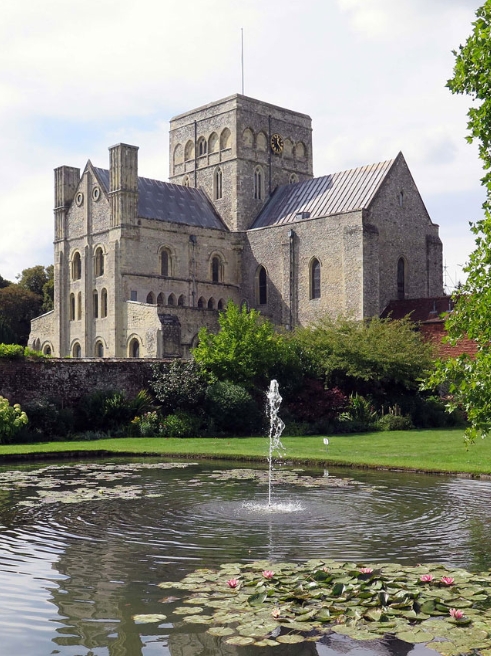
Bishop Henri de Blois was another fan of the riverside walk, and it’s thanks to him that the Hospital of ‘Santa Crux’ exists. Grandson of William the Conqueror and half-brother of the incumbent King Stephen, he was Bishop of Winchester for more than forty years (1129-1171), and there’s a legend about how the hospital was founded.
True or not, it’s certainly plausible that while the young, wealthy and powerful man of the cloth was walking through the water meadows, he was stopped by a young girl with a pail of milk on her head and a baby in her arms. No doubt, like the rest of her community, life was an uphill struggle, and so she seized the opportunity to plead for the Bishop’s help in providing food for those that needed it the most. She may not have realised it at the time (if the story’s true of course), but she must have had a profound effect on Henri because it is said that she reminded him of the Virgin Mary.
William Cowper wrote that ‘God moves in a mysterious way’ and that must have been the case when, after leaving the girl behind, the bishop happened upon the ruins of a religious house destroyed by the Danes – and it was there and then that he decided to set up a community to help the poor of Winchester. Work started on building the hospital in 1132 and was completed four years later, making it the oldest continuously running charitable institution in Britain. Henri de Blois died on the 8th of August 1171 and his body lies in Winchester Cathedral.
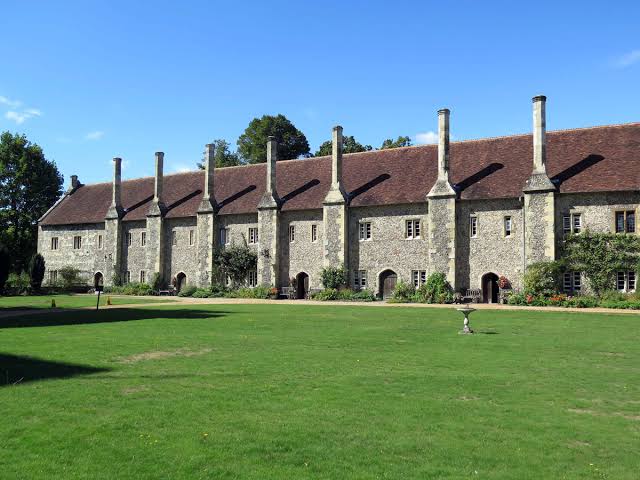
When the Brothers’ Quarters were constructed in the 15th century, the accommodation must have seemed quite luxurious to anyone lucky enough (or unlucky depending on which way you look at it) to be granted a home here. It might not seem quite like that nowadays, but the accommodation still includes a bedroom, kitchen, bathroom and sitting room, and they also have a small communal dining room and common room where they can watch TV. The accommodation caters for twenty-five Brothers, seventeen of whom are from the original foundation and eight from the Order of Noble Poverty. If you see any of them wandering around, you can tell them apart by their gowns: The original foundation’s Brothers wear a black gown associated with the Knights Hospitaller and has a silver cross attached to it, and those from the Order of Noble Poverty wear a red gown with a cardinal’s badge. There are worse places to spend one’s retirement I thought to myself wistfully!
From St Cross I walked along the banks of the River Itchen, (where as a boy at WinColl I spent far too much time trout fishing rather than studying!) towards Winchester College. Over 200 years ago, the poet John Keats had trodden the same path when he spent time in Winchester in 1819. It was his most productive year as a poet as he worked on ‘Lamia’, ‘Otho the Great’ and ‘Hyperion’. “The air is worth sixpence a pint” he told a friend. He took regular walks in the water meadows beside the Itchen and wrote his beautiful ode ‘To Autumn’ after walking through the meadows to St Cross. 2 years later he died of fever in Rome, almost 200 years ago to the day.
My final port of call for the day was the cloisters at Winchester College where I wanted to pay my respects to a school contemporary of mine called Christopher Gray, a brilliant student who became a priest after a distinguished academic career at Oxford. He had an annoying habit at school of winning pretty much every school prize that was on offer. After leaving Oxford he had become a priest and spent a year looking after handicapped people at the L’Arche community in France, where he discovered his flair for learning living languages – in addition to Latin, Greek and Hebrew, French and German he was fluent in at least 5 Slavic languages including Czech and Rumanian.
In 1992, after training for the priesthood at Mirfield in Yorkshire, he became a curate at St Jude’s Church, Cantril Farm, in Liverpool. Cantril Farm is a 1960s housing estate with one of the highest unemployment rates in England; the community there was under siege, with high levels of drug use, crime and violence.
Christopher knew the limits of a priest, but within those limits he exercised a sacrificial ministry, especially working with young people who had no connection with the Church. He did not see himself as doing the work of a social worker but felt strongly that the Church is responsible for giving meaning to the lives of those that present them to her.
His life was tragically cut short aged 32 in 1996 when he was savagely stabbed to death 5 times with ax5 inch knife outside his vicarage in Anfield, Liverpool by Peter Storey, a vagrant he had befriended and lent money to. Destined for great things, his life is commemorated with a simple Latin inscription in the college cloisters.

As a theologian, Christopher had written a number of pieces on the role of a priest one of which included the following strangely prophetic passage:
The supreme act of the shepherd is to lay down his life for the sheep . . . [Priests are called to be] people who grow to be like Christ in their faithful service of their flocks; even to the point of sacrificing their own lives.’

As I returned from the cloisters, I passed the school chapel and Chamber and Flint Courts, where both my father and myself had spent so much of our youth at WinColl. Ghosts from the past came flooding back, memories of attending daily morning chapel before heading round the corner for lessons in Flint Court.
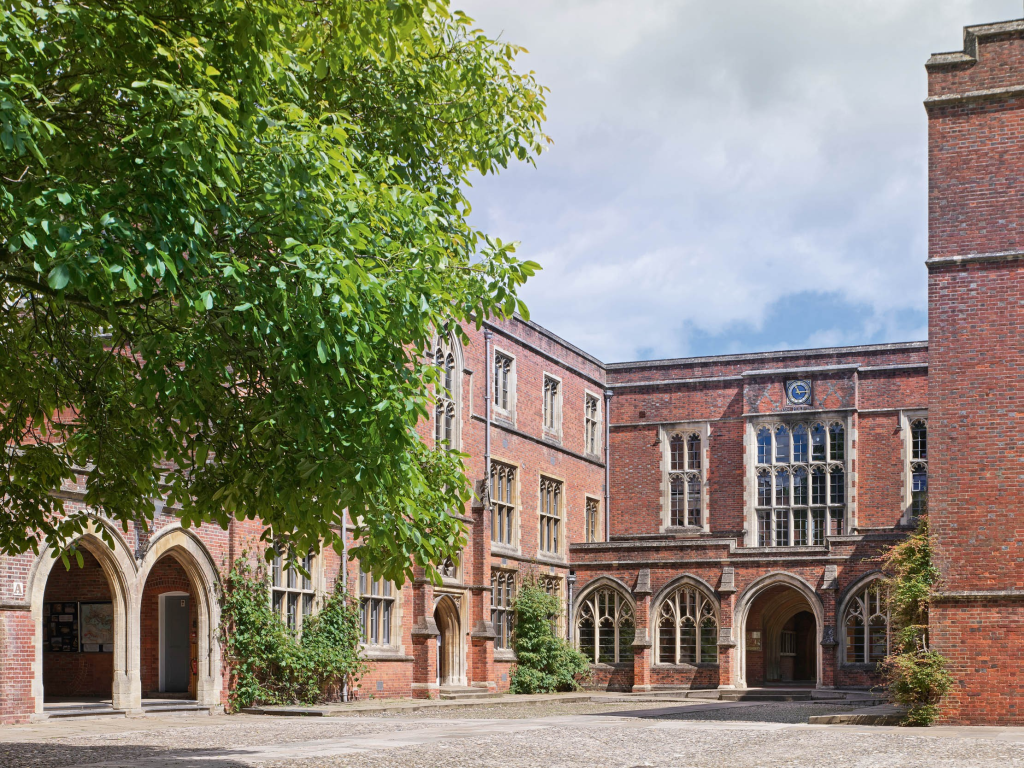
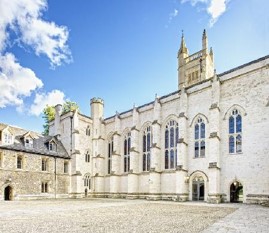
Winchester College has many claims to fame. It boasts the oldest classroom in England, dating from the time of the college’s foundation by William of Wykeham in 1382. Its has own unique language called ‘Notions’, some of which date back to Anglo-Saxon times! A game (Winchester Football) with unique rules which isn’t played anywhere outside the school. Alumni include a couple of British Prime Ministers (Henry Addington and Rishi Sunak) neither of whom lasted very long, some illustrious authors and poets including Keats, Arnold and Trollope, a member of the Goodies comedy group (Tim Brooke-Taylor), the English cricket captain Douglas Jardine who won the Ashes during the infamous Bodyline series in 1932/3 and the first English travel writer, Thomas Coryat. It’s the latter that I find particularly fascinating as I follow in his illustrious footsteps across France.
Born in the Somerset village of Odcombe in 1577 as the penniless son of a rural rector, Thomas Coryat attended Winchester College between 1596-9. After studying at Oxford, he became a court jester to Prince Henry, the son of King James I before setting off on his travels. The self-styled ‘Oddcombe Legge-Stretcher,’ author of the famous Coryat’s Crudities(1611) travelled to Venice and back in 1608, almost half of which he completed on foot. This was a feat he later repeated at much greater length (it took him five years) all the way to India, via Constantinople and Persia. During his travels he acquired Turkish, Arabic, Persian and Hindustani, and was deservedly honoured as something of a polyglot by the few Englishmen he encountered en route.
He is credited with having more or less invented what we now think of as ‘travel-writing’ (and also with single-handedly making popular the whole idea of what soon became the gentleman’s obligatory ‘Grand Tour’). On top of that he claimed to have brought both forks and umbrellas back to England for the first time (he was probably right about the umbrellas), earning the Latin nickname of ‘furcifer’ as a result. He was also greatly impressed by the Italian habit of using fans to cool themselves in summer.
Like many subsequent travel-writers he didn’t just record the people and places he came across; he also provided handy hints for those whom he fully expected to follow in his footsteps. He counsels us, for instance, against eating too many melons in Italy. Can we then think of him as providing the first ‘Rough Guide’ or ‘Lonely Planet’ manual, as well as blazing the trail for Hester Stanhope, Robert Byron, Gertrude Bell et al? Truly this was, for his contemporaries, ‘a Pandect . . . and a Universall Booke’ (John Donne). Thomas Coryat can claim to be the ‘first backpacker’: he travelled light and unlike many modern British travellers abroad, he was never afraid to sample the local cuisine. At one point on his travels, he tucked into a dish of frogs with relish! Thomas Coryat may not have had the profile of a typical Old Wykehamist, but he was very much somebody after my own heart!
With thoughts of Chris Gray and my father fresh in my mind, after checking in to the Wessex Mercure Hotel, I headed over to the Cathedral to attend Choral Evensong. Listening to the choir sing the final anthem ‘ The Lord is my Shepherd’ I couldn’t help but dwell on the life of Christopher Gray and the ultimate sacrifice he made for his religious beliefs.
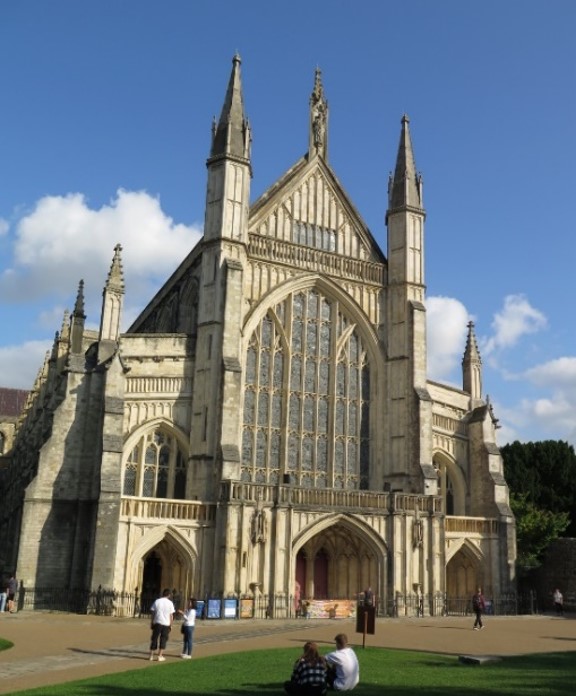
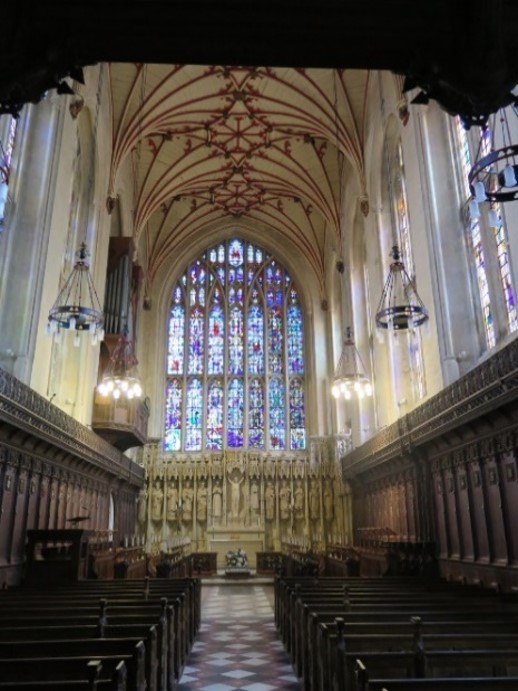
From spicy noodles to choral evensong in Winchester Cathedral. It really was a case of ‘ from the ridiculous to the sublime’ I thought to myself as I immersed my throbbing feet into the bath and dimly wondered what surprises tomorrow’s journey would bring.


Leave a Reply