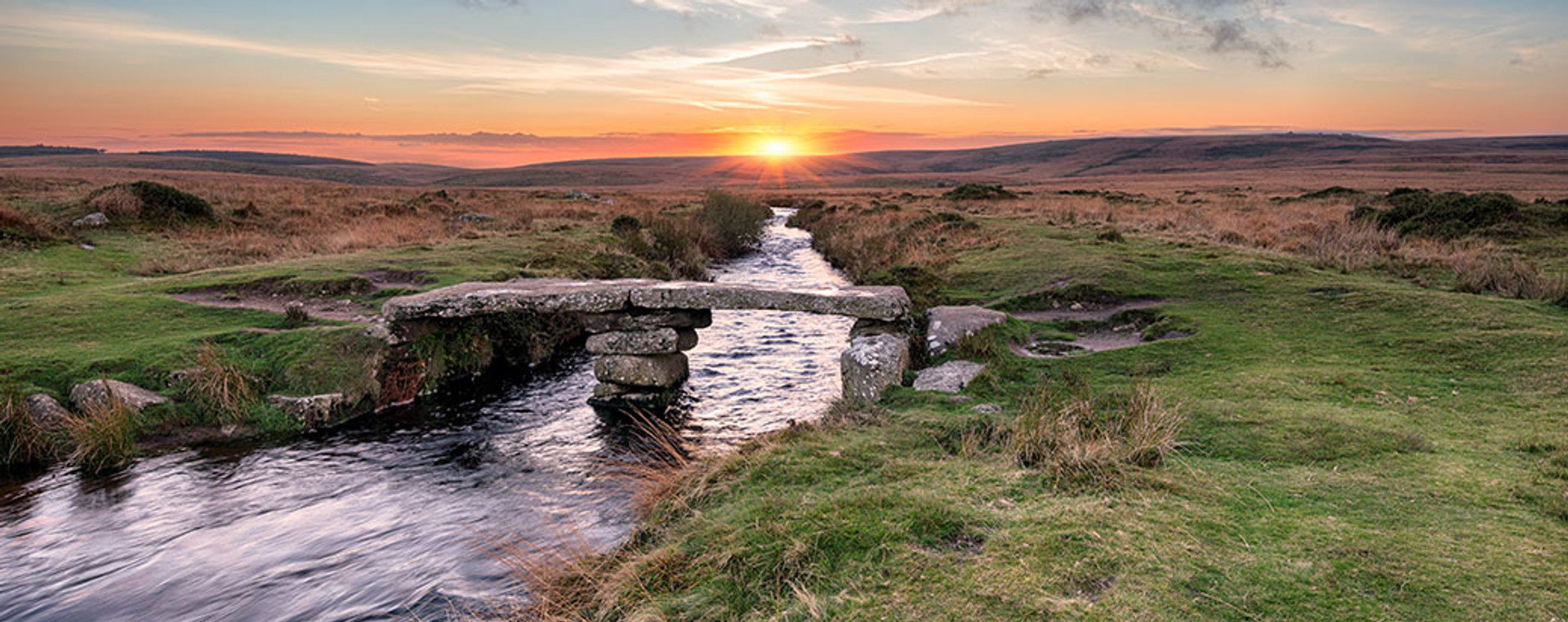
France is a paradise inhabited by people who believe they’re in hell
Sylvain Tesson – author of Sur les Chemins Noirs
Shortly after New Year, quite by chance, I bumped into a couple of old acquaintances, and faithful followers of this blog, in the Waitrose car park in Salisbury. After we had exchanged New Year greetings they asked me a simple question. Jonathan, where’s your next walk? It was a very good question, and one to which I had no ready reply.

In 2010, British Prime Minister, David Cameron and other leading politicians of the time, were asked what their favourite children’s book was. Nick Clegg chose Julia Donaldson’s The Gruffalo, while David Cameron chose Our Island Story by H.E.Marshall. “When I was younger, I particularly enjoyed Our Island Story by Henrietta Elizabeth Marshall,” Mr Cameron said.“It is written in a way that really captured my imagination and which nurtured my interest in the history of our great nation.”
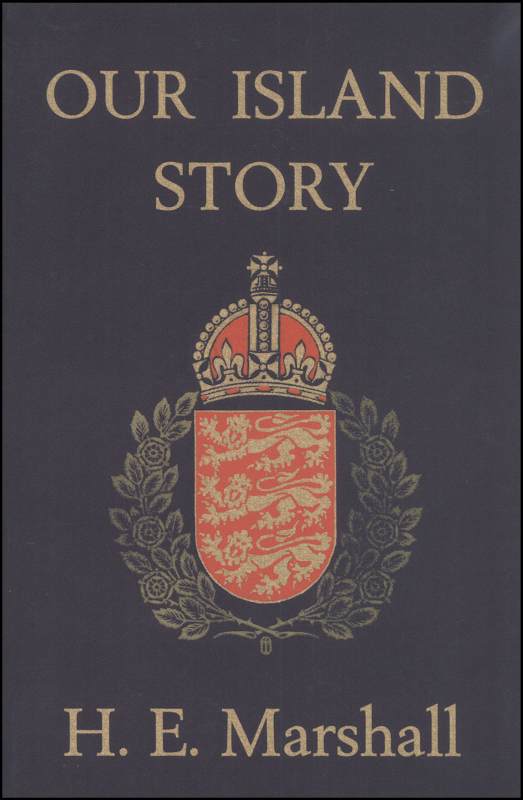
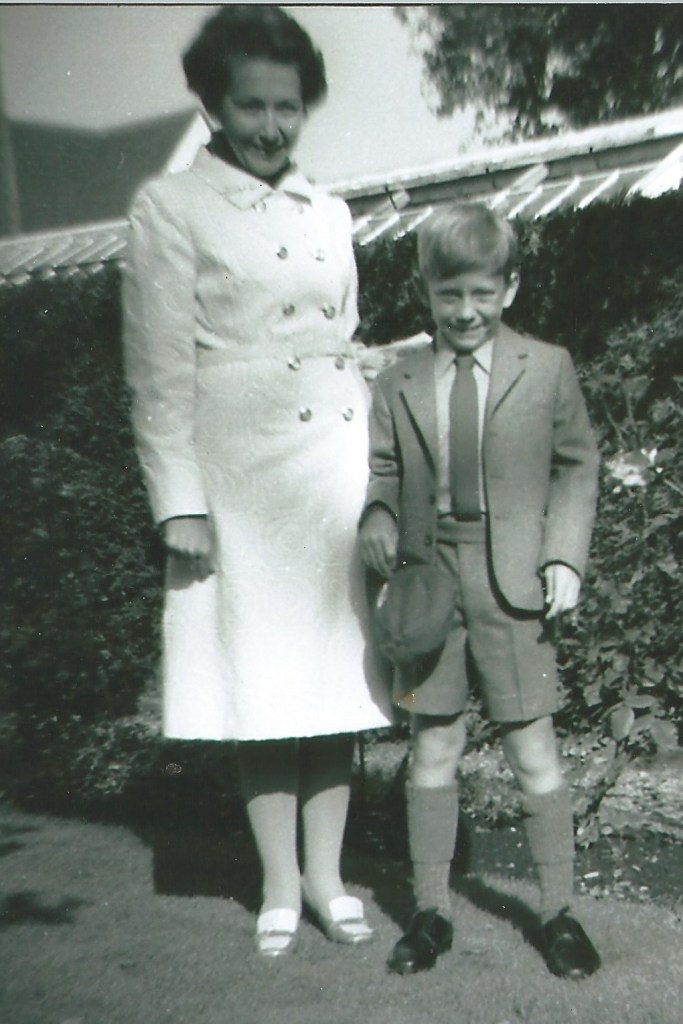
David Cameron’s choice struck a chord with me. As a seven year old I remember being taken up to London by my mother. First stop was Harrods to buy name tapes for the boarding school I was being packed off to in the autumn. Second stop was a trip around the British Museum. Third stop was a visit to Foyles in Charing Cross Road where I was allowed to “choose” three books. The first was a voluminous history of Ancient Greece. The second was an equally weighty history of Ancient Rome and the third was H.E. Marshall’s Our Island Story, a children’s history of the British Isles from Caesar’s Invasion in 55BC to the death of Queen Victoria.
First published in 1905 by an Australian author called Henrietta Marshall, Our Island Story went on to become a children’s classic for the best part of a century. The keynote of Our Island Story is an enthusiasm for the rights and freedoms of the people at the expense of those cast by Marshall as their oppressors. Kings who fail to do right by their subjects are forthrightly condemned. William the Conqueror, John and Charles I all duly receive black marks. Alfred, by contrast, is hailed as “England’s Darling”, less for his achievement in defeating the Danes than because “he did away with the laws which he thought were bad, and made others”.
Marshall is even keener on rebels. Boudicca is praised for teaching the Romans that “the women of Britain were as brave and as wise as the men, and quite as difficult to conquer”, and Wat Tyler for starting a rebellion that was “the beginning of freedom for the lower classes in England.”
I certainly lapped it all up and by the time I arrived at my prep school in the autumn, as well as being fully up to speed on The rape of the Sabine Women, the defence of the Tarpeian Rock by a flock of geese, most of the Greek myths and the chronology of the Trojan Wars, I had a pretty good basic grasp of British History from the arrival of Julius Caesar to the death of Queen Victoria!
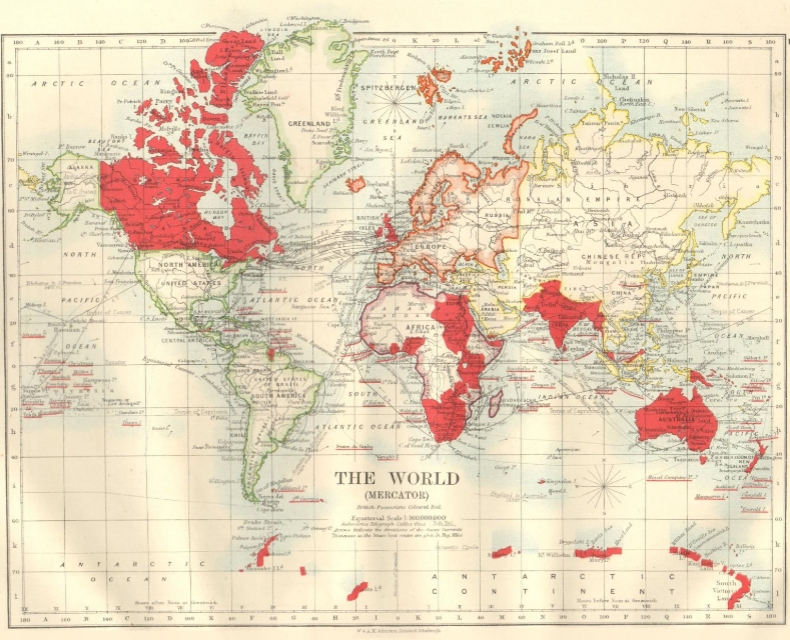
It was also gratifying to learn that Henrietta Marshall’s history of Britain was replicated almost exactly at my boarding school over the following five years, albeit with a few more details thrown in about stuff like the Black Death, the Wars of the Roses and Industrial Revolution. However, growing up in the 1970s, one thing that did strike me as slightly incongruous was how to reconcile the impressive 1920s map of the British Empire in all it’s glory(with Imperial possessions marked in red) which hung on the classroom wall where Geography was taught with the fact that at school we constantly seemed to be plagued with power cuts linked to nationwide industrial unrest. Something didn’t quite seem to add up!
That’s all well and good, I hear you say, but what, if anything, has this rather rambling blog got to do with rambling plans in 2026? Well the answer is quite simple. It’s called my knowledge of French history or rather the lack thereof. Despite having lived in France for the last three years and done an undergraduate degree in modern history,my knowledge of French history is embarrassingly poor. This was brought home to me back home in France one evening after my visit to the UK at Christmas. Testing my knowledge of French history by trying to answer 300 questions, it became painfully obvious that there are huge gaps in my knowledge of France and French history. If only Foyles had stocked children’s books about French history in the early 70s….

Vis a vis popular myths about Anglo-French history it’s often stated that the Duke of Wellington claimed that the Battle of Waterloo was won on the playing fields of Eton. Irrespective of the fact that recent historic research suggests that the Napoleonic Wars were won by the gold smuggling endeavours of the Rothschild family, it’s worth highlighting the fact that one of Eton’s recent headmasters, Robert Birley, has poured cold water on this myth based on his research which has traced the words back to Montalembert’s De l’Avenir Politique de I’Angleterre, published in 1855. According to Count Montalembert, the Duke of Wellington, returning to Eton in his old age, exclaimed: “It is here that the battle of Waterloo was won.” Obviously the playing fields had been tucked in later.
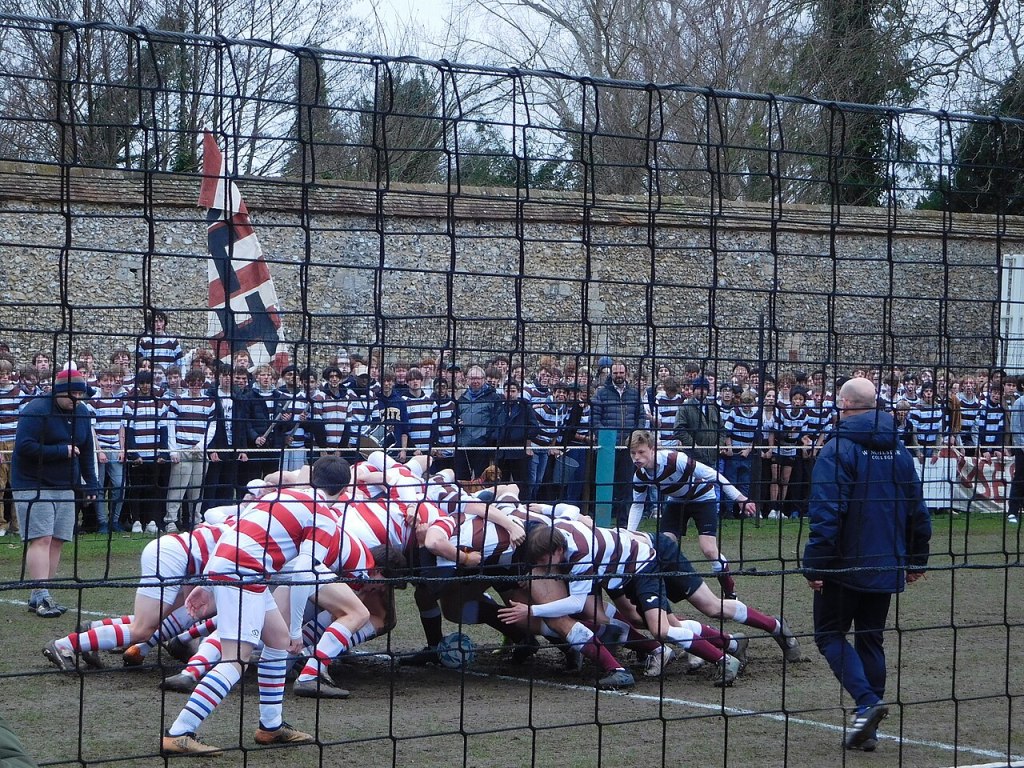
Triumphantly, the seventh Duke of Wellington wrote another letter to the Times last week: “The only authority for attributing the phrase to Wellington is a Frenchman writing three years after the Duke’s death . . . Wellington’s career at Eton was short and inglorious and . . . he had no particular affection for the place.” As for the words themselves, “to any one who knows his turn of phrase, they ring entirely false. It is therefore much to be hoped that speakers will discontinue using them either, as is generally the case, in order to point out their snobbishness … or else to show that Wellington was in favor of organized games, an assumption which is entirely unwarranted.”
In the days after the unexpected encounter in the Waitrose car park in Salisbury, I had been mulling over what walks to undertake in 2026. The Salt Path maybe? Following in the footsteps of Raynor Winn along the 630mile South West Coast Path?
At this point I do have to make a guilty confession. After the Salt Path Scandal expose appeared in hte Observer last July, I contacted the journalist (Chloe Hadjimatheou) and spent much of the subsequent 9 months assisting her uncovering the truth about this sorry saga. Such was my obsession with uncovering the truth that shortly before Christmas I flew back to the UK to be interviewed with Chloe for nearly 10 hours in the offices of the Observer newspaper as part of the Sky docudrama that was released in December 2025.

Sadly my contribution didn’t make the final cut! But if you are interested in learning more about the skulduggery surrounding The Salt Path that makes it one of the worst literary scandals of the 21st century, then I can warmly recommend episode two of Chloe Hadjimatheou’s podcast, (the real Salt Path) where I make a cameo appearance…
On the path | The Walkers Ep2 – The Walkers: The real Salt Path | Acast
In addition to Chloe Hadjimatheou’s podcast, there is also a podcast about the Salt Path Scandal available on the BBC.
How about continuing my half completed walk to Rome along the Via Francigena from Bourg St Pierre in the French Alps from where I finished up in October 2021? The Apennines, Tuscany, jewels of the Italian Renaissance such as Siena, Lucca and Rome not to mention Italian cuisine were all tempting. What about walking from Land’s End to John O’Groats? That’s another long distance walk I’ve always dreamed of doing?
But in the end I decided that none of these walks would satisfy the huge gaps in my knowledge of France, French culture and French history. I had to do something way more ambitious than embarking on another short walk. I needed a real challenge, something that would fill the gaps left in the fifty five years since first reading Our Island Story as a seven year old.
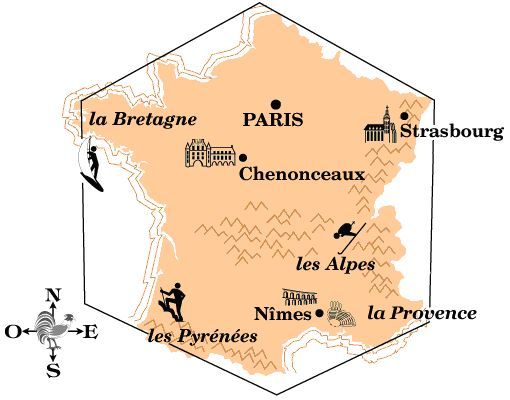
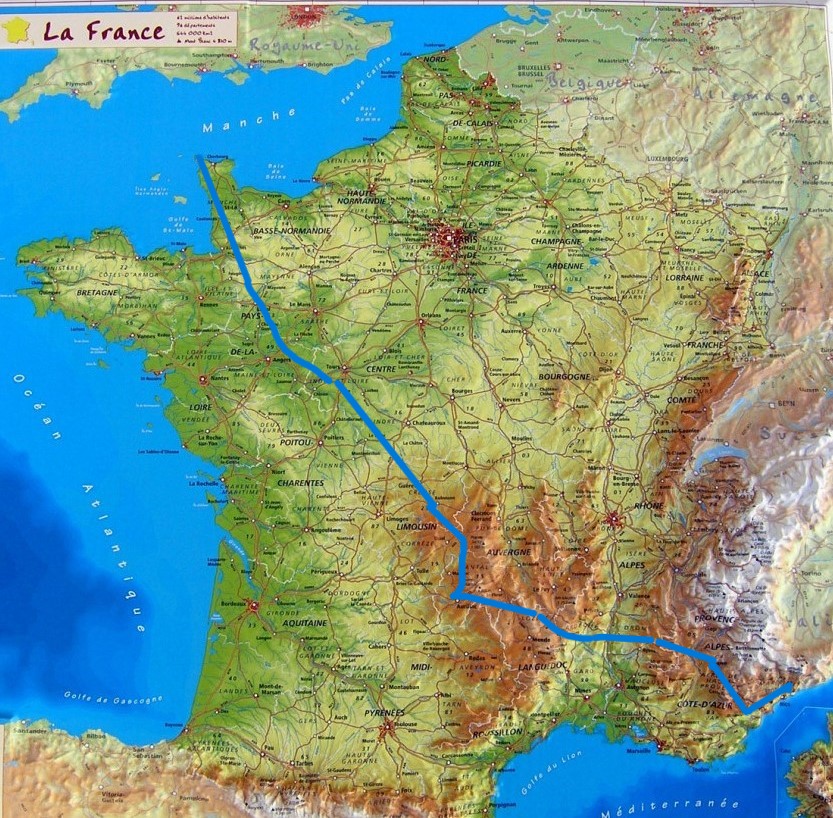
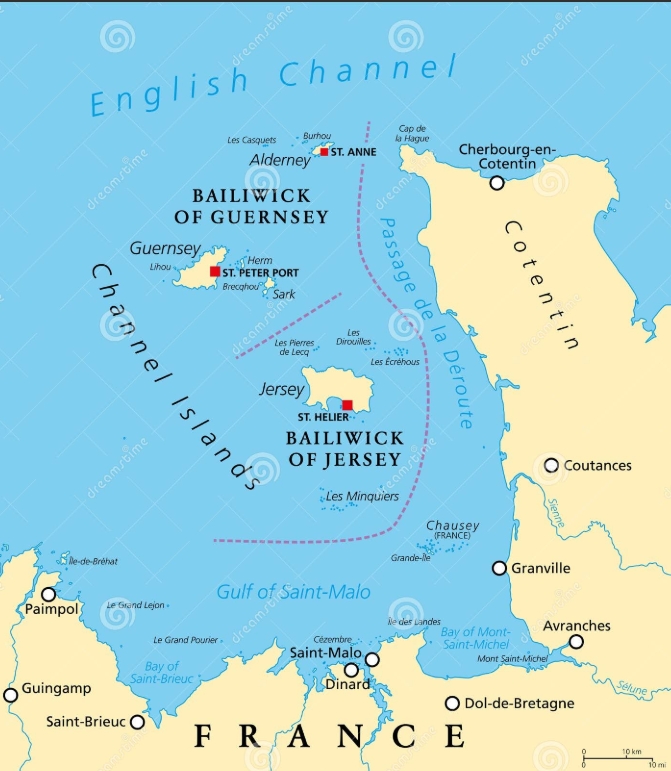
So what exactly is my cunning/bonkers plan? Well in a nutshell it is to walk from coast to coast crossing the Hexagon* from Menton on the Mediterranean to Mont-Saint-Michel on the Atlantic coast and then continue north along the coast to Normandy until I reach the French equivalent of Land’s End, a rocky promontory called Cap de la Hague. Menton happens to be the home of the best lemons in France and Nez Bayard lies around 10 miles west of the Island of Alderney, or as the French call it, the Isle of Aurigny. In between these two points on the map are 2,000km of some of the most remote and uninhabited parts of France. In terms of distance, it’s the French equivalent of walking from Land’s end to John O’Groats and, as far as I can ascertain, nobody from the UK has been mad enough to undertake it – yet…Easy peasy, lemon squeezy, as the old saying goes!
(* The Hexagon: France is often affectionately known as the Hexagon due to the six sided shape of mainland France)
As far as I know nobody from the UK has ever completed such a walk although a couple of Frenchman including the author Sylvain Tesson, did complete it about a decade ago and wrote about it in a book called Sur les Chemins Noirs.
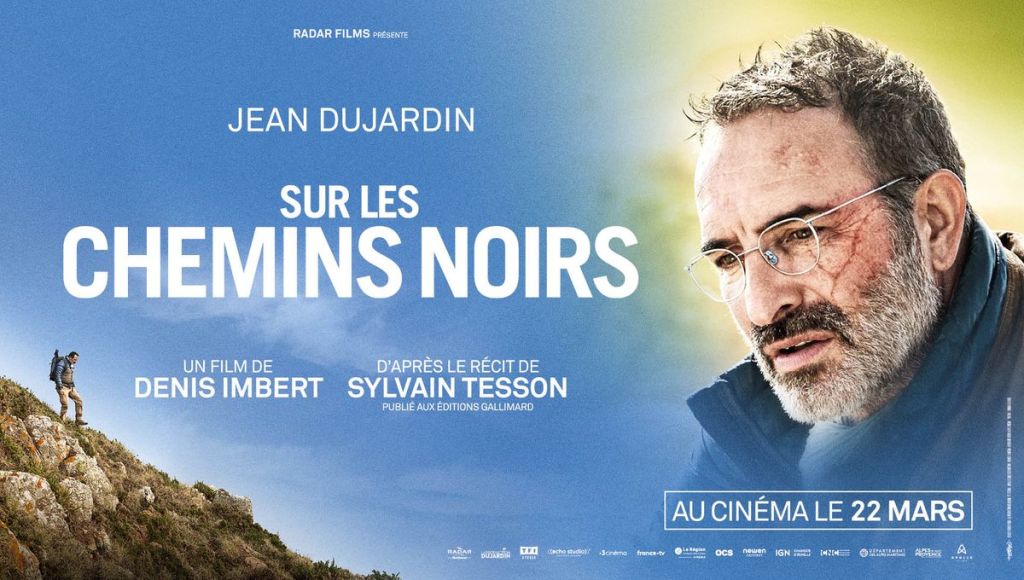
I’ll be following in the footsteps of Sylvain Tesson although at the moment, I’m not planning to take an umbrella with me. Maybe I should!
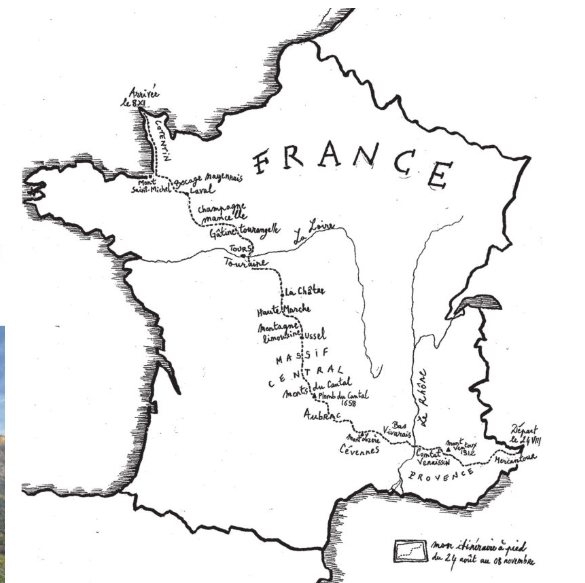
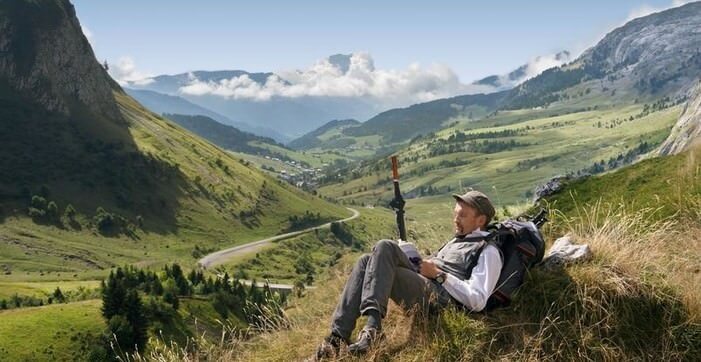
Quite apart from the physical challenge of such an endeavour, one of the immediate issues is how to plan such a long walk. All of my planned walk will follow existing French long distance footpaths (grande randonees) and will be signposted. So hopefully I won’t be floundering around with a compass in the back of beyond wondering how to get from A to B. However, not surprisingly there aren’t any guidebooks that cover all of the route that I am planning to walk. Yes there are admirable topoguides for sections of some of the footpaths including the GR4, which runs 1,500 km from the Mediterranean to the Atlantic. However, some of the route, including the section from Tours to Mont-Saint-Michel which follows an ancient pilgrim route, aren’t covered in any current guidebooks. So research will be required over the next few months as I try to unearth places to stay each night without having to spend any more time than is necessary under canvas!
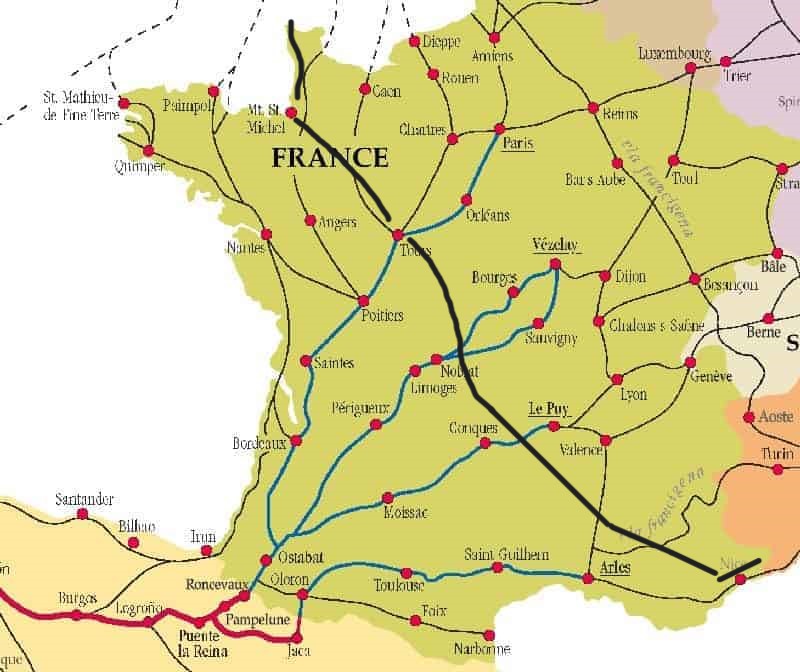
Although it is in a sense my French pilgrimage I’ll only be following established pilgrim routes for around 350km of the total 2,000km walk. The majority of the walk will be on existing French long distance footpaths.
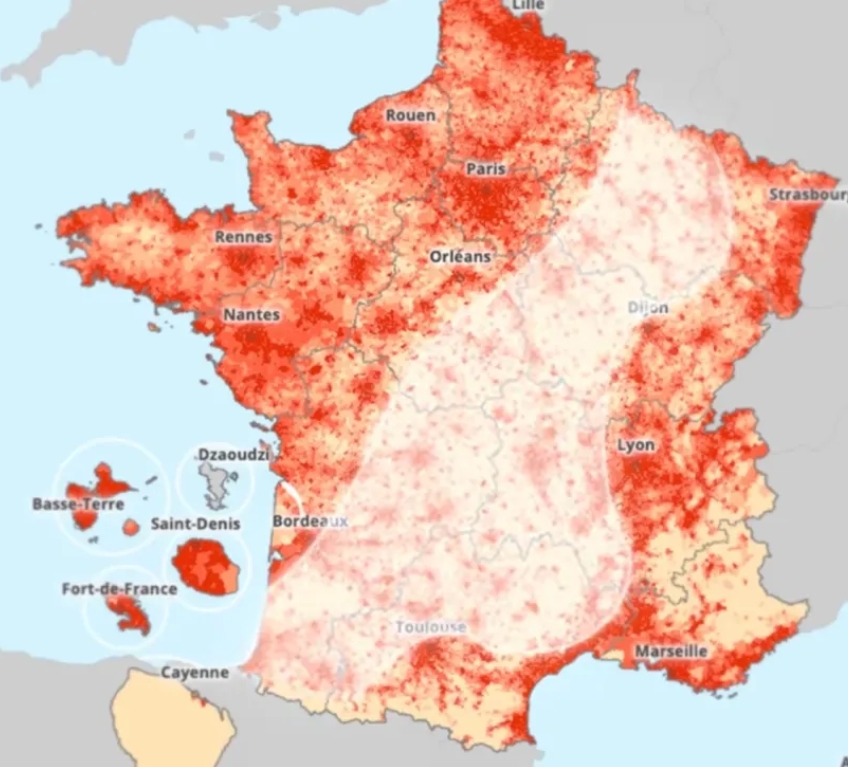
My route will cross what in France is called the diagonale du vide, an area comprising 42% of mainland France but holding just 7% of its population. I guess you could call it France’s empty quarter! Apart from Menton, Tours, Le Mans and Mayenne, my walk won’t take me through any town with a population of over 10,000 people. From what I’ve read, none of the long distance footpaths are particularly well frequented by other walkers, so it looks like I’m going to have to get used to spending a lot of time in my own company!
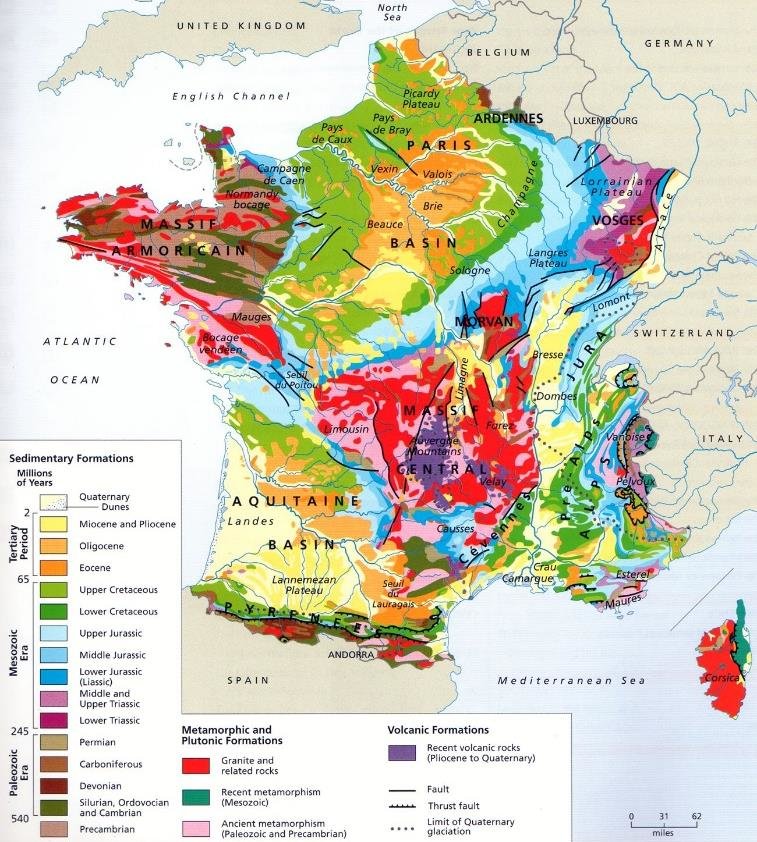
I’ll be crossing a a geological time capsule with rock formations stretching from the pre Cambrian to modern times!
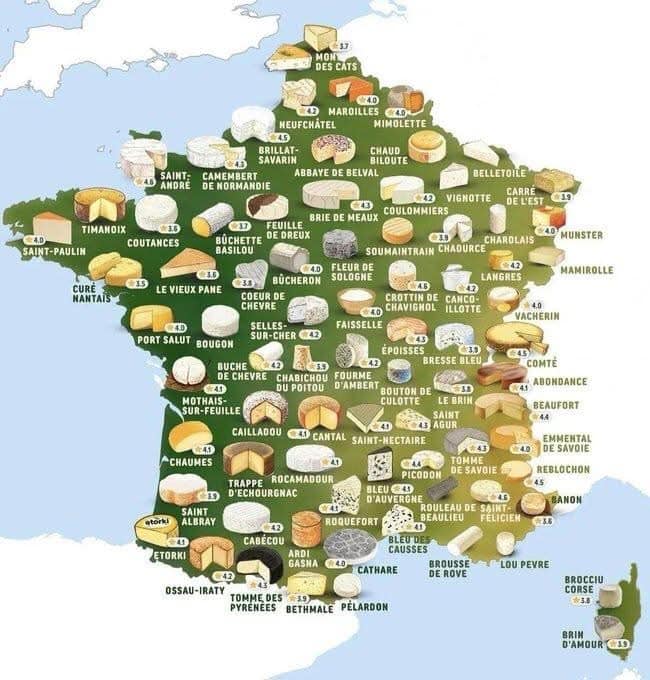
As well as the geology, I’m looking forward to the gastronomic journey ahead, particularly the cheeses available en route!
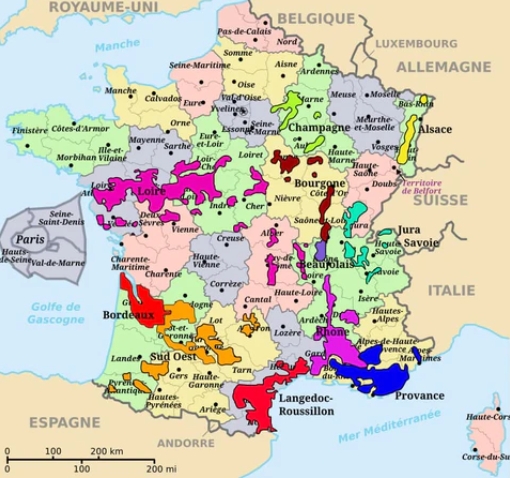
Doubtless some wine will also be consumed on the walk!
There is no French long distance walking challenge that is the equivalent of walking from Land’s End to John O’Groats (aka LEJOG). But if there was, I think that the walk from Menton to Cap le Hague would a pretty good comparison. At 2,000km/1,200 miles it’s roughly the same distance and there are stretches such as the Cotentin coast (South West Coast Path) and the crossing of the Massifs Centrals (Pennine Way) which are quite similar to sections of LEJOG.
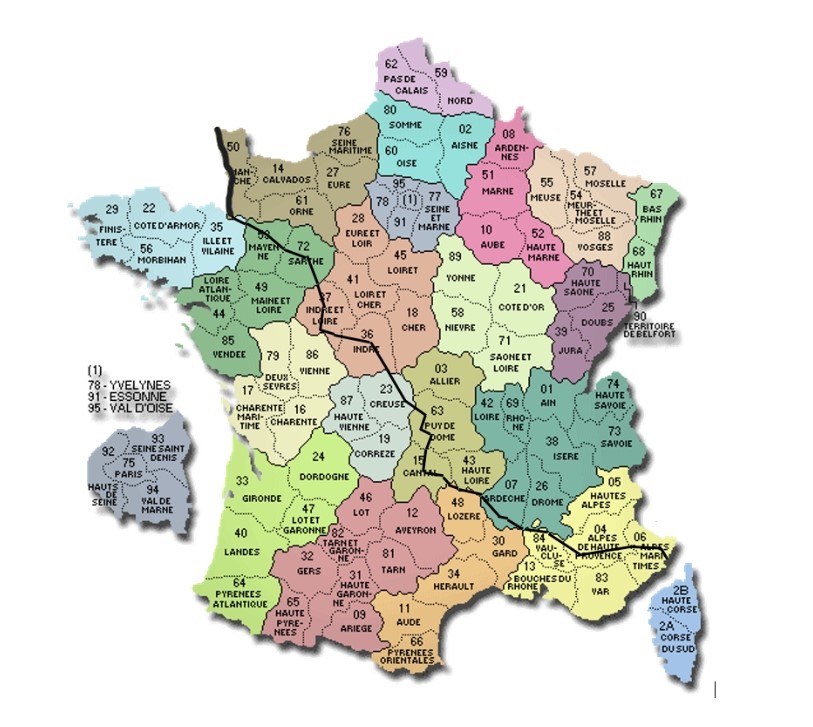
How long will the whole walk take? Well,based on my last coast to coast walk (The 163km Two Moors Way in Devon) which I completed over the August Bank Holiday weekend in 2022, the walk should take me just over a month! Hmm, realistically maybe a bit longer than that. It took Pierre Herant 73 days to walk from Nice to Mont-Saint-Michel in 2017 but he was a few years older than me.
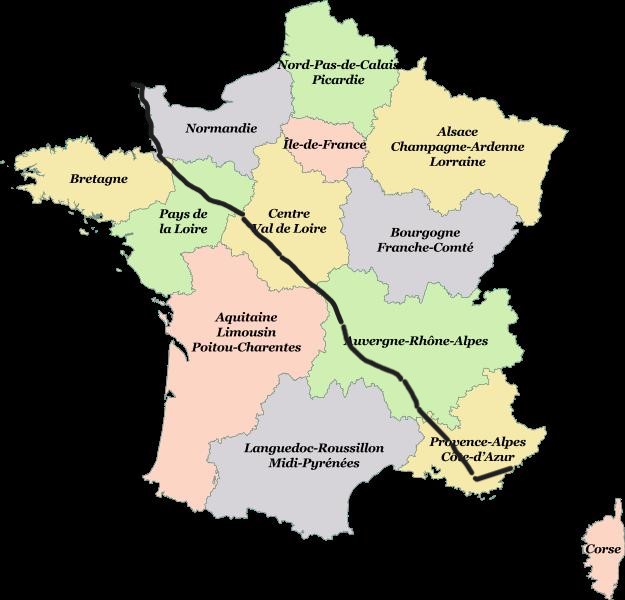
Realistically I’ll have to break the walk into manageable chunks rather than attempting it all in one go. Who knows how long it will take me to complete, maybe a couple of years.
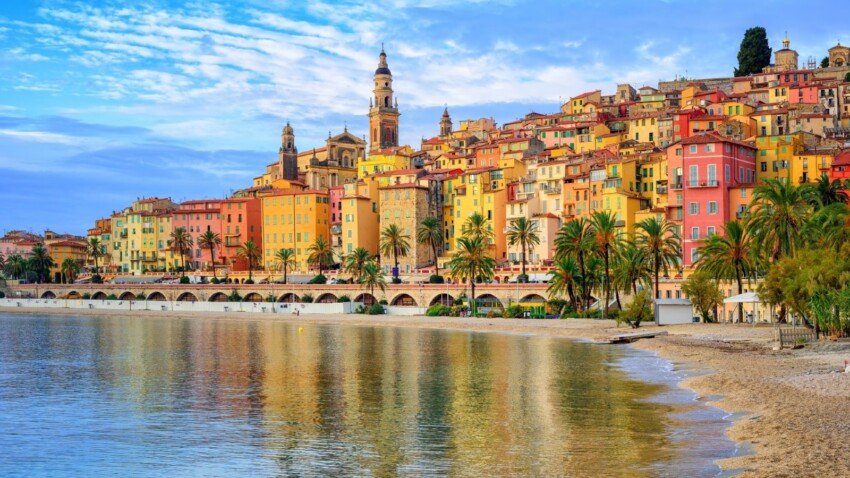
Highlights of the 2,000km route are too numerous to mention but include the following:
Menton – home to France’s best lemons, host to an annual lemon festival and the place where New Zealand novelist Katherine Mansfield lived for a year in the 1920s, describing the town as “a lovely little town, small and unreal, full of a colour and movement that make you continually happy”. Menton’s 316 cloudless days a year work wonders for novelists and lemon growers!
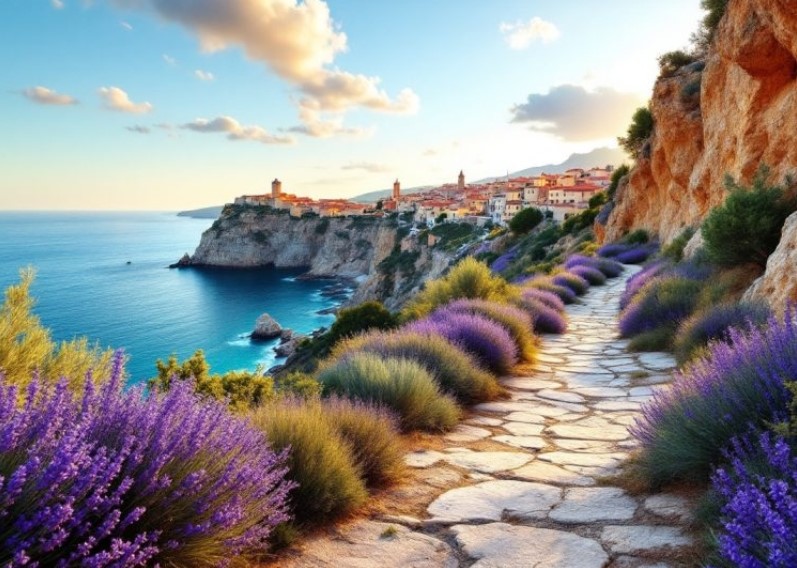
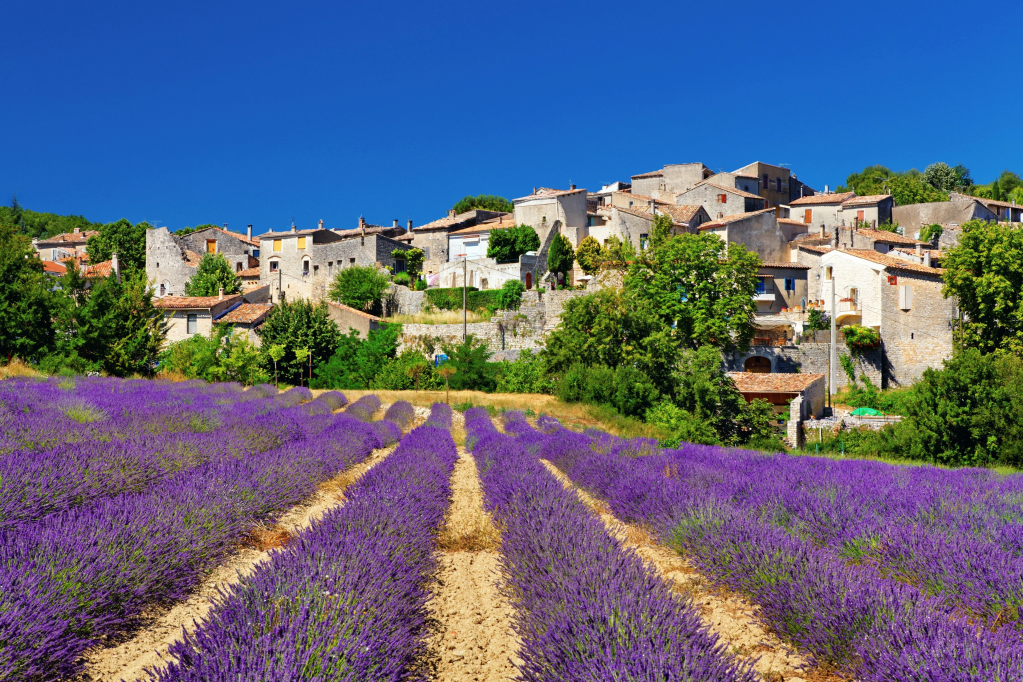
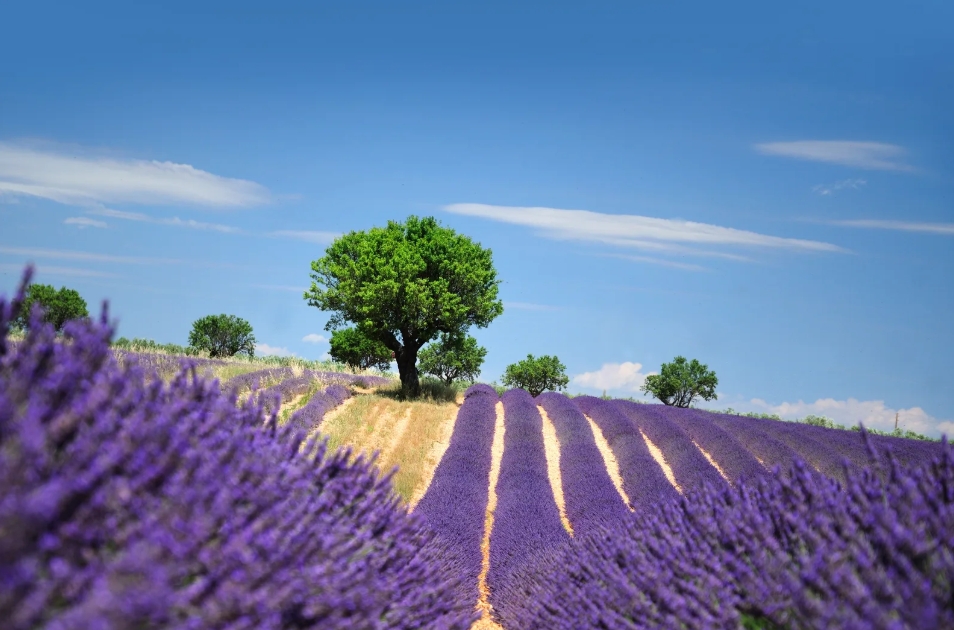
The GR653 (Via Aurelia): This pilgrim path connects the Calanques National Park, the Esterel Massif, and the charming hilltop villages of the French Riviera. Hikers discover architectural treasures, from Romanesque chapels to Provençal country houses, as well as the remains of fortifications, olive oil mills, and former vineyards. The Mediterranean climate fosters lush vegetation such as olive trees, lavender, cork oaks, rosemary, and thyme. As it winds along the coast, the route offers stunning views of the Mediterranean Sea with its limestone cliffs, secluded coves, and sun kissed beaches.
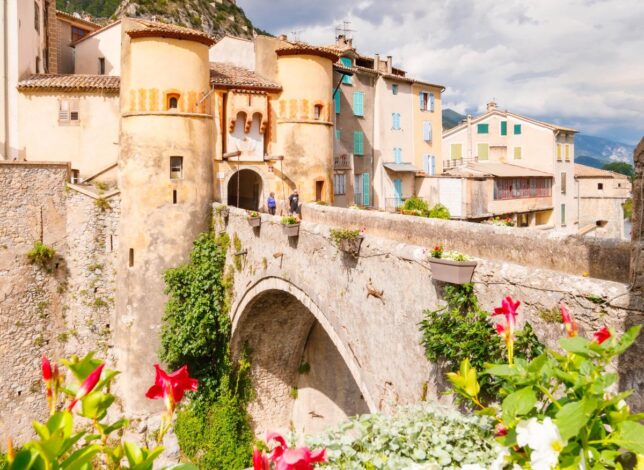
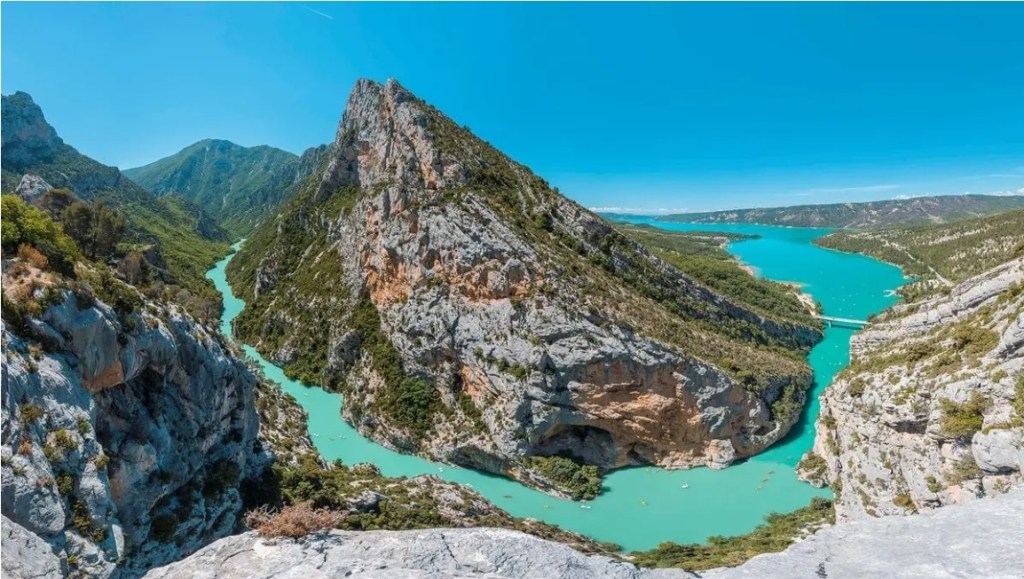
The Verdon Gorges – my proposed route follows the GR4 for 900 of its 1,500km and takes in the Verdon Gorges, one of France’s most emblematic walks. Also known as Verdon Grand Canyon, the Verdon Gorges are often described as the world’s second-biggest canyon (after the US’ Grand Canyon). Formed by the Verdon River, re-known for its startling turquoise-green colour, my route takes me through the most impressive stretch between Castellane and Moustiers-Sainte-Marie, where the river has cut a 700m deep ravine through the limestone mass.
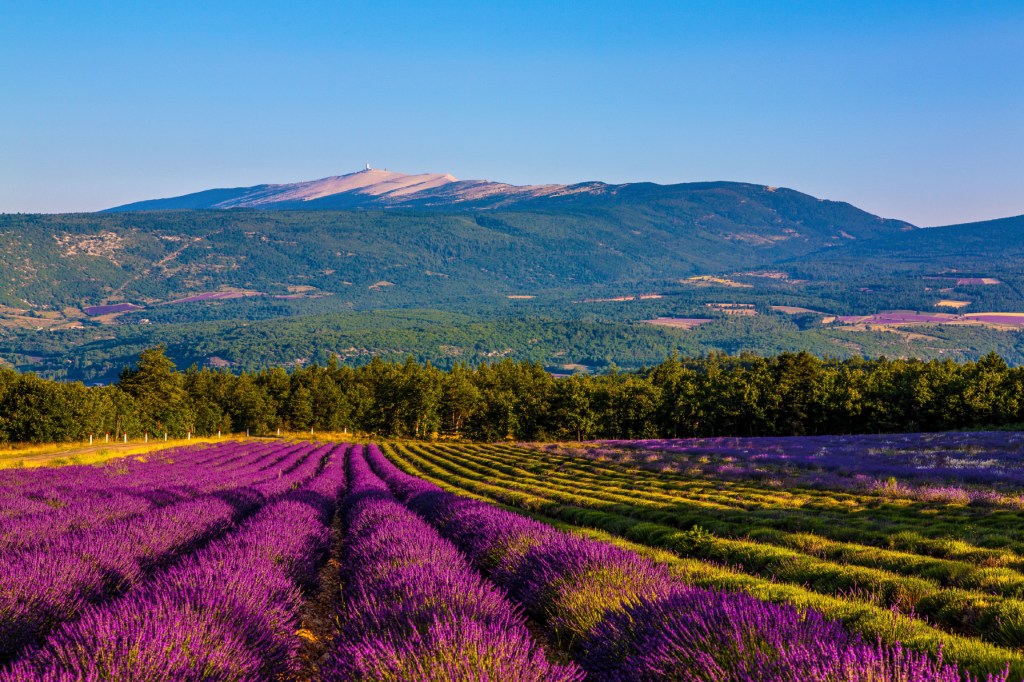
Mont Ventoux – after crossing the Verdon Gorges, the GR4 ascends Mont Ventoux, at 1910m the highest peak in Provence. From there it’s downhill all the way! The Italian poet Petrarch was the first to climb Mont Ventoux on 26 April 1336. In a letter he wrote some years later he claimed to be the first person since antiquity to have climbed a mountain for the view! In some ways my French pilgrimage should be to Mont Ventoux not Mont-Saint-Michel. From the medieval to the modern. But that is another story!
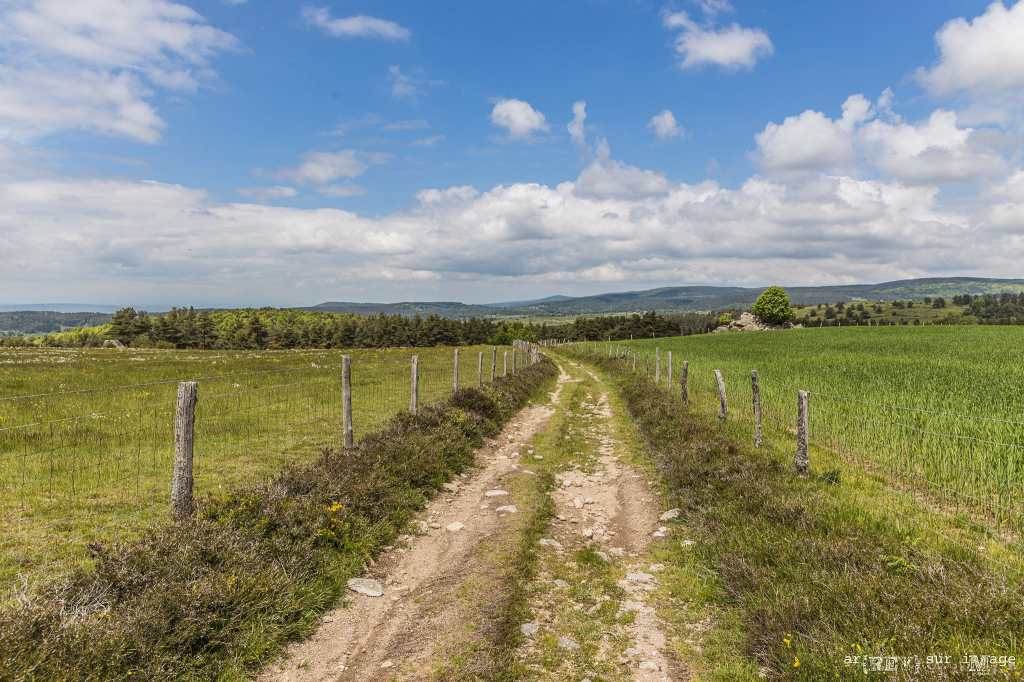
The Margeride – the GR4 crosses The Margeride, a granite high plateau in the french Massif Central at an altitude of 1200 to 1500 m. Sparsely populated (14 inhabitants / km²), it straddles the three departments of Cantal, Haute-Loire and Lozère. The granite plateau is covered with moors, pines and pastures and interspersed with forests of beech and birch.
Planeze de Saint-Flour – my route crosses the Planeze of Saint=Flour in the Auvergne, a volcanic basalt plateau between the Cantal and Margeride, famous for its megalithic dolmens and lush pastures.
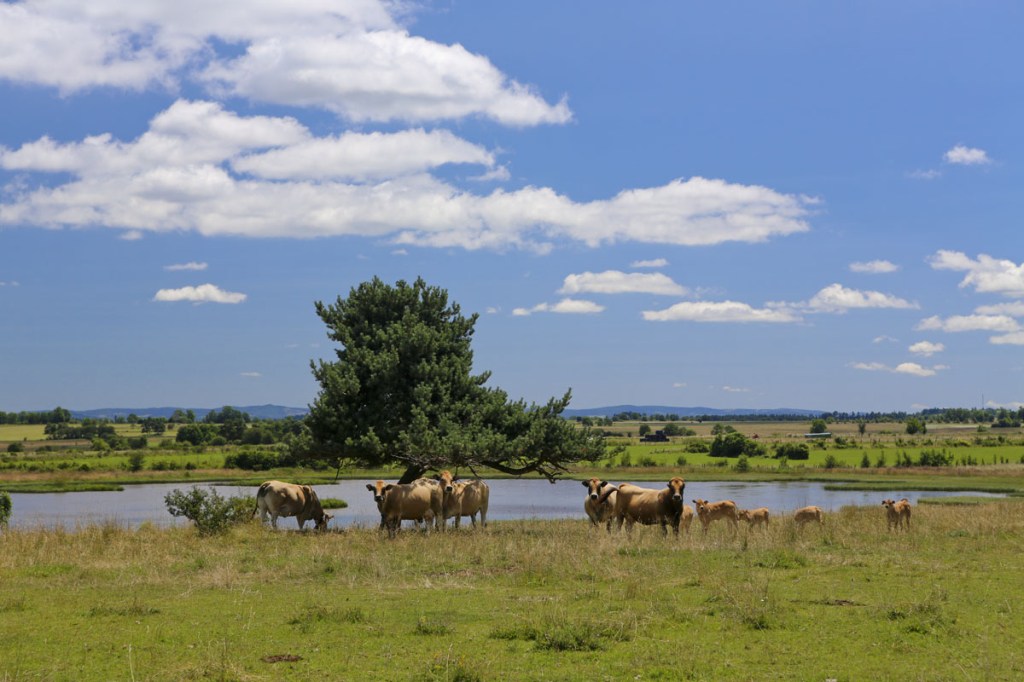
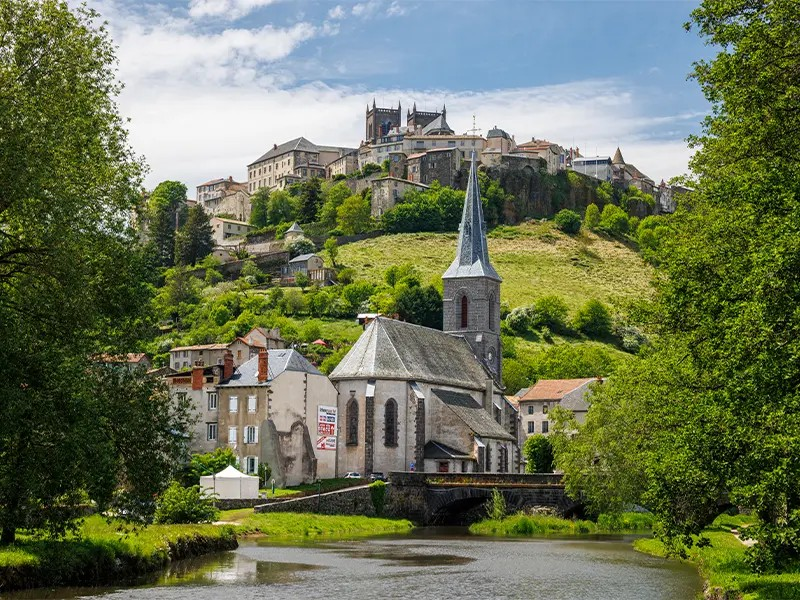
Plomb du Cantal – at 1,850m, my route takes me across the Plomb du Cantal, one of the highest peaks in the Cantal
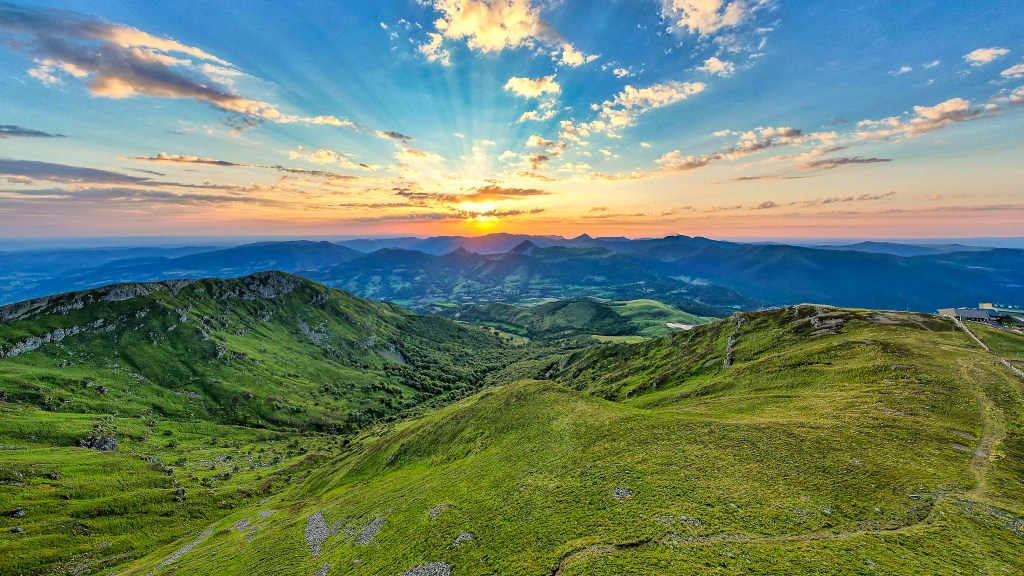
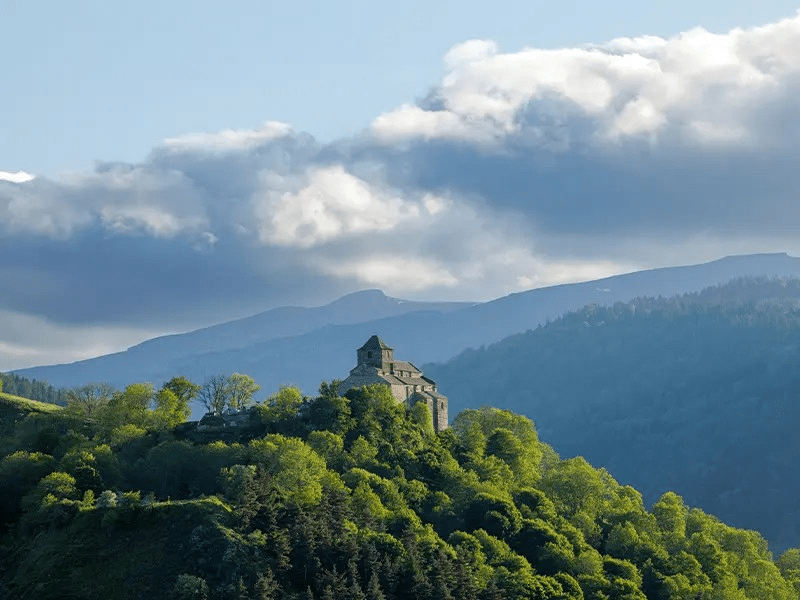
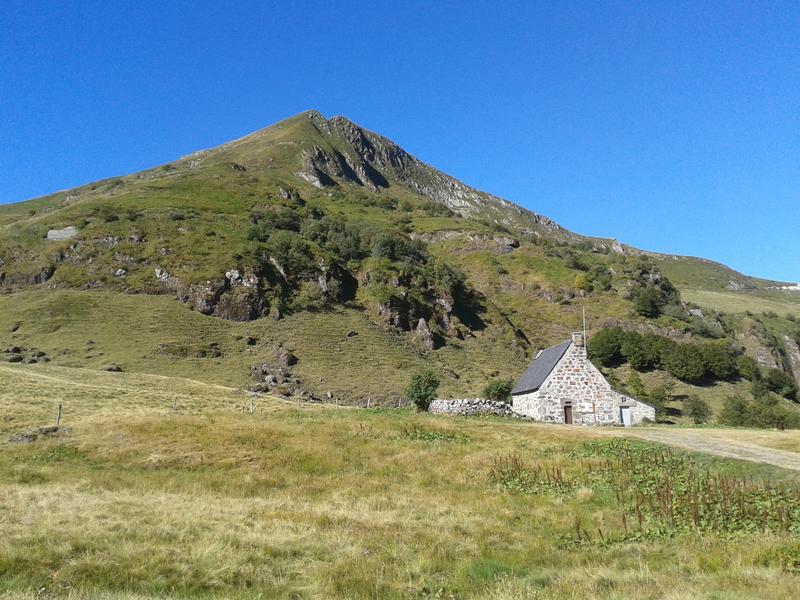
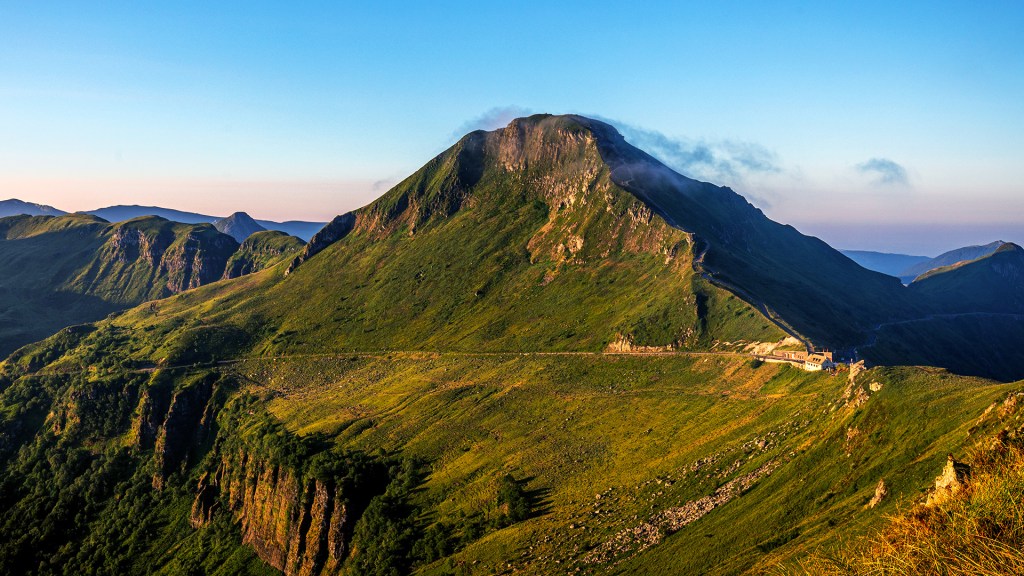
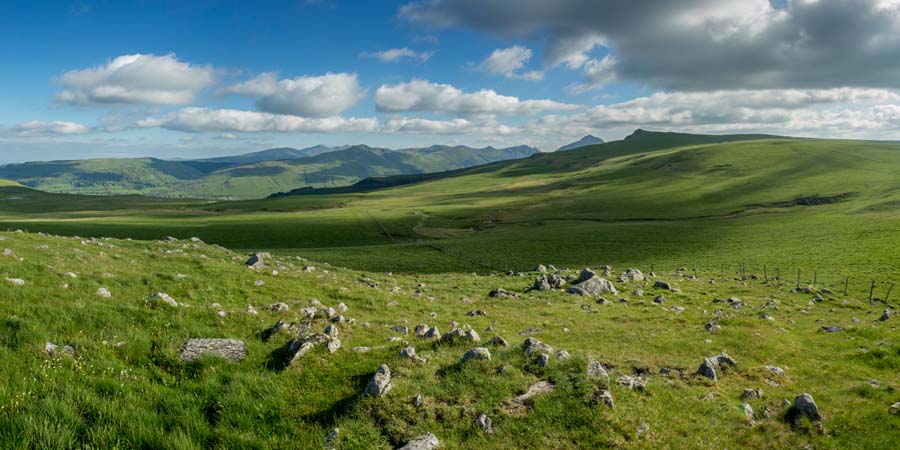
Le Plateau du Limon – my route crosses the Limon plateau, a sparsely inhabited basalt region rich in biodiversity. Finding places to stay for the night may prove challenging!
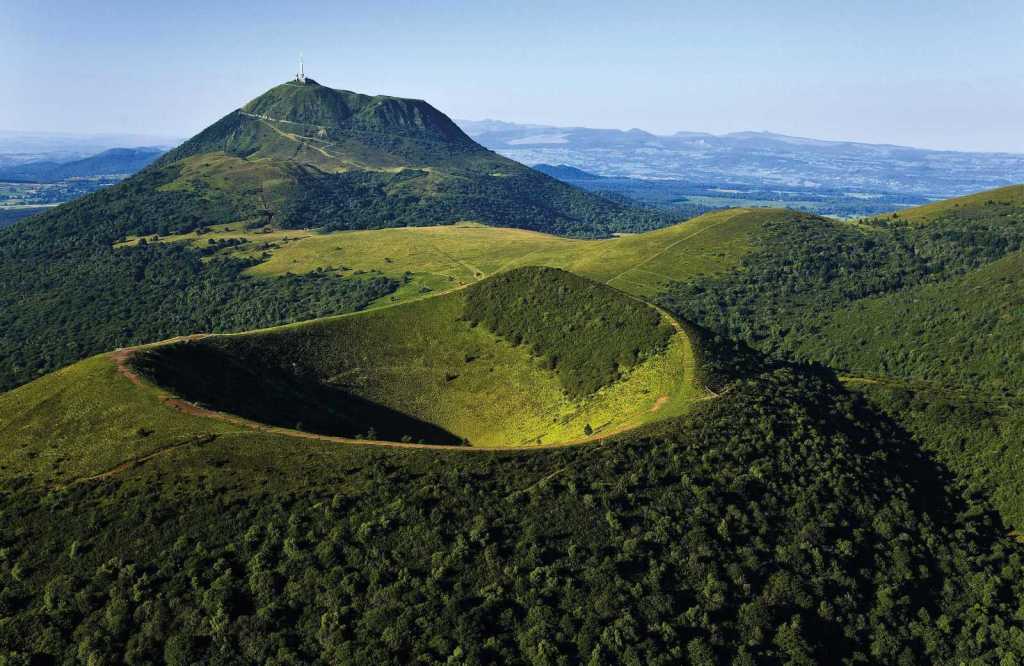
Puy-de-Dôme – at 1,465m the Puy-de-Dome is probably the most iconic of the extinct volcanoes in the Auvergne. At it’s summit stands remains of the Temple of Mercury, one of the largest mountain sanctuaries of the Roman Empire, built in the middle of the 2nd century AD.
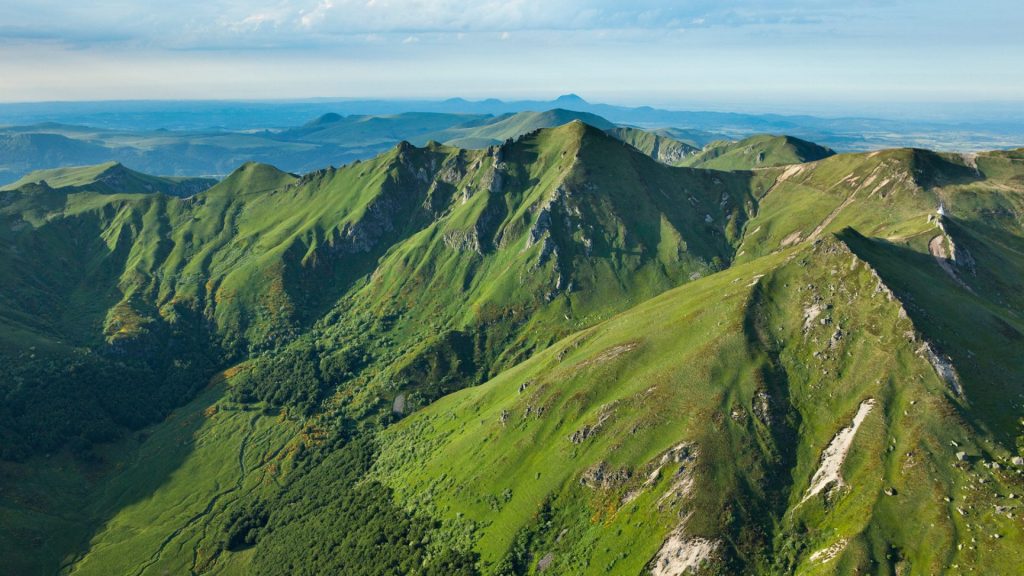
Massif du Sancy – at 1,885m, the highest of the volcanic peaks in the Mont Dore range. Its formation began 5 million years ago and ended around 250 years ago!
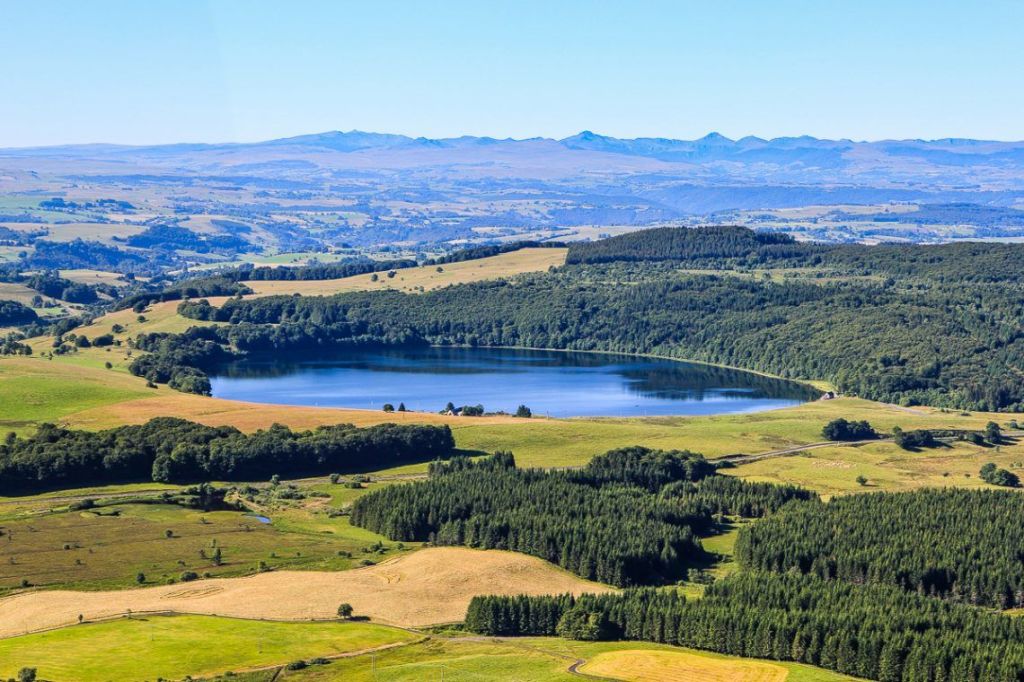
Massif Dore
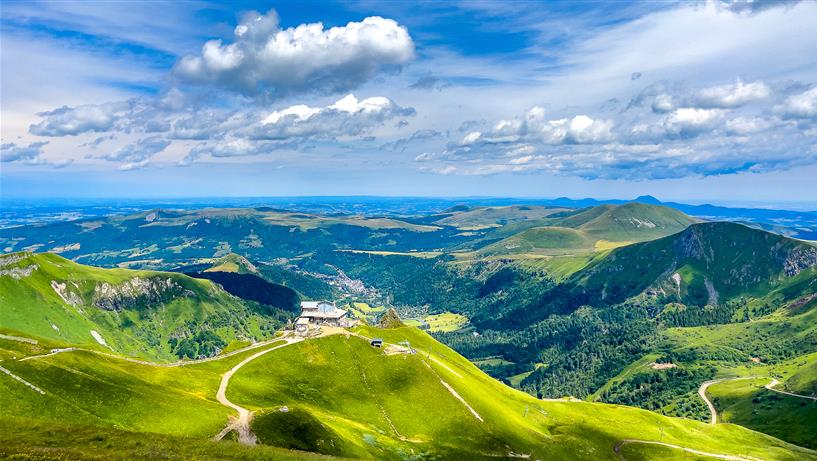
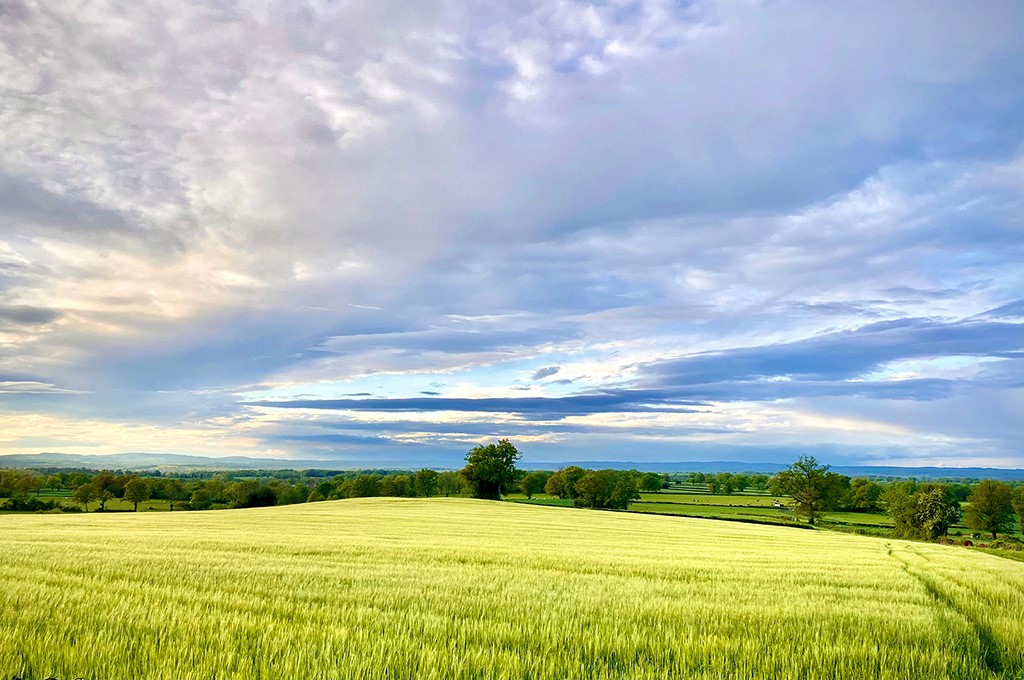
Sannat – after crossing the Massifs Central my route descends into the Creuse department, finally leaving the GR4 and linking up with the GR46 which follows an ancient pilgrim route towards Tours.
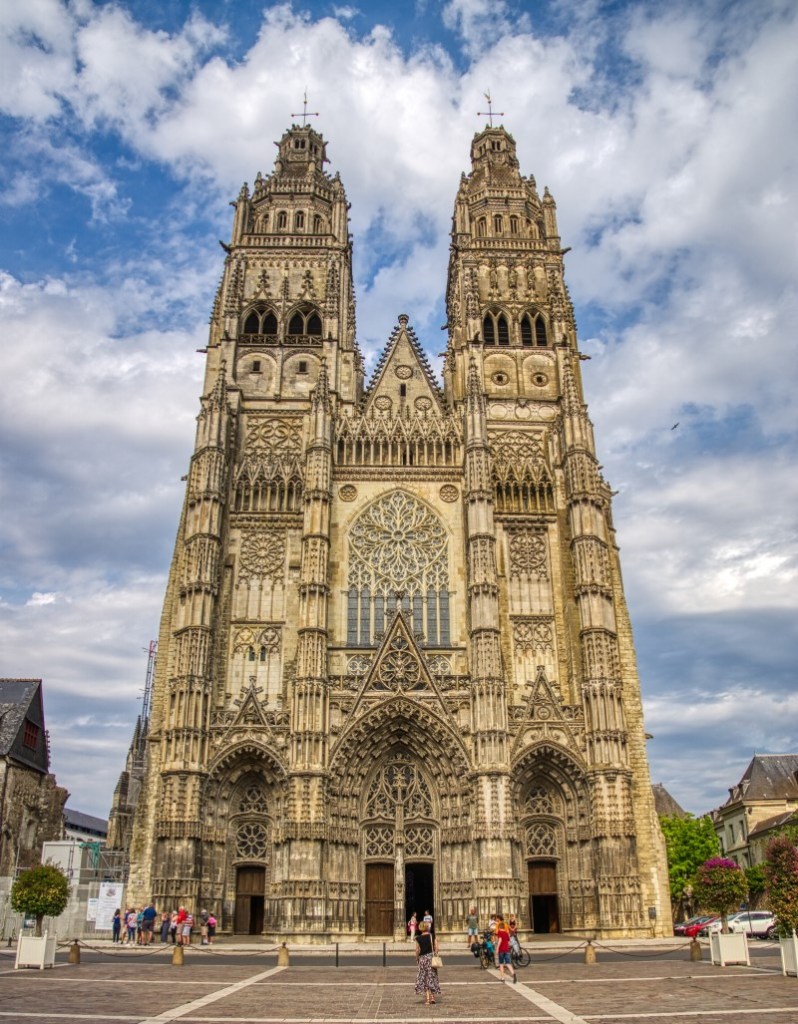
Tours – lying on one of the main medieval pilgrim routes to Santiago de Compostella, the magnificent 12th century Gothic cathedral holds the remains of St Martin of Tours, a 4th century Roman bishop who was subsequently canonised
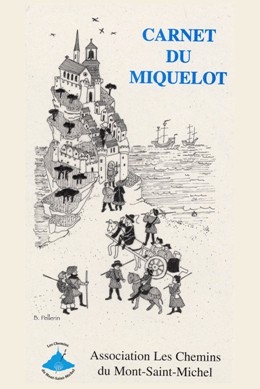
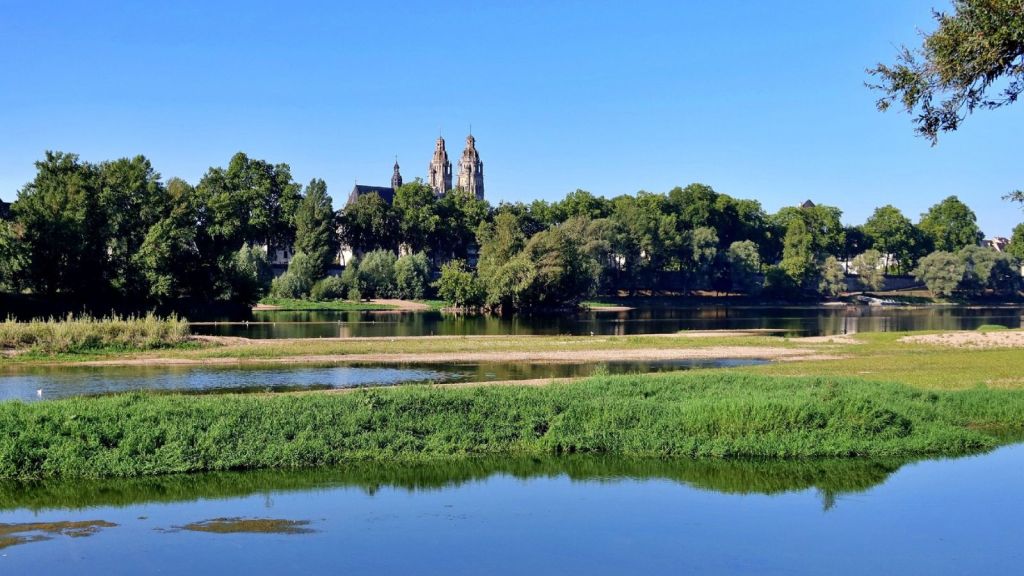
Le Grand Chemin Montois – from Tours my proposed route links up with a pilgrim route which runs 323km to Mont-Saint-Michel. Although 3mn people visit the Abbey of Mont-Saint-Michel every year, most of them don’t arrive on foot from Tours by walking the Grand Chemin Montois! The route benefits from a network of pilgrim host families who accommodate pilgrims such as myself.
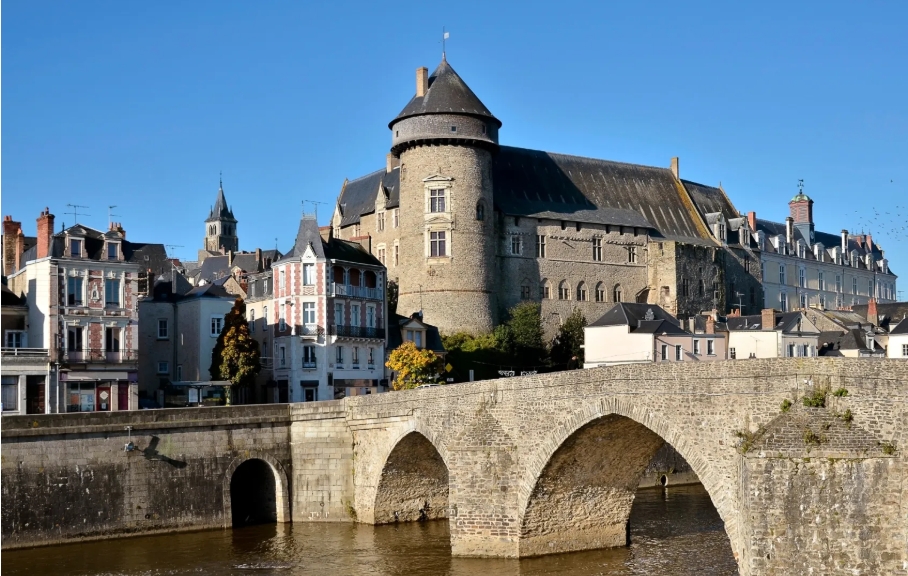
Le Mans – the pilgrim route to Mont-Saint-Michel passes through Le Mans. There is more to the town than fast cars going round in circles for 24 hours. There is a close historic connection between Le Mans and the Plantagenet royal dynasty of England. History buffs may remember that Geoffrey Plantagenet, Count of Anjou and Maine, was married to Matilda, widow of the German Emperor. Granddaughter of William the Conqueror in Le Mans Cathedral in 1128. “The Empress” was the heiress of the Kingdom of England and the dukedom of Normandy. Their son Henry was born in 1133 and in 1152 married Eleanor of Aquitaine, who brought him, as a dowry the entire south-west of France. He was crowned king of England in 1154. The rest, as they say, is history!
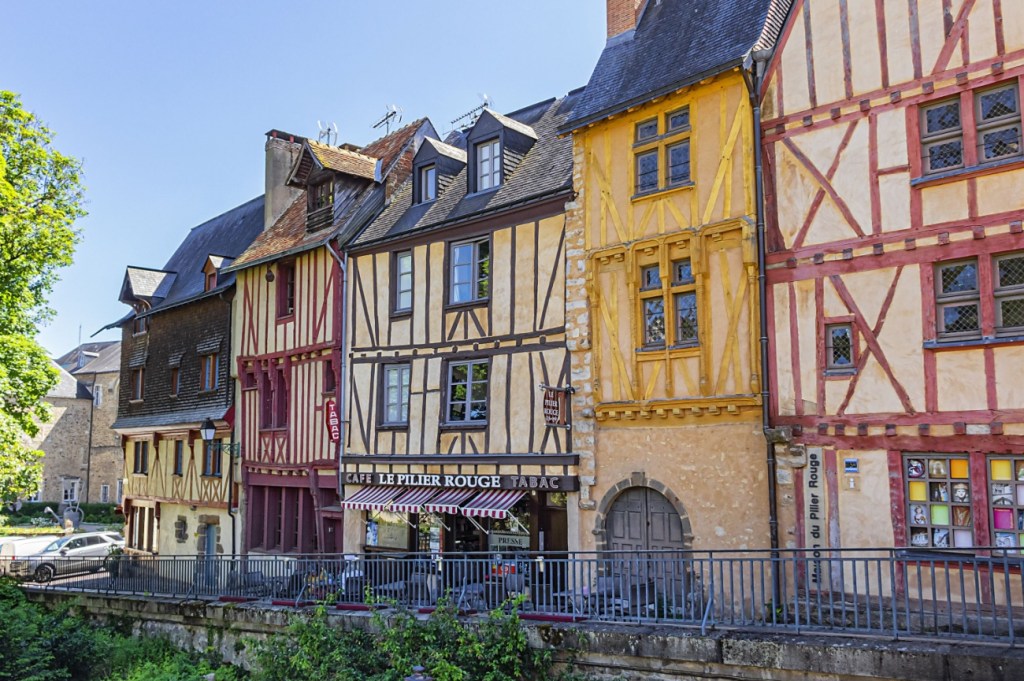
Mayenne – besides being the only town in France which has the same name as the river and the department, Mayenne has the distinction of being twinned with Devizes! We had the pleasure of welcoming a couple of coachloads of students from Mayenne when we were running the Solstice School of English in Wiltshire. Who knows, I might even bump into one of those students when I pass through Mayenne on the pilgrim route to Mont-Saint-Michel!
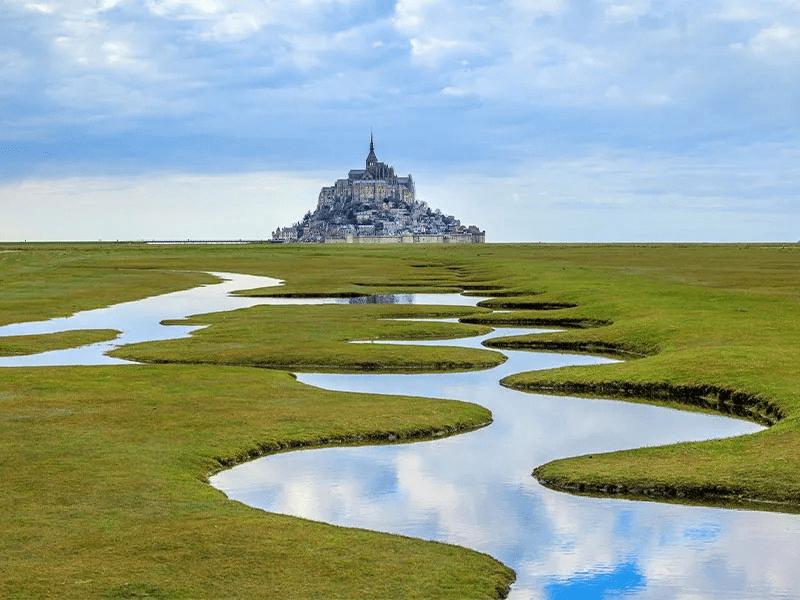
Mont-Saint-Michel – what better place to finish a pilgrimage the length of France than the Abbey of Mont-Saint-Michel? Founded in the 8th century by Aubert, Bishop of Avranches, Mont-Saint-Michel was one of the most important places of pilgrimage in medieval Christendom, along with Rome, Santiago de Compostela and Jerusalem. For centuries, pilgrims from different origins flocked to Mont Saint-Michel along the routes known as the “Chemins de Paradis” (paths to heaven).
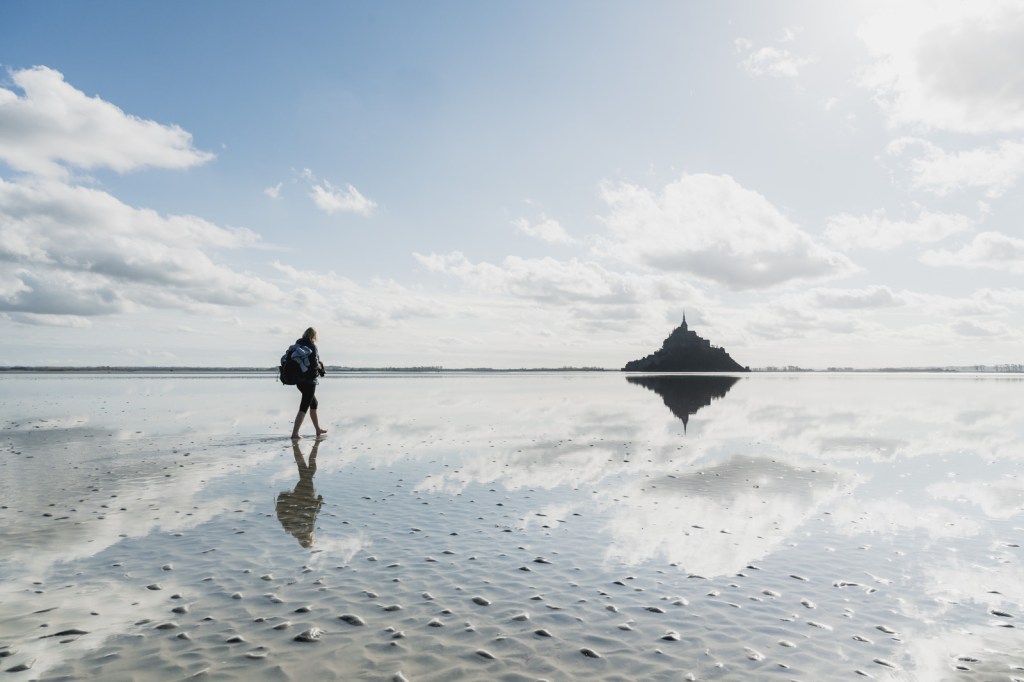
Intrepid pilgrims can cross the bay at low tide to reach the Abbey. That would be a more enterprising way of reaching my destination than braving the land route with the throngs of tourists.
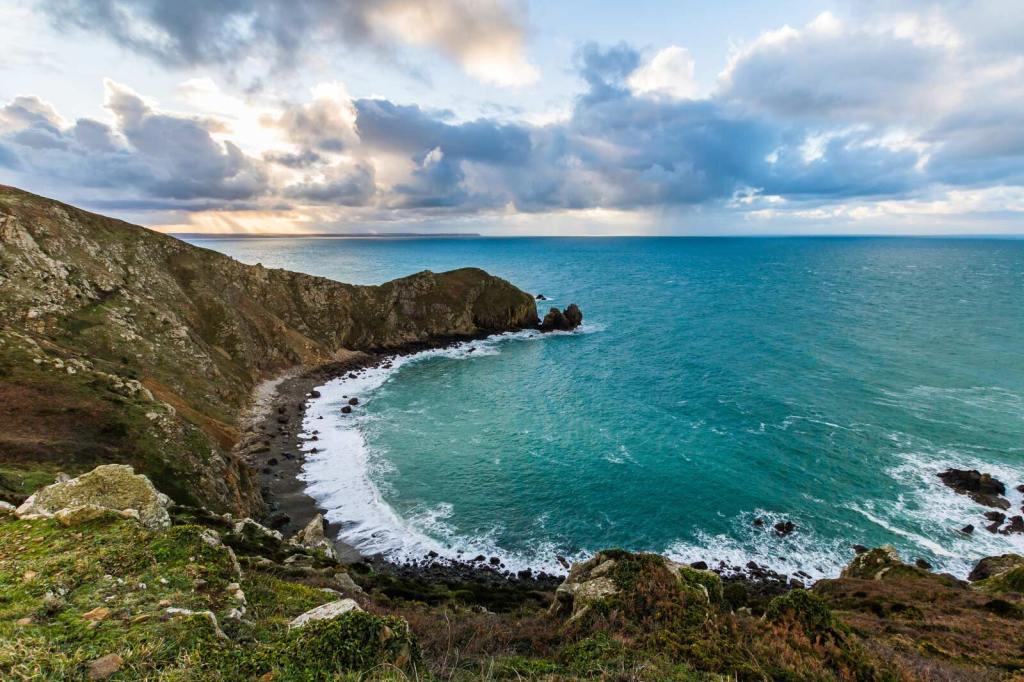
Cotentin peninsula – after Mont-Saint-Michel I plan to continue the walk for another 272km on the GR223 all the way to the Cap de la Hague lighthouse, the most northerly point on the Cotentin peninsula. The French call it little Ireland but it reminds me of the South West Coast Path. Fitting that the end of my walk should have a salty flavour to it!
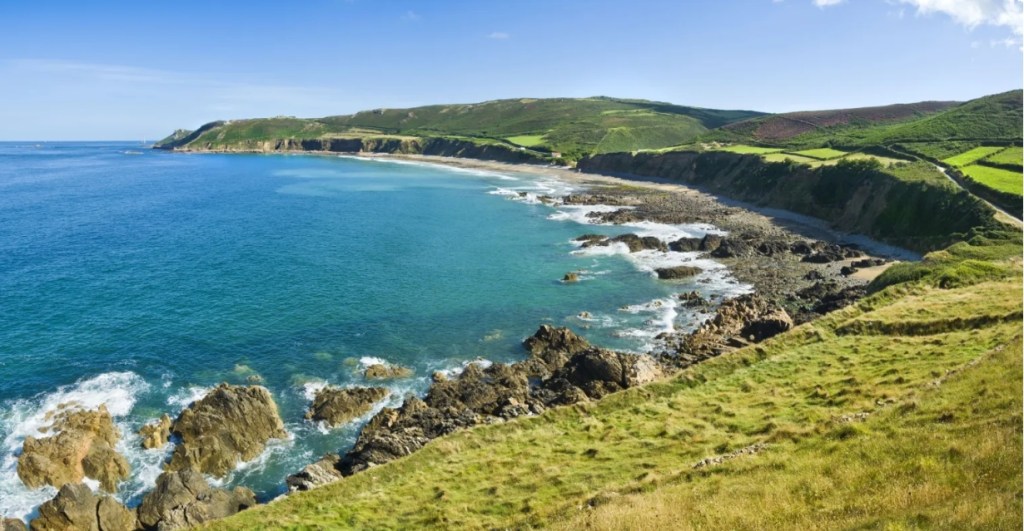
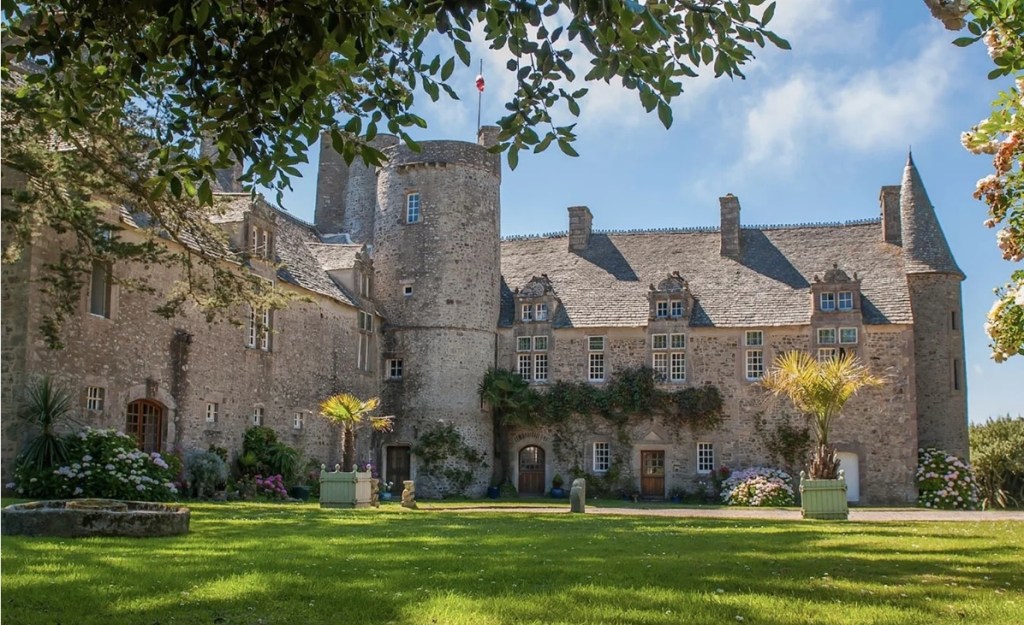
Vauville Chateau and botanical gardens – an unexpected delight at the end of a 2,000km walk across France come in the form of The Traveller’s Garden’ at the Chateau du Vauville. Thanks to the warming influence of the Gulf Stream, the French perfumier and botanist Eric Pelletier, created a botanical garden at the chateau in 1948. The collection now comprises over 1,000 species of plants from the southern hemisphere including palm groves of trachycarpus fortunei from China, the moats and their royal ferns from Tasmania, the impressive pool of gunneras manicata from Brazil, and the eucalyptus in the “garden of wisdom”.
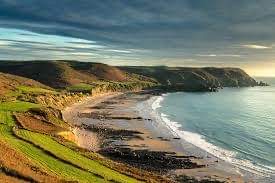
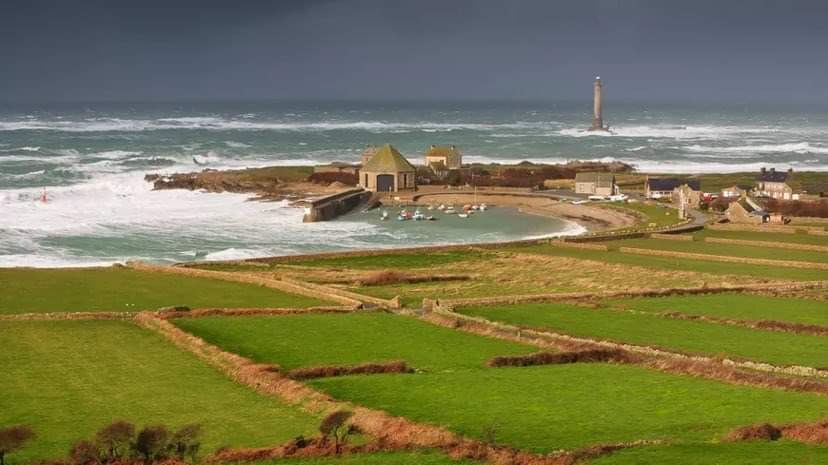
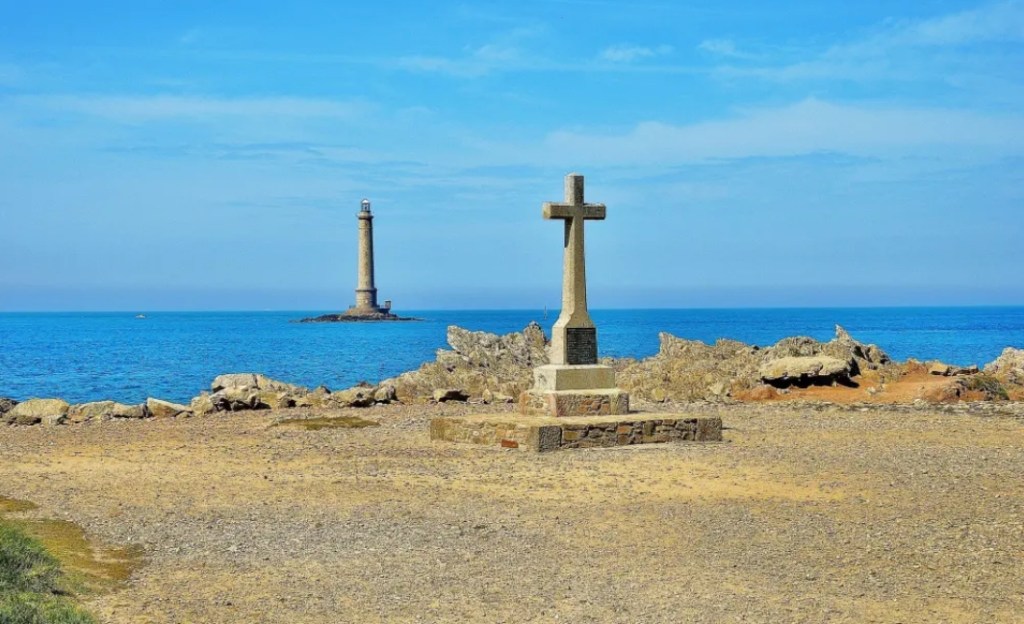
Journey’s End – Cap de la Hague, Goury lighthouse and Vendémiaire cross. Roughly 2,000km from the lemon trees of Menton, my proposed route ends at Cap de La Hague, the most northerly point of the Cotentin peninsula. The Vendémiaire cross commemorates the sinking of the Vendémiaire submarine with the loss of 24 sailors on the 8th June 1912.
Onwards to Alderney? And if I was being really greedy? Well, there’s always Alderney (accessible by boat from Dielette once a month), or Aurigny as it’s called in France!
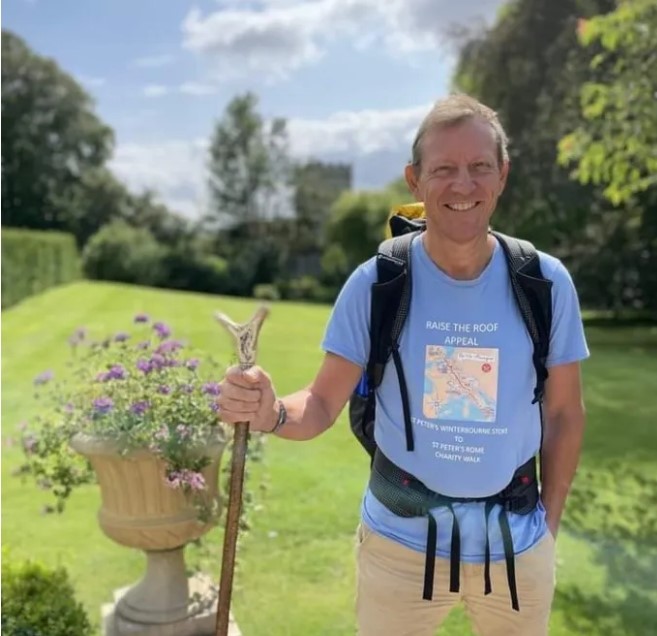
I’m planning to set off in early May. If I complete the walk and succeed in crossing The Hexagon, then as well as shedding a few pounds, hopefully I’ll finally be able to fill in some of those gaps in French history that have remained unfilled since first picking up a copy of “Our Island Story” all those years ago!
In the process, maybe I’ll also also be able to grasp the significance of the French expression les quatre coins de l’Hexagone, when a Hexagon has six not four sides! Such are the mysteries of France, it’s history and language!
 Pilgrim's Progress - Long Distance Walks in Europe and the UK
Leave a comment