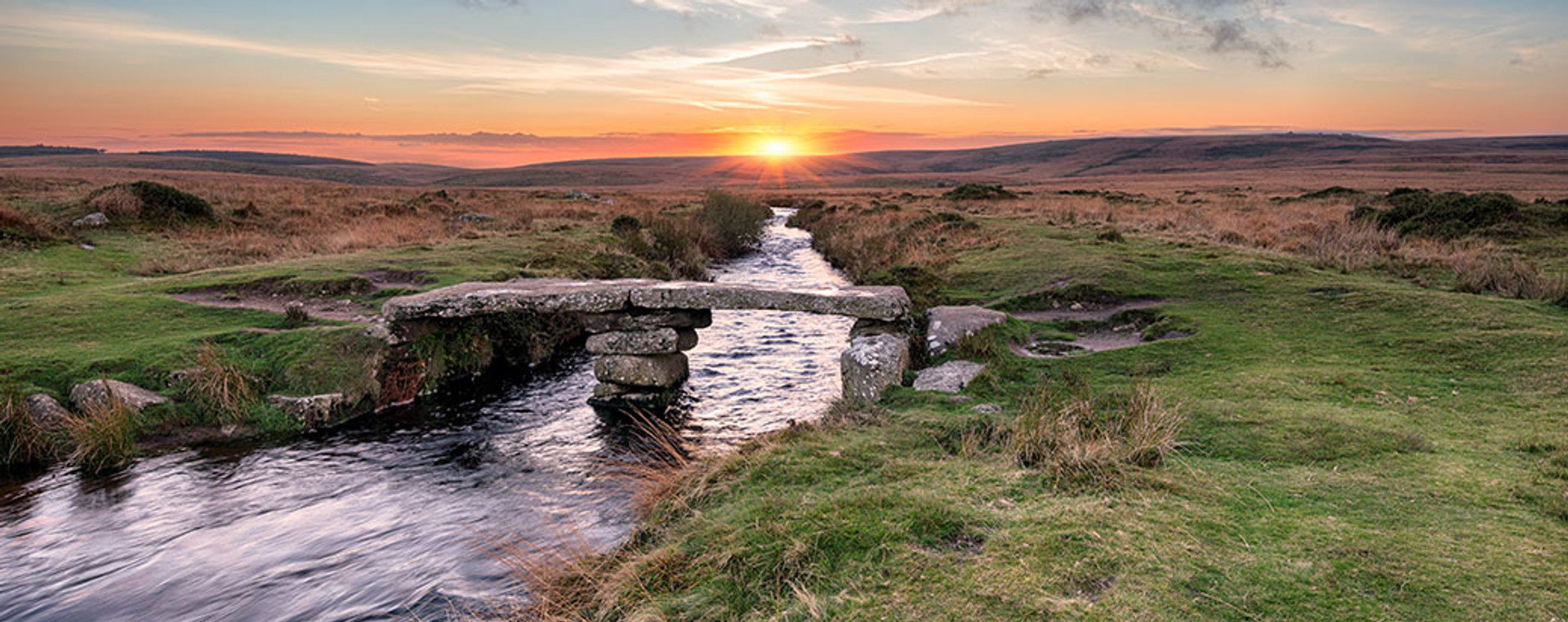
Everyone who has visited the Basque country longs to return; it is a blessed land.
Victor Hugo
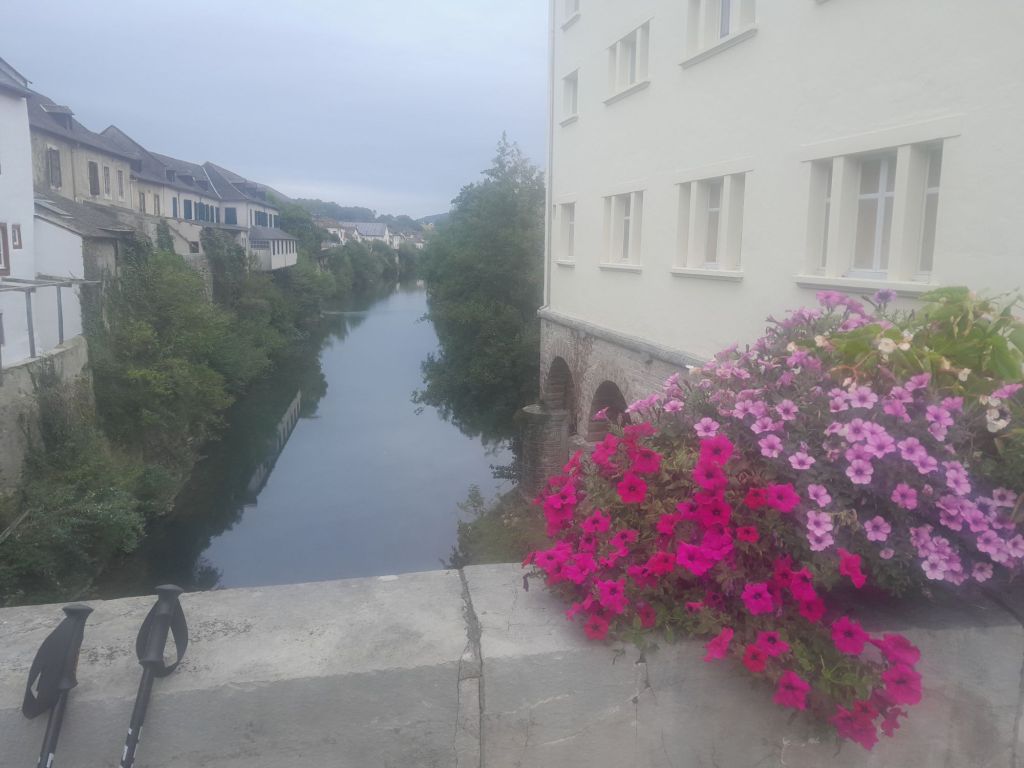
Shortly after 9am I passed a sign informing me that I was just entering the Pays Basque. Curiously it was written in both French and Basque, a language I am completely unfamiliar with. I was intrigued and spent much of the day musing about the Basques, their language, their history and their culture.
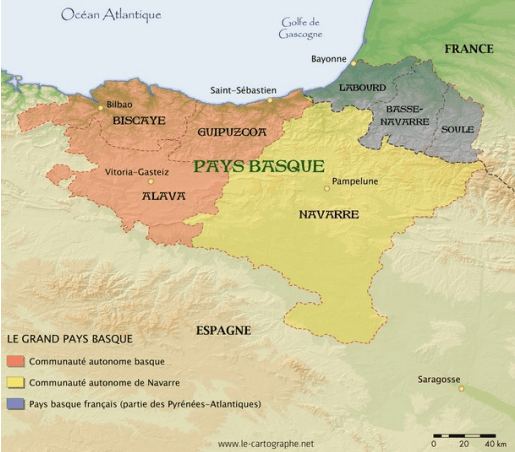
The previous evening at the communal gite at Hôpital-Sainte-Blaise I was joined by two other walkers -Jean and Isabelle. They had started from Le Puy-en-Velay and were heading to Compostella. The walk would take them 3 months but they were seasoned veterans of long distance walks. Over supper they regaled me with har raising incidents which had occurred to them when crossing the Pyrenees. If I’m brutally honest, it didn’t stir my soul to embark on a high level crossing of the Pyrenees any time in the near or distant future!
I set off from the gite at 7.30am. The walk to Mauléon-Licharre was uneventful. Most of the was on roads and the scenery was pleasant but unremarkable.
I reached Mauléon-Licharre shortly before midday. Created at the beginning of the 13th, and attached to the English crown until the middle of the 15th, the town emerged in the 19th century as France’s primary manufacturer of espadrilles, a position it enjoys to this day.
I hadn’t had any breakfast so made a bee line for the town market which was in full swing. The first people I encountered were a couple of English ladies engagef in animated conversation which ended with the repartee: ” Lovely to see you Claire, cheerio!”. I made a swift u-turn and headed off to the nearest Intermarché store in search of sustenance.
As I headed out of Mauléon, my thoughts turned to the Basques. Why was I suddenly encountering signboards in Basque? Was this sheer tokenism or was there a vibrant community of French Basques who maintained the Basque language and culture?
So who are the Basques? Well it turns out that the Basque people may be the oldest culture not only in Spain, but in Europe. They are thought to have descended from Neolithic farmers long before the Roman invasion of the Iberian peninsula, and they maintained their distinct language, identity, and culture largely due to their geographic isolation — the area in which they live is largely rough, mountainous terrain.
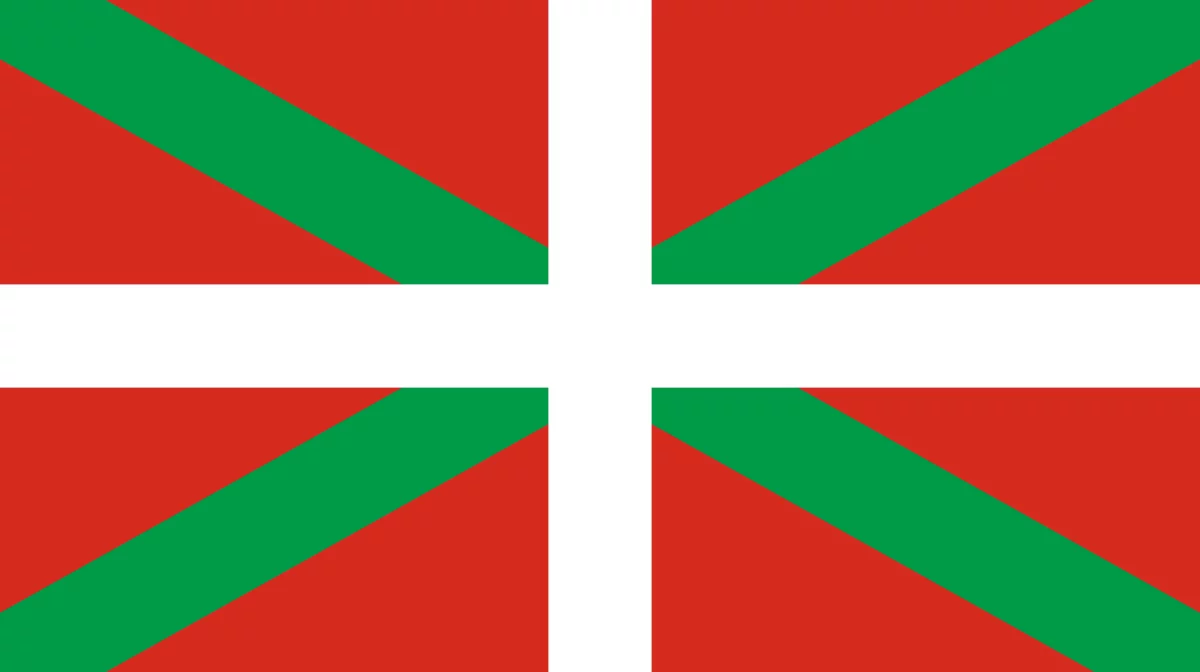
The Basque language is of particular interest to linguists because it is so unique. The language is unrelated to any other language on earth, including all those in the Indo-European language family. Historians believe it is descended from Aquitani, an ancient language spoken in the region at around 200 B.C.E. This would make it the oldest language in Europe. Unfortunately, only around 28% of modern Basques still speak it!
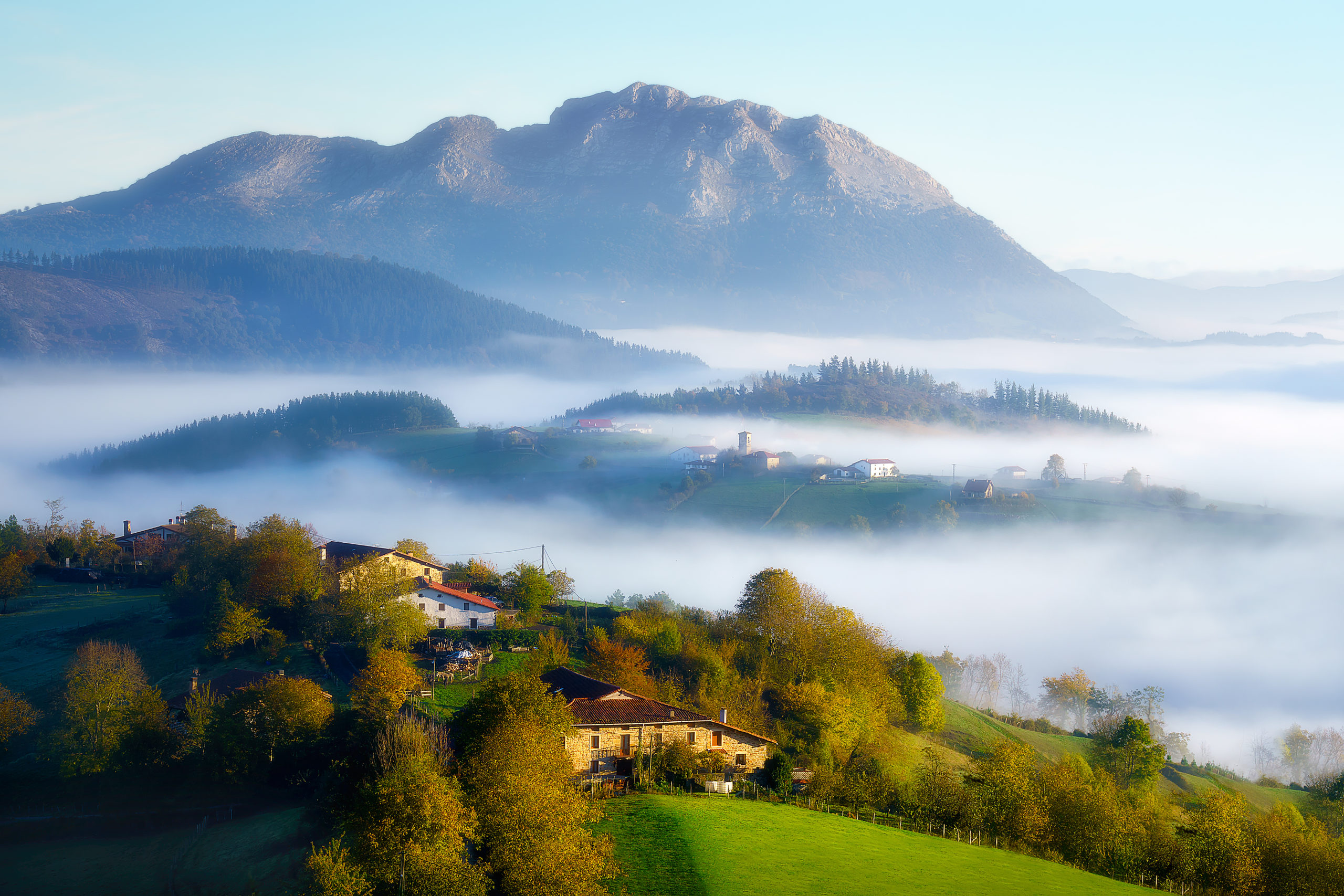
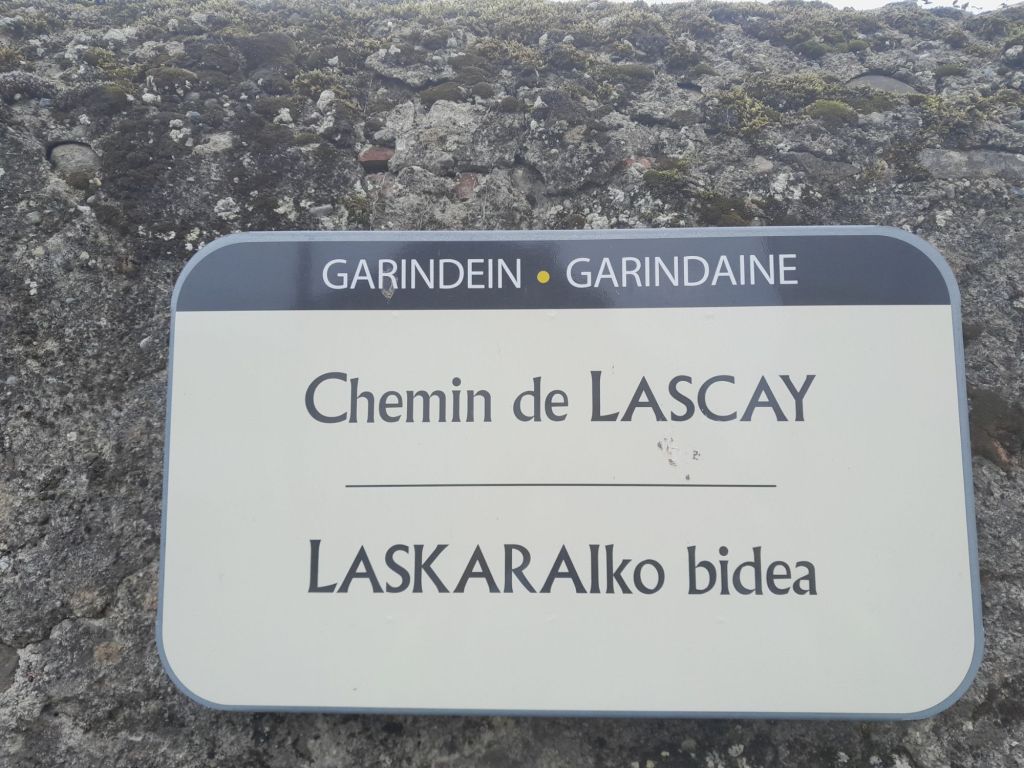
The Basque people lived in a region that stretches between modern-day northern Spain and southern France. It contained 7 historical provinces. Only 3 of those provinces (Araba, Bizkaia, and Gipuzkoa) are included in the modern-day Basque Autonomous Community, which is one of the 17 autonomous communities in modern Spain. Another of the 17 autonomous communities is Navarre, which is also a historic Basque province. Navarre was actually a Basque kingdom in the Middle Ages, but it was assimilated into Castile in 1515, joining what would eventually become a unified Spain.
Unfortunately, living as a minority within Spain hasn’t always been easy for the Basques. While they did enjoy autonomy under Castile, their self-government was abolished in 1839, and this sparked a movement among Basques to fight for autonomy and independence. Following the Spanish Civil War, under Franco’s dictatorship, the Basque culture and language were harshly repressed. It is likely that a combination of this repression and assimilation with the Spanish-speaking and French-speaking populations around them led to the endangerment of the Basque language. Today, concerted efforts have led to a revival, and the number of Basque speakers is rising.
The historic Basque capital of Guernica is unfortunately best known as one of the most devastating casualties of the Spanish Civil War, immortalized in Picasso’s famous painting depicting the event. Due to its cultural significance to the Basques and the fact that it was a symbol of Basque identity, General Franco gave his allies — Hitler and Mussolini— a chance to try out a new war tactic on Guernica two years before they launched World War II. On April 26, 1937, German and Italian planes bombed the city relentlessly, reducing it to rubble and leaving thousands of casualties.
The Basques have been Catholic Christians for centuries, but their festivals and beliefs have roots in the ancient pagan religions of their ancestors. They have a strong history of folk dance and music, played on traditional instruments such as the txistu and xirula (types of flutes) and the trikixa (a kind of accordion).
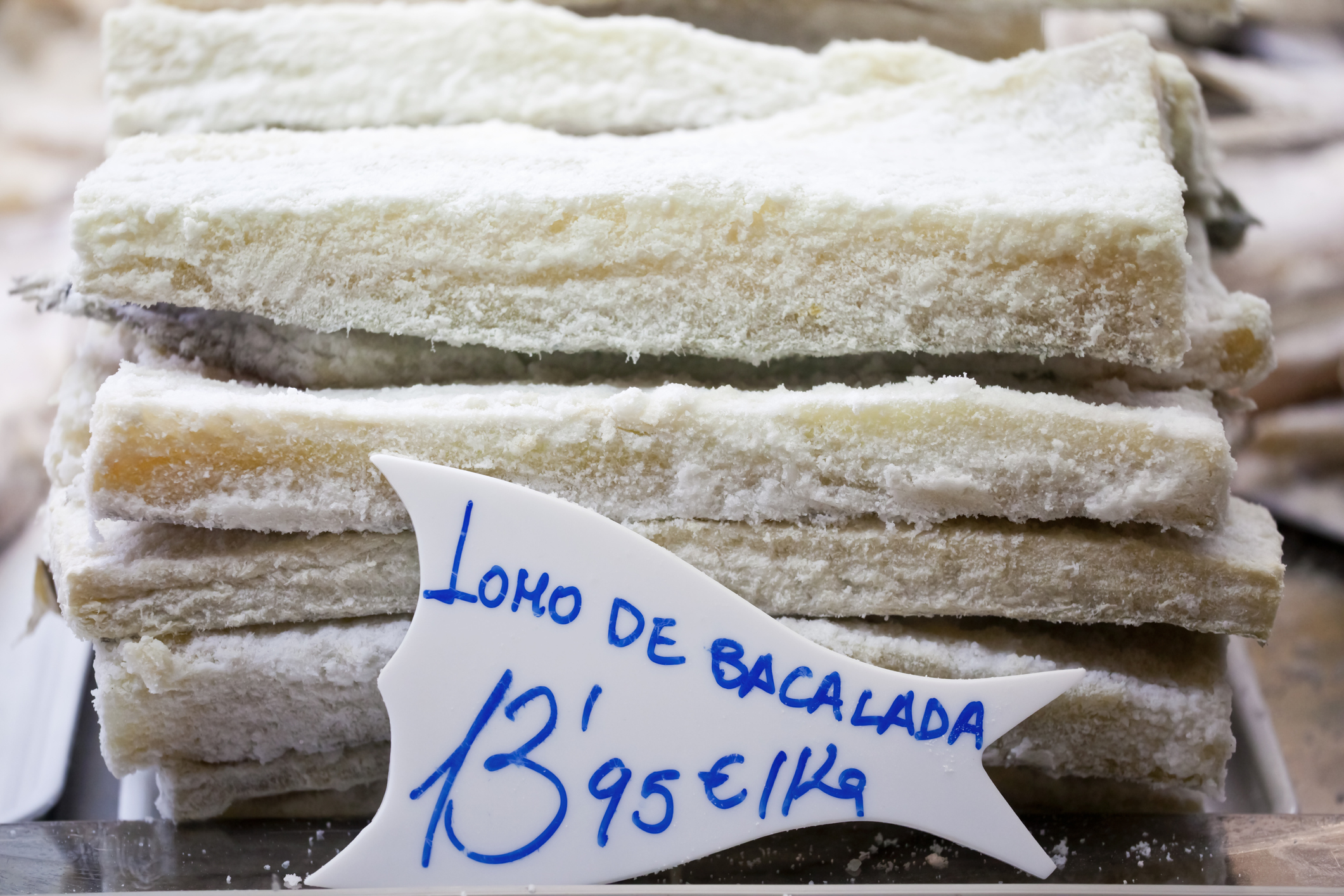
Due to the mountainous terrain, farming was relatively difficult, and the Basques thrived largely on harvest from the dramatic Atlantic coasts bordering their land. This gave birth to a rich maritime culture and a traditional cuisine that incorporates a lot of seafood. Salted cod in particular is an important cultural food.Salted fillet of Cod for sale at a Basque market. Salt cod has been produced for at least 500 years
There is also a traditional Basque sport called jai alai, a fast-paced game that involves bouncing a hard ball against a wall with a curved wicker instrument something I observed mid afternoon in a village called Ordiarp.
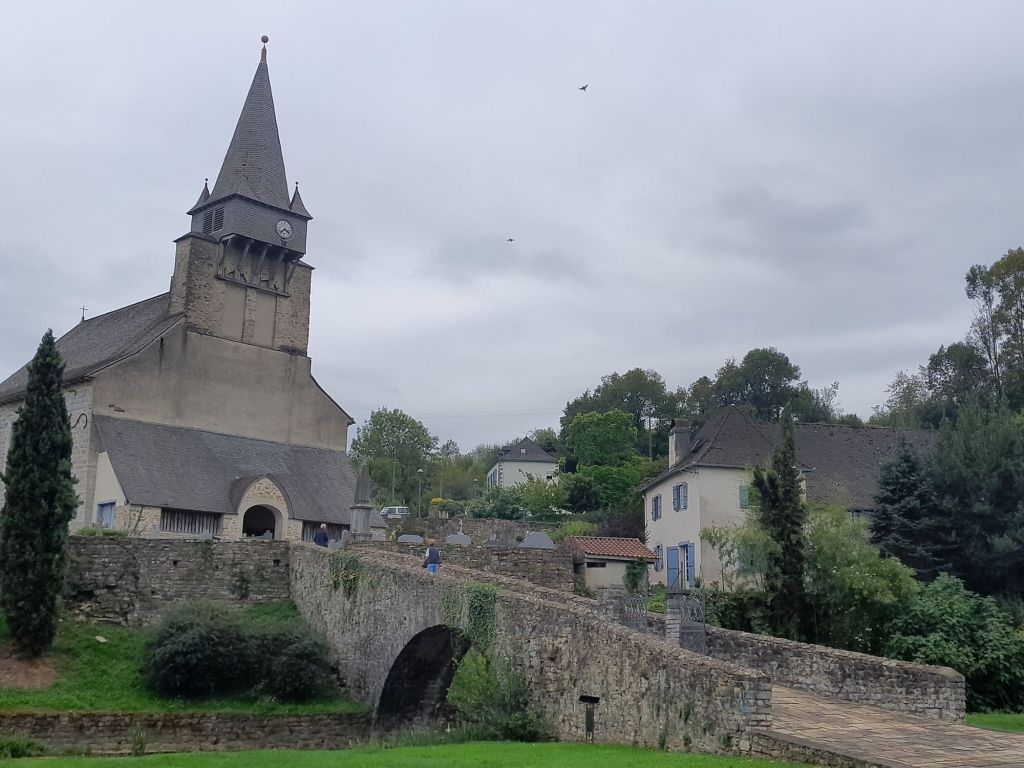
The walk from Ordiarp to Saint-Just-Ibarre was gruelling. I climbed up to the Navalho col before undertaking a steep descent towards Saint-Just-Ibarre.
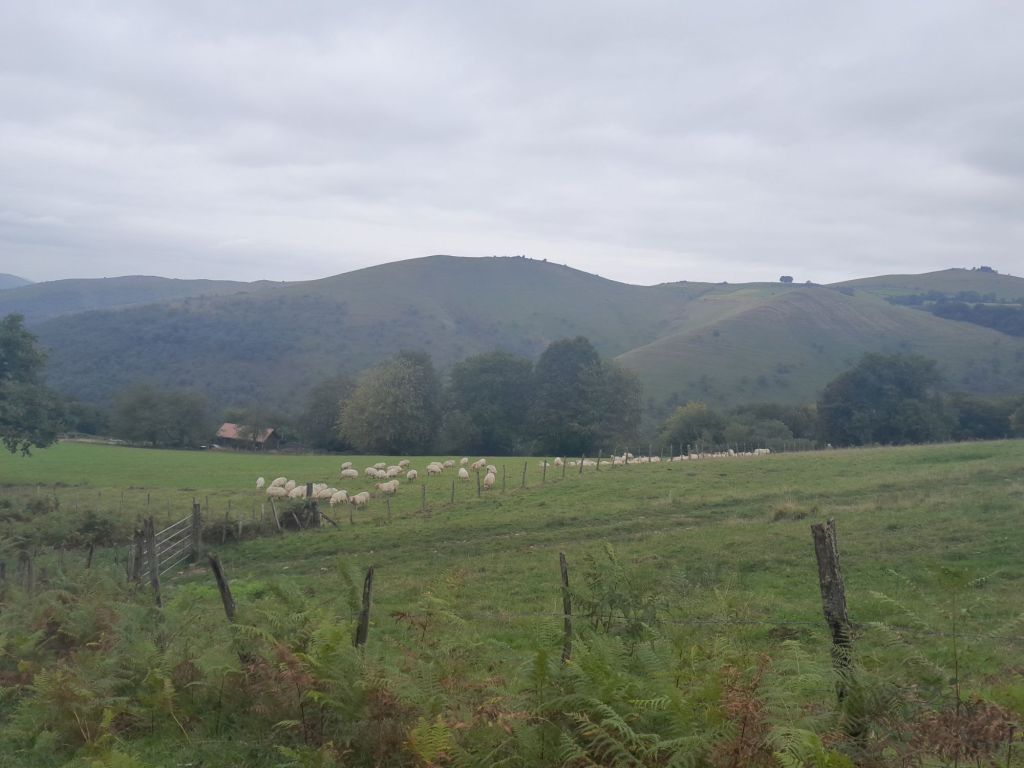
I reached my gite for the night shorfly after 6pm. I’d been walking for nearly 11 hours and was mighty grateful to finally take a breather.
There were four other people stayongvat the gite. I ess so knackered from the day’s exertions that I didn’t really feel up to engaging on French witty banter with my fellow guests. Instead I was totally focussdd on the meal of papardelle carbonara with cucumber that Sandra, the gite proprietor had prepared for us. It wasn’t typically basque, but frankly I was past caring. It went down a treat!
 Pilgrim's Progress - Long Distance Walks in Europe and the UK
Leave a comment