Whoever you are, I have always depended on the kindness of strangers.
Tennessee Williams – A Street Car named Desire.
The small things in life make the world of difference. A smile from a check out assistant: a cheery wave from a vague acquaintance; a like on a blog post. Random acts of kindness or appreciation that put a spring in your stride.
There were two Spanish pilgrims staying in the gite at Oloron-Sainte-Marie. As far as I could tell, neither spoke a word of French or English.
One of them was sitting at the end of the table in the kitchen when I arrived. Clad in a Spanish football shirt and sporting a classic beer belly, he was forking noodles into his mouth from a saucepan while jabbing at a notebook PC screen with his other hand, looking for all the world like an irate magpie. He was equally monosyllabic at breakfast this morning before hauling himself off his chair and making his exit.
The other chap arrived at the gite shortly after me. He hadn’t booked and his sole repartee to the quedtions thrown at him by the hostel proprietors was ‘Que?’. It was reminiscent of Manuel in Fawlty Towers!
I couldn’t help but ask myself, what is the point of going on a long walk in a foreign country if you can’t communicate with the locals? It must be such a lonely and soulless experience.
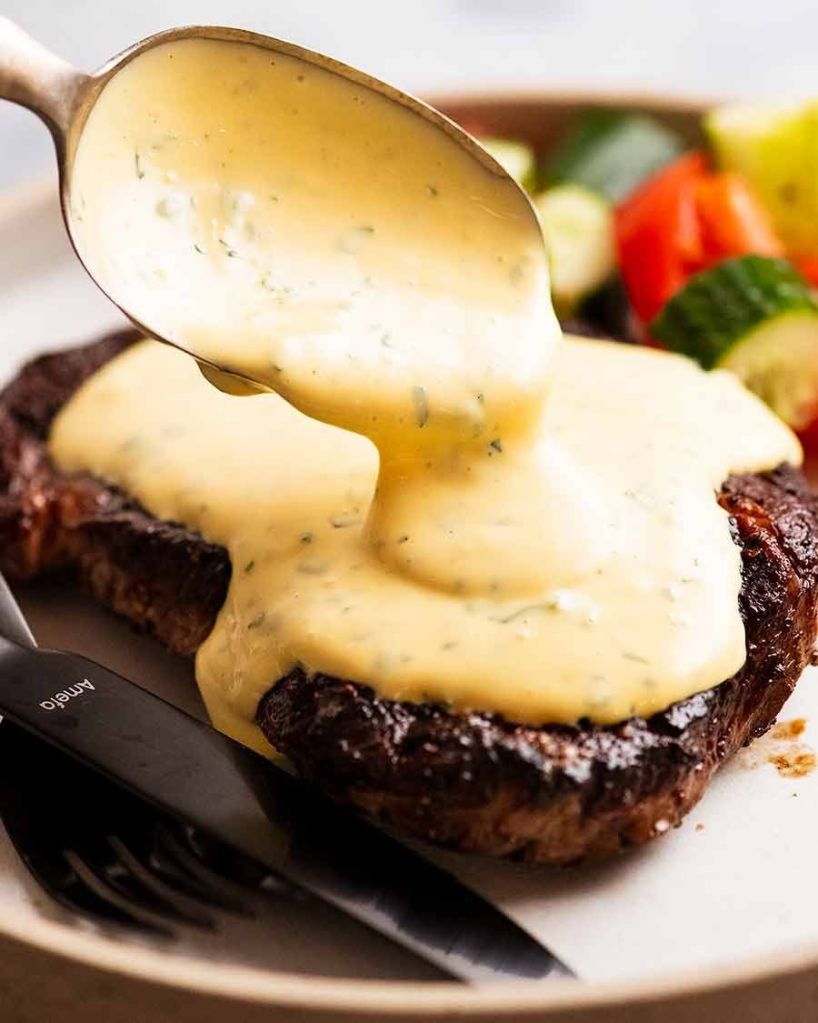
As I left Oloron-Sainte-Marie I congratulated myself. I could now say that I have been to Béarn. So what makes Béarn special apart from it’s secret sauce (béarnaise)?
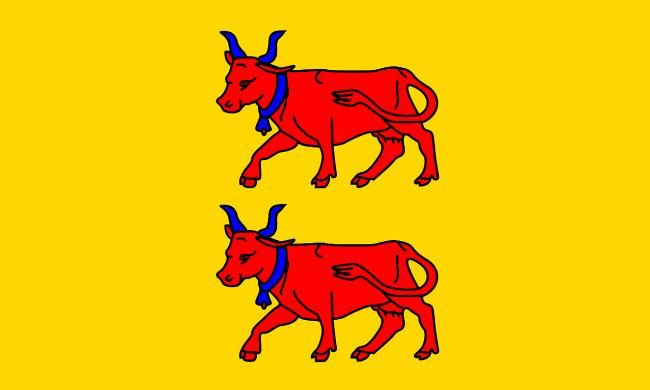
It may surprise you to learn that Béarn was once English. Ok, not for very long, but it was part of the Angevin Empire for a while in the 14th century. Much later, the province’s capital, Pau, became a magnet for Brits in search of winter sun. And during the Napoleonic Wars, many British soldiers were so taken with Béarn that they settled in the area.
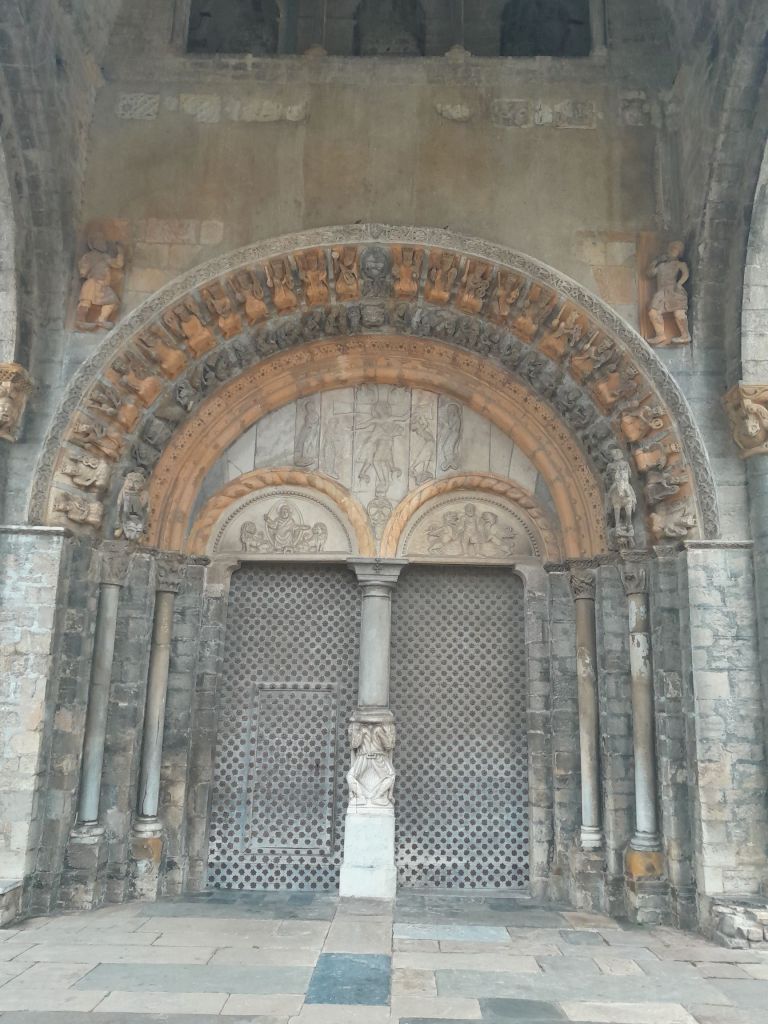
But Béarn’s origins go back much further as the Roman hypocaust outside Oloron’s cathedral attested to.

The Béarnais have kept their identity alive since Pliny the Elder described a people called the Venarni; sufficiently ethnically distinct in physique and language to be written into history. The Venarni were a tribe of the Roman province of Aquitania, settled in the Western Pyrenees on the Atlantic coast who fiercely resisted the occupation of their lands by Romans, Visigoths, and Franks.
Over the ensuing centuries the rulers of Béarn largely preserved their independence and language by skilfully playing off regional powers against each other. It wasn’t until 1620 that Béarn formally became part of France.
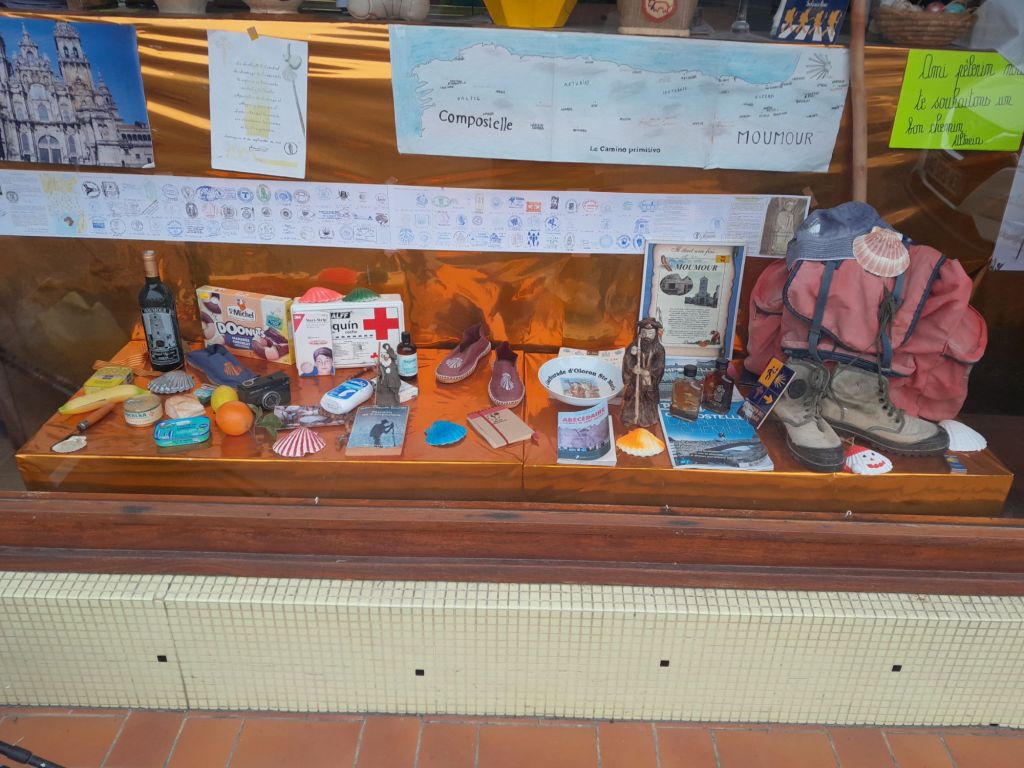
In the little village of Moumour I was hailed by a lady who ran the village shop and post office. Having ascertained that I was a pilgrim on the GR78 she promptly guided me to a table outside and disappeared to get me some coffee and a piece of cake!
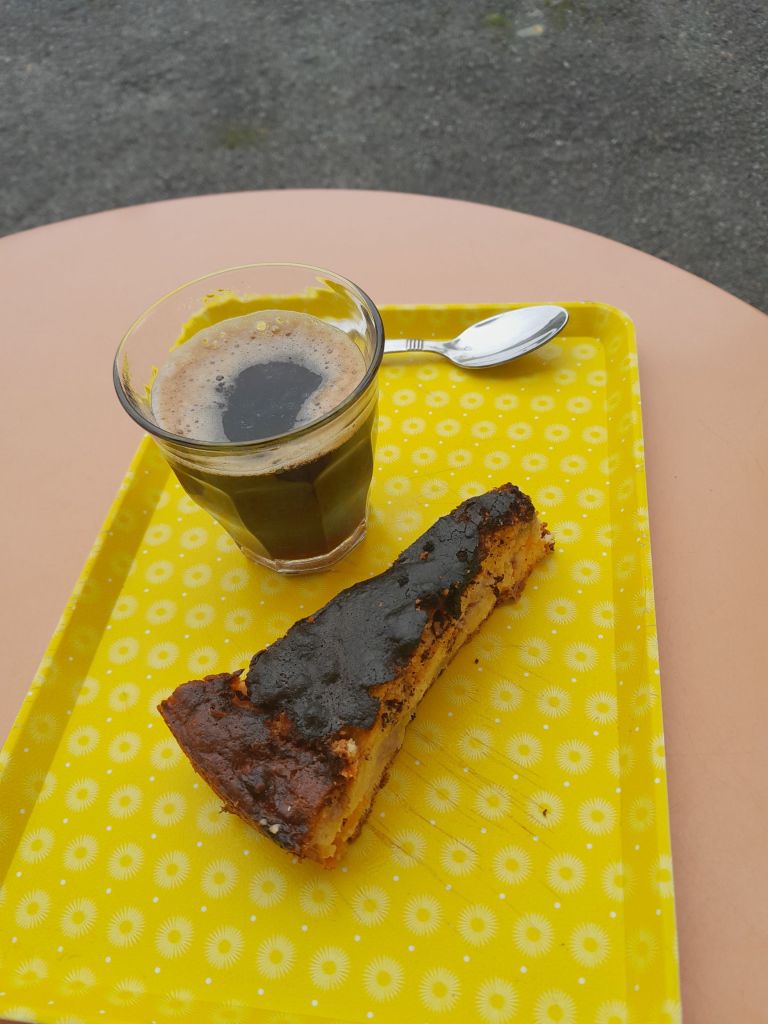
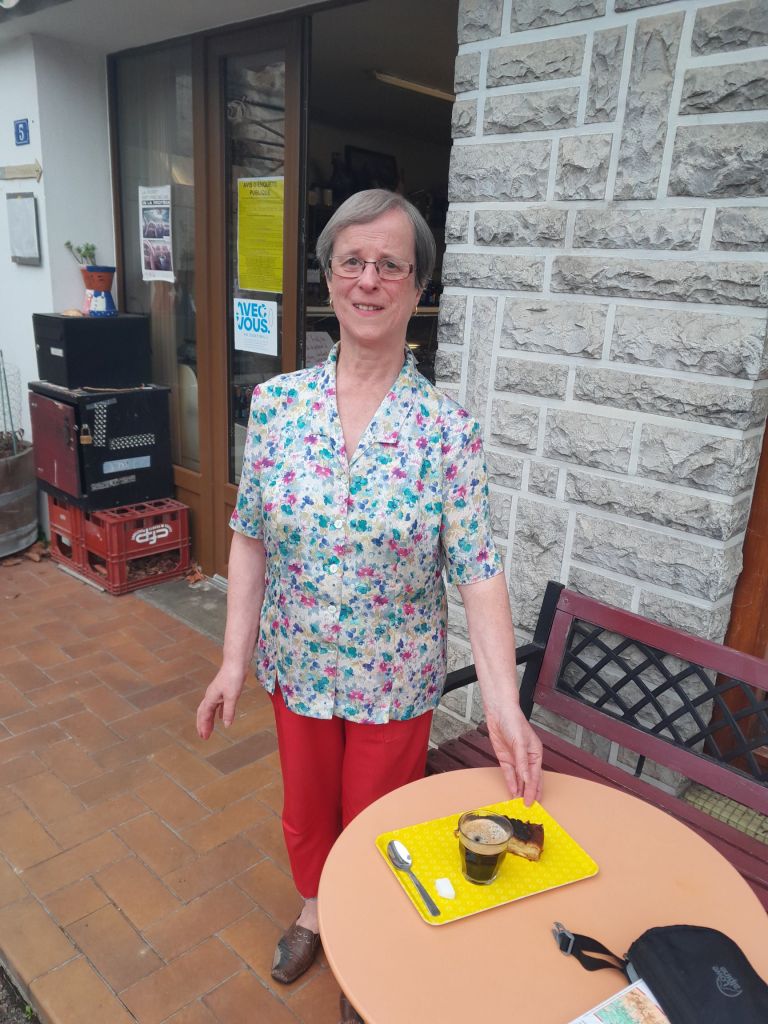
The kind lady was called Marie-Pierre. Coffee and cake was obligatory for passing pilgrims apparently. I thanked her profusely and wrote some effusive comments in the notebook she thrust into my hands as she prepared me a ham sandwich for lunch.
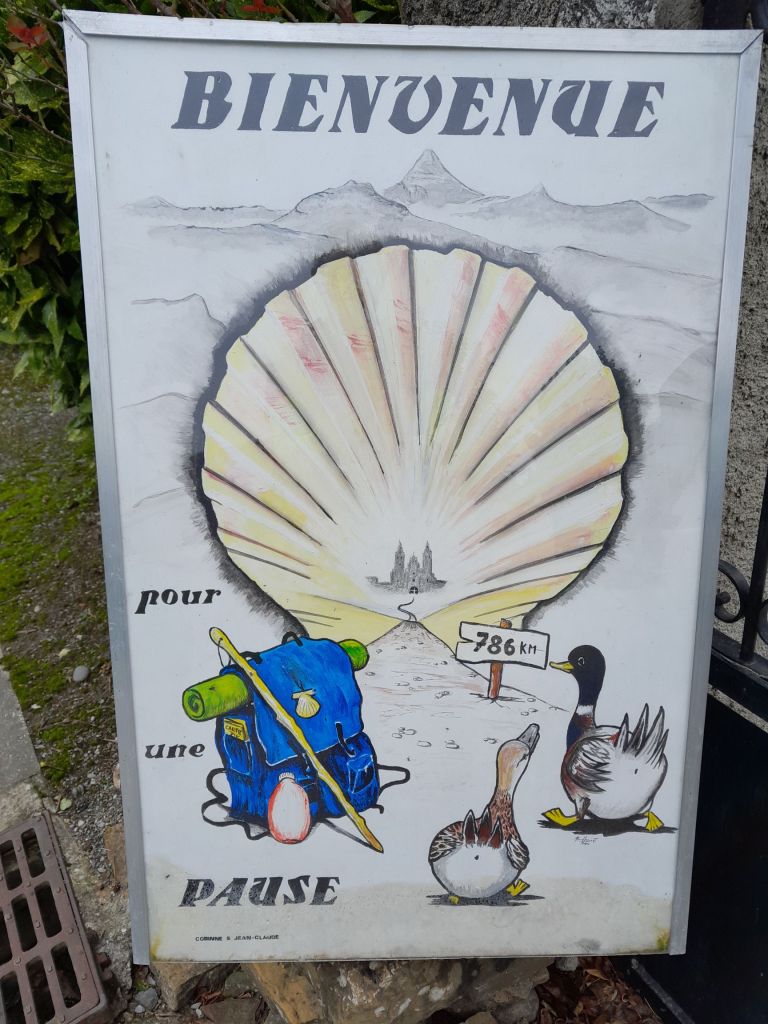
Less than an hour later in the pretty village of Aren, there was another sign offering coffee and chocolate.
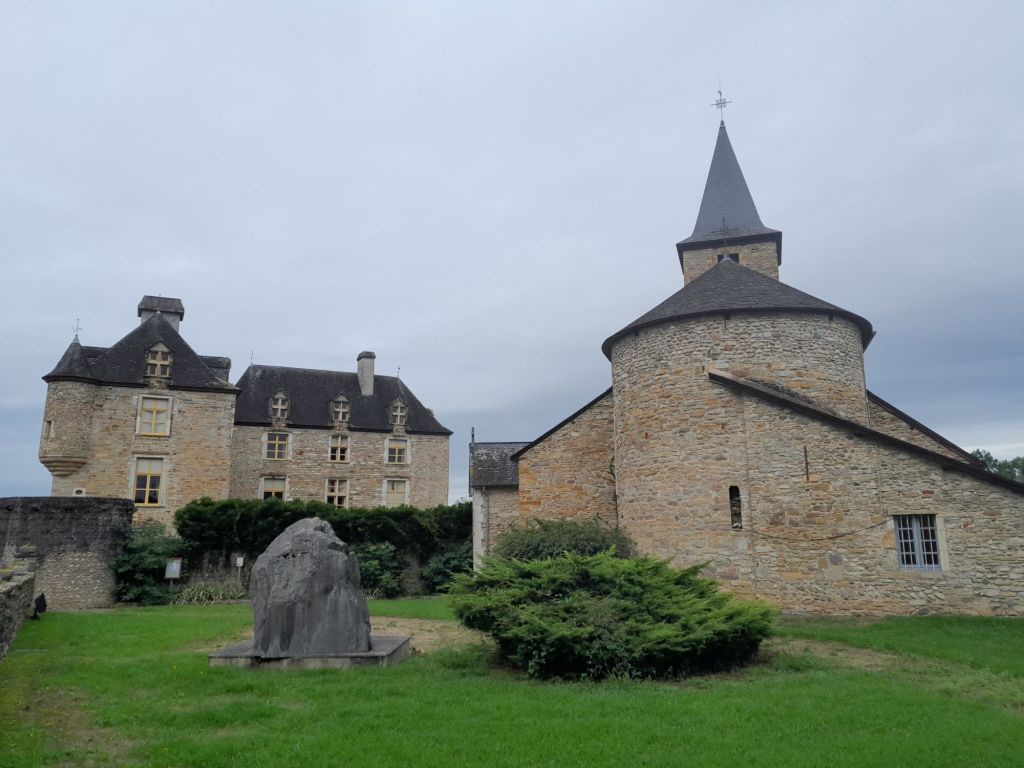
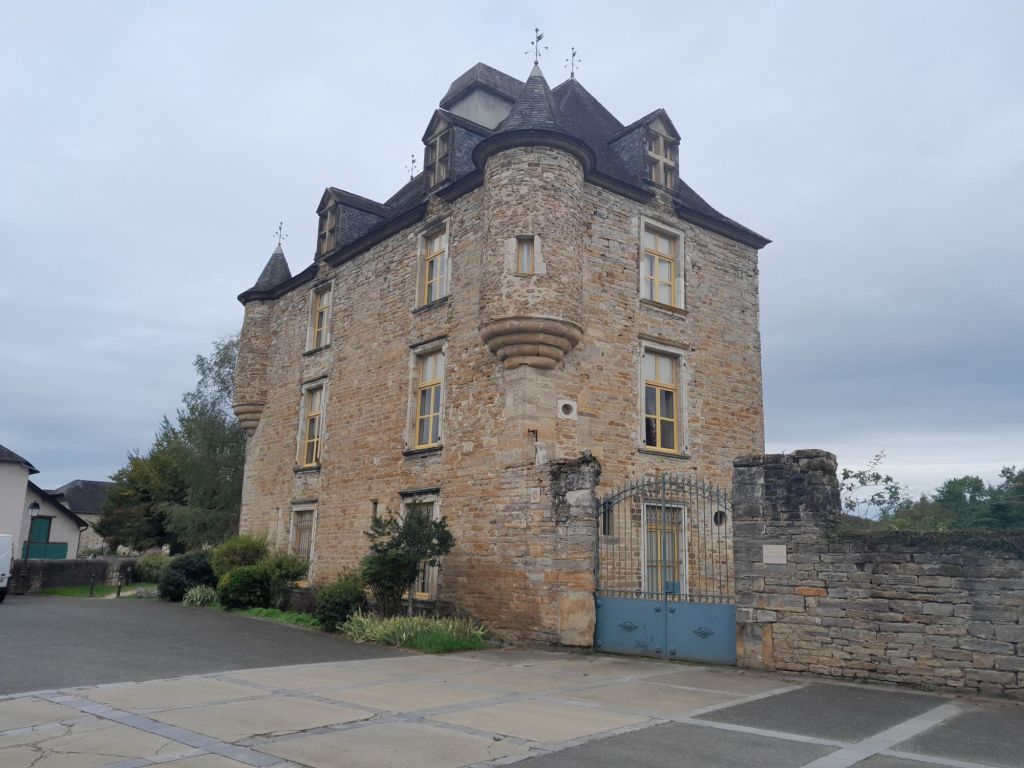
I didn’t see anybody in the village itself but it did boast an attractive church next to the chateau and pigeonnier.
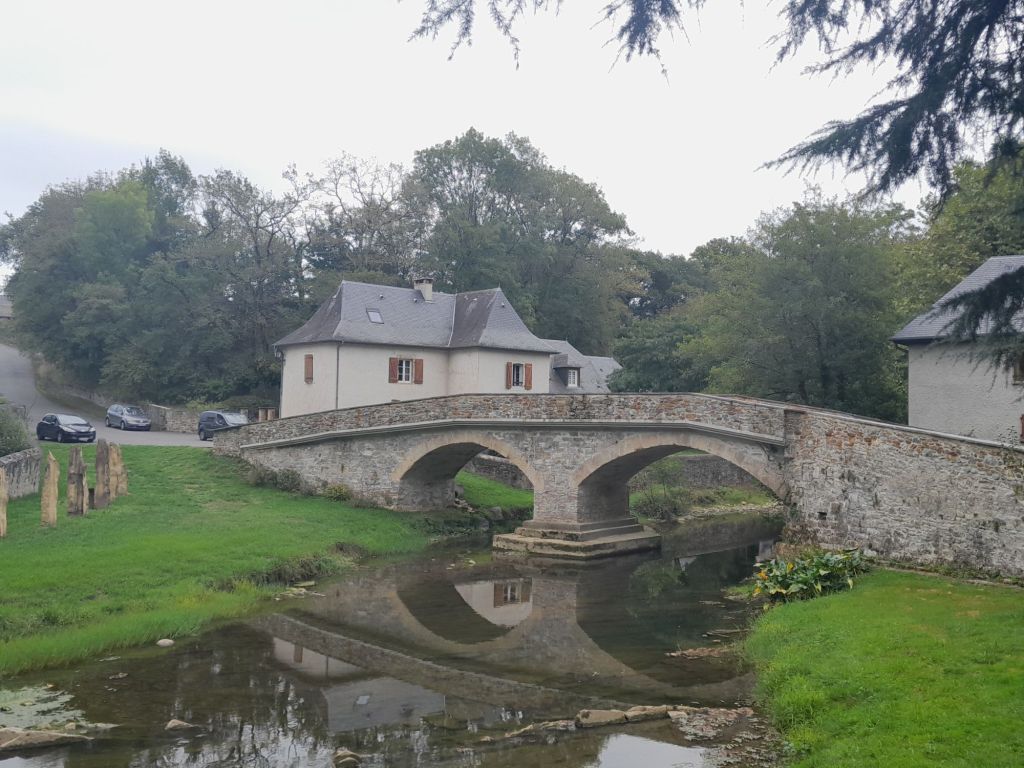
The walk from Oloron-Sainte-Marie to Hôpital-Sainte-Blaise was only 23km so I wasn’t on any great hurry to reach my destination for the day. Just after midday I pausdd by a pretty little bridge to eat my sandwich and book my penultimate night’s accommodation at St Just Ibarre.
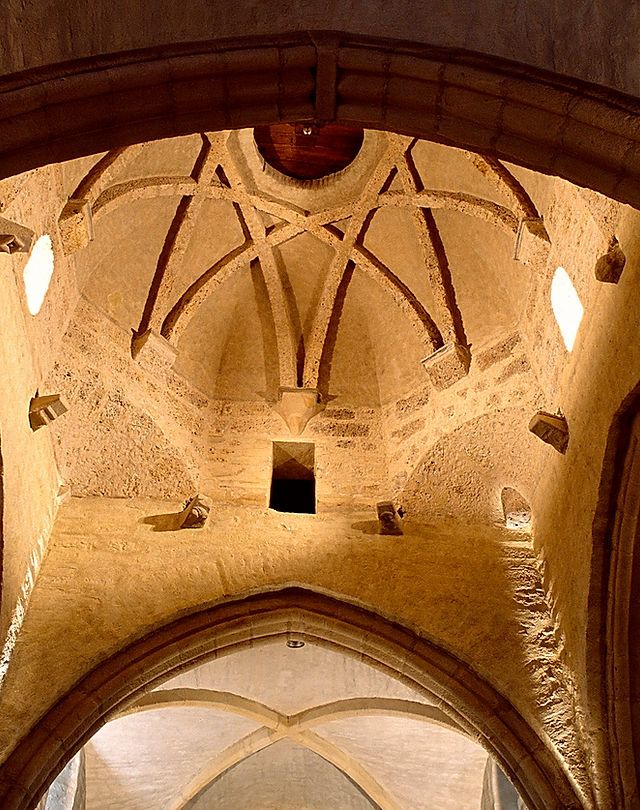
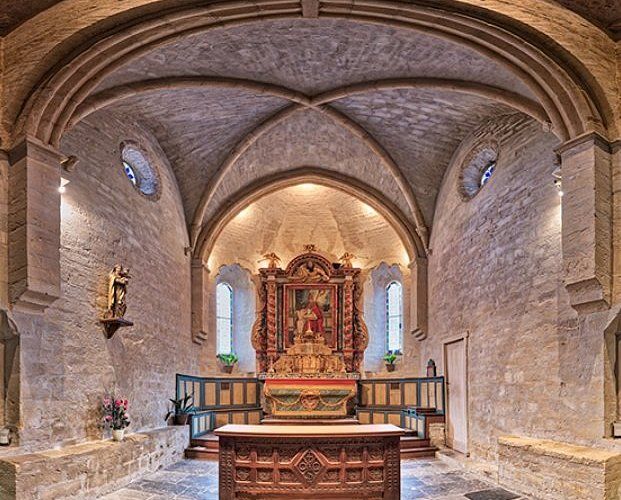
It was only 2pm when I reachrf Hôpital Sainte Blaise.The church is the only remnant of an ancient hospital foundation on the pilgrimage route to Santiago de Compostela and is a UNESCO World Heritage Site. This Romanesque building, with its Hispano-Moorish architectural features, is unique in France.
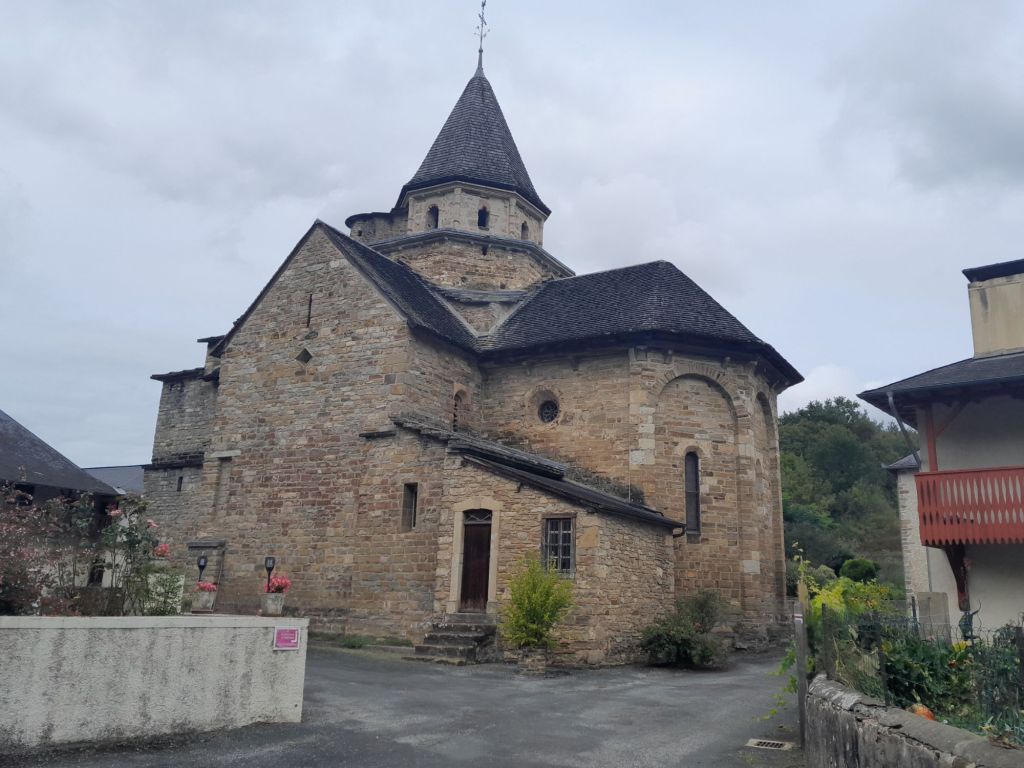
As I made my way to the village gite it was sad to see that the auberge next to the church was closed and the restaurant on the other side of the road was up for sale. It’s sadly an all too common sight in rural France these days. I just counted myself lucky to be on the right end of Béarnais hospitality.


 Pilgrim's Progress - Long Distance Walks in Europe and the UK
Leave a comment