The earth has its music for those who will listen;
Its bright variations forever abound.
With all of the wonders that God has bequeathed us,
There’s nothing that thrills like the magic of sound.
Reginald Holmes – The Magic of Sound
The barman in the Glacier Bar in Quillan had got it wrong. After I’d managed to get his wife to find me a widget to open up my dead phone and transfer the sim card to my other (nearly but quite dead) phone I rang La Scierie to find out where they were located.
A cheery south London voice greeted me on the other end of the line and told me that they were located 500m up the road. I heaved a huge sigh of relief and made my way their post haste.
Run by a lovely couple from Tunbridge Wells, the chambre d’hote had everything I could have wished for by way of amenities. Another French couple from near Arles who were also walking the Cathar way were busy digging in to a plate of pork and flageolini beans. Although I hadn’t booked a meal, the proprietess was kindness personified and promptly whipped me up the same dish the other couple were having (together with another beer!)
The French couple who were staying were called Alex and Francoise from near Arles. They were also walking the Cathar way albeit at a more leisurely pace than me. Our paths were to cross frequently over the next couple of days!
The next day I set off early, shortly after 8am. It was going to be a long one – a 41km hike to Roquefeuil. I just prayed that the temperature would cool down a bit.
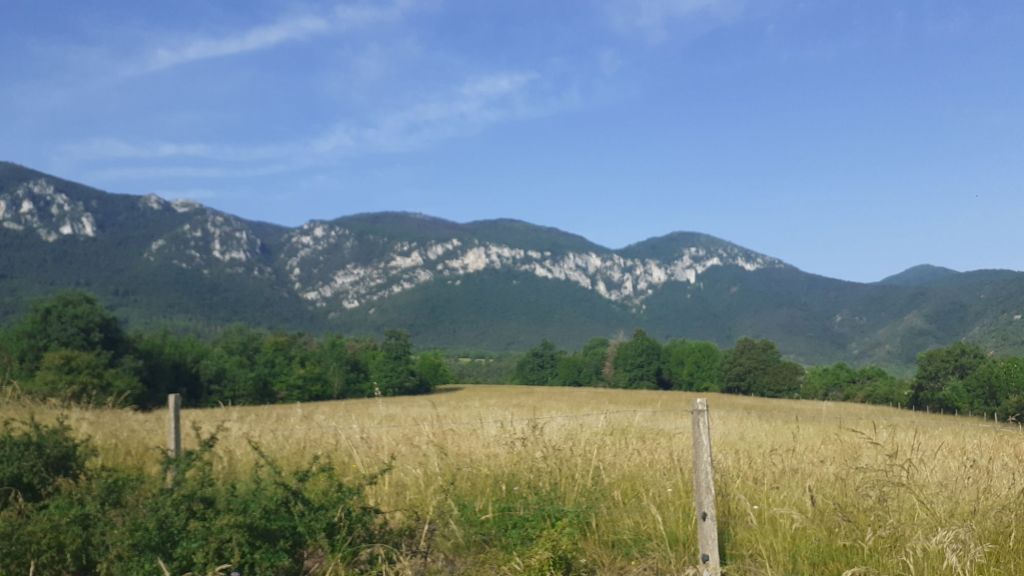
By 10am I had already drunk 2 litres of water and faced another of those inordinate uphill slogs in 90C of heat. Once again I was forced to take frequent breaks by the side of the trsil with my T shirt drenched in sweat. Despite having set off earlier than the couple from Arles, I was soon overtaken by them as they passed me slumped in an ignominious sweaty heap by the side of the trail.
It’s never a good sign when you start to phantasise about your first ice cold beer of the day before it has turned 10am! I can remember a few years ago on holiday in Egypt watching a group of rotund Brits on an ‘all inclusive holiday’ downing pints of lager in tbe hotel pool shortly after breakfast. But the extreme heat had driven me to a similar obsession with the next amber nectar when I should have been grappling with more abstruse subjects like 13th century French politics or the impact of the Troubadours on the culture of the Languedoc.
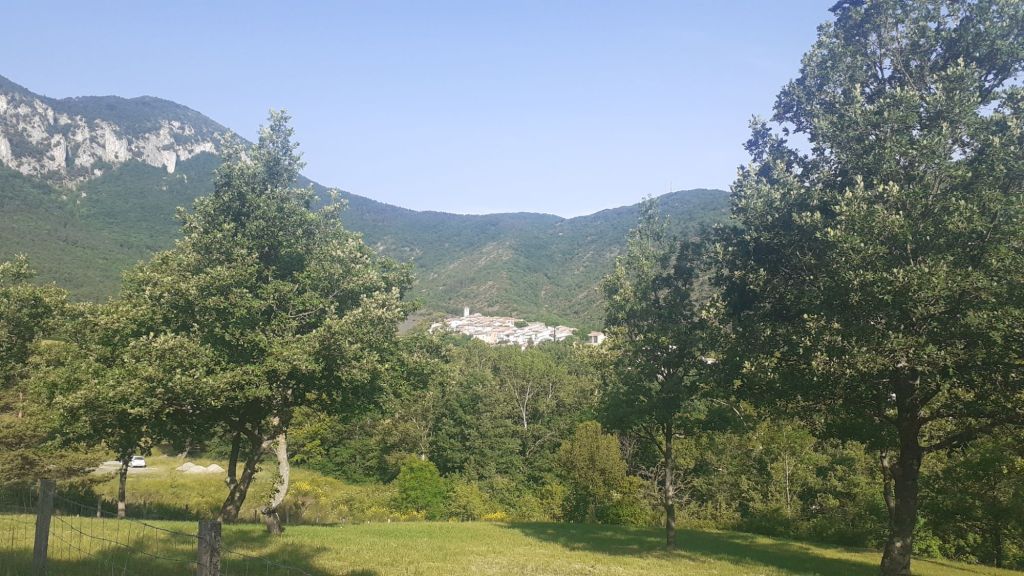
I wasn’t expecting much of Nébias, a,small unprepossessing village clinging tenuously to the side of a barren mountain. Imagine my aurprise and joy therefore when it transpired that it had a bar and a beer garden in the ahade of willow trees. I was in there like a shot and soon had three ice cold beers lined up in front of me.
I got chatting with an English couple sitting at a nearby table who lived in the village and were a mine of local information. When I mentioned that I was planning to walj as far as Roquefeuil in the day, I could tell by their sharp intake of breath and rictus grins that they clearly didn’t think it was a good idea. And at this point, the proverbial penny dropped, that I had, for today, possibly bitten off more than I could chew!
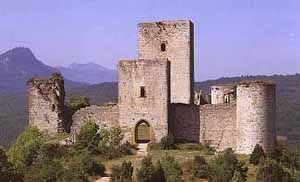
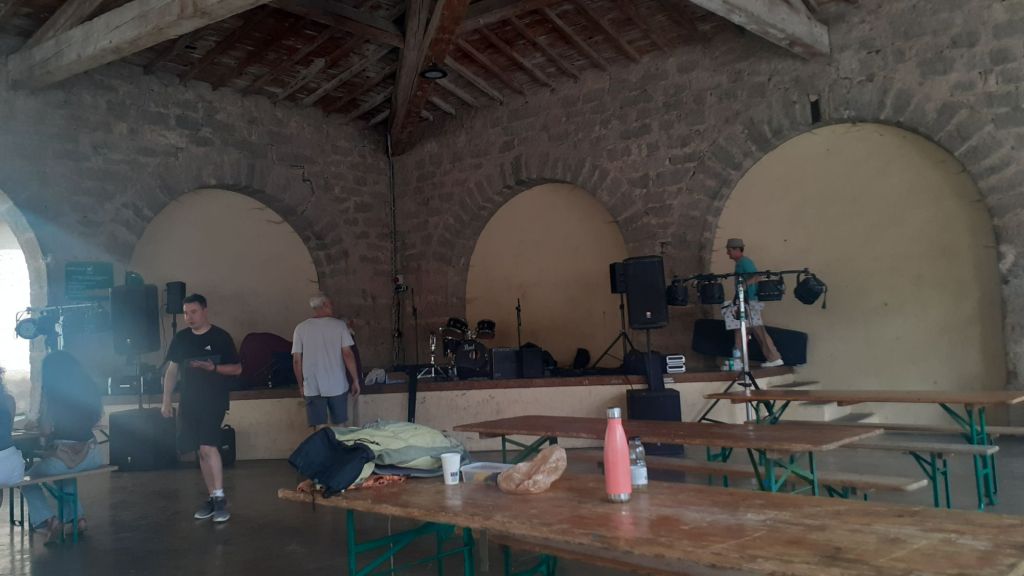
When I reached Puivert, shortly past 3pm, I was done. I’d only covered a measly 21km but I decided to call it a day. Besides, it looked like preparations were afoot for a shindig in the village’s covered market, later in the day. Luckily I found somewhere to stay for the night, had a,cold shower and returned for an evening of jazz and dancing.
Before the party got going I dropped in to the Quercob museum to learn more about the Troubadours and their rich history.
The “canso” is a song with stanzas, a form of lyric poetry that emerged in the 12th century among authors who practiced the art of trobar, abandoning Latin and using the Occitan language, which they initially called “romance”. These followers of “trobar” or troubadours, like Pèire Vidal in Saissac, composed and sang these poems, essentially devoted to “fin’ amor”, in Occitan courts or further afield. Their works, taken up by itinerant musicians, arrived in the 13th century in the northern principalities, where other poets, the trouvères, were inspired by them to recount legends such as that of King Arthur, and in turn invented a new form: the romance. The instruments of the troubadours and those who played them, the jongleurs or “joglars”, have been reconstructed by archaeo-musicologists and were on display in the museum.
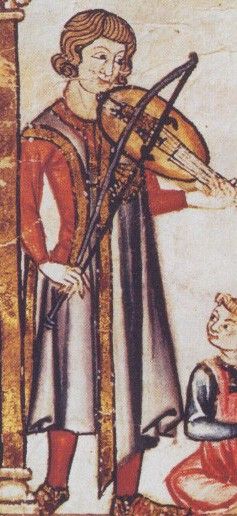
Troubadours played a central role in medieval society. They were not only entertainers but also bearers of news and cultural values. Their songs and poems served to spread news, entertain, and convey courtly ideals. Troubadour culture developed particularly in southern France and had a great influence on European literature and music.
So it seemed curiously appropriate that Puivert was hosting a modern day equivalent of a troubadour shin dig. Throw in an French jazz band specialising in African jazz, beer on tap and pizza and you have all the ingredients for a good party.

After wolfing down a pizza it was time to get up on stage and join the merry throng. The heavens had opened and it was raining cats and dogs but this did little to assuage the party atmosphere. Children and parents were break dancing with gay abandon, several of the village elders were shuffling enthusiastically to the Afro beat and I managed to join the merry throng for a few of tbe techno dances. Finally my feet gave me the message that it was time to slope off to bed rather than continuing to party until dawn. It had been a short day but one that had turned out better than expected!
 Pilgrim's Progress - Long Distance Walks in Europe and the UK
Leave a comment