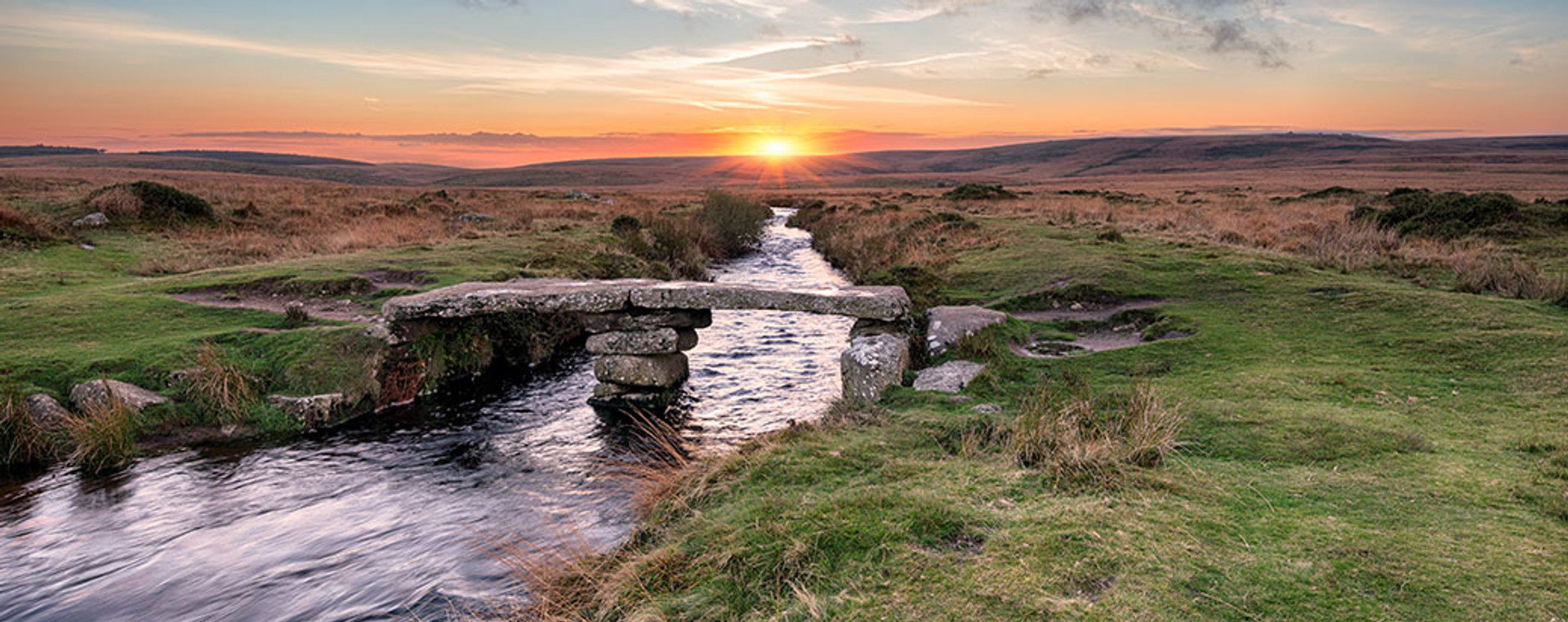
The notion that I had walked twelve hundred miles since Rotterdam filled me with a legitimate feeling of something achieved. But why should the thought that nobody knew where I was, as though I were in flight from bloodhounds or from worshipping corybants bent on dismemberment, generate such a feeling of triumph? It always did.
A Time of Gifts – Patrick Leigh-Fermor
This is a blog with a difference – its about other people’s walks rather than my own. Its about travelogues which have inspired me over the years to get out of my armchair, get my boots on and get out there.
With the shadows lengthening, the days shortening and the imminent arrival of the end of British/European summer time, it’s almost time to put my walking gear into winter storage. In the absence of any long distance walks planned over the next 6 months or so, my reflex action is to scour my book shelves, dust off and re-read classic accounts of long distance walking in Europe and hope to find inspiration for my next adventure .
Apparently my great grandfather used to spend the long winter evenings in Norfolk, sat in a rocking chair reading the Old Testament by candlelight. This must have been sometime in the middle of the 19th century before electricity let alone Netflix or Apple TV had arrived in the vicinity of King’s Lynn. Worthy activity though reading the Old Testament doubtless is, I can think of better ways of spending long winter evenings than ploughing through The Book of Amos.
My grandmother, whose catch phrase was “Have faith”, may also have spent much of her childhood reading The Old Testament by candlelight in Norfolk. Her eyesight became so bad that her final years were spent in a home for the blind on the Isle of Wight.
Nowadays, thankfully most of us have access to electricity and more reading options available to while away those long winter evenings. If my grandfather was alive today I would definitely recommend ” Six of the best” – not so much obscure books of the Old Testament, rather travelogues about walking in Europe.
So here (in order of publication) are my ‘Six of the best’ travelogues written by English authors about walking in Europe. (NB. Post Brexit, sadly books about walking in the UK don’t qualify for the short list!)
1. A Time of Gifts – Patrick Leigh-Fermor
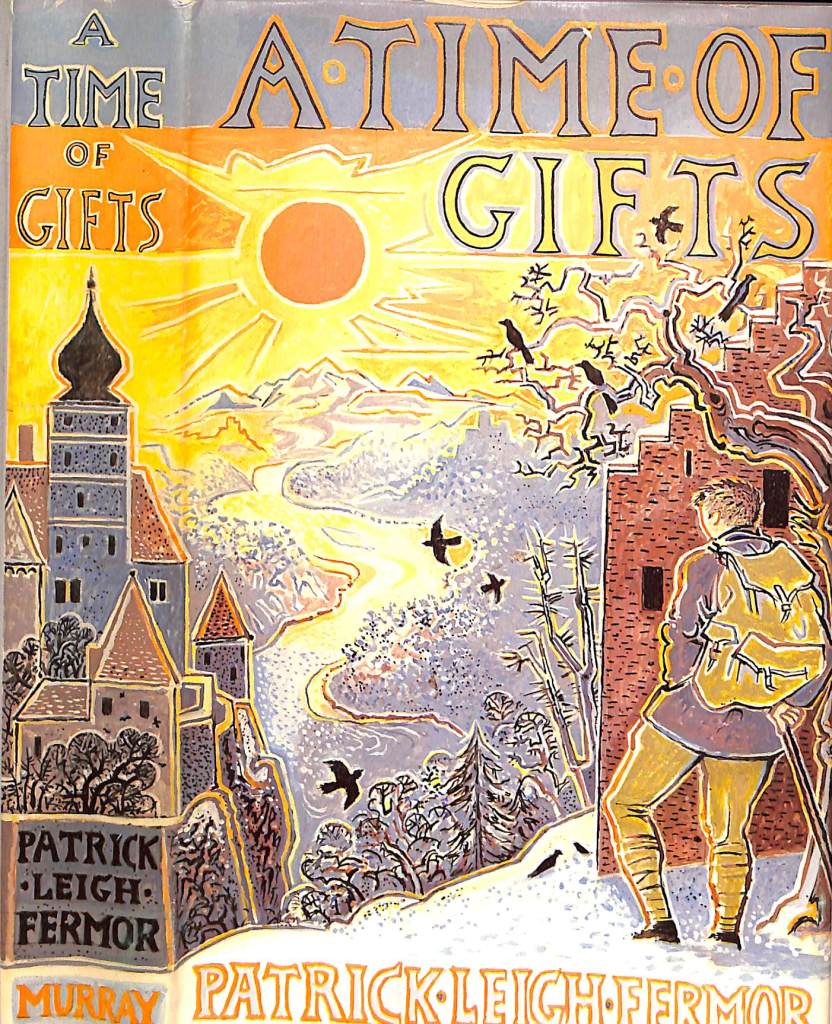
‘A Time of Gifts’ is considered as one of the very great works of travel writing in English. “Nothing short of a masterpiece” says Jan Morris (a great travel writer herself, who died in November, and in an earlier life as James was reporter on the 1953 Everest ascent). And when it comes to distance walking, Tower Bridge to the Iron Gates of the Danube certainly counts as long.
I remember reading this book for the first time when I embarked on a month long interrailing holiday across Europe in spring 1984. Like Paddy Leigh-Fermor, my journey started in London and its ultimate destination was Istanbul. My trip there by rail was a good deal shorter and a lot less luxurious than Paddy’s but there were some interesting moments on the trip including nearly being arrested in Yugoslavia for being in possession of a suitcase full of $10,000 dollar notes (which a shady looking guy sitting next to me had persuaded to take care of for him while machine gun toting border police searched the passengers) as well as being accosted by a gay bank manager in Istanbul, while I was attempting to change some travellers checks, and being invited back to his apartment for “a cup of coffee and some baklava”….
It was in December of 1933 that Patrick (Paddy) Leigh-Fermor took a taxi to Tower Bridge, trotted down the rainswept steps of the Thames to a small Dutch freighter, and set off for Constantinople. On foot, of course; on a budget of £1 a week – which was quite a lot of cash in 1933. His route-plan was simple. Up the Rhine, and then down the Danube.
Before World War II, it was still possible to stride out, towards somewhere a few thousand miles away, using the public roads as Robert Louis Stevenson and Modestine the donkey had done a hundred years before. In the same way a couple of years later, Laurie Lee was heading south across Spain.
Leigh Fermor was 18 years old, already kicked out of several schools, hanging around London waiting (though he didn’t know it) for the start of World War II. The moment of decision – I’m always interested in those ten-second events, where someone decides to spend months, in Leigh Fermor’s case 13 of them, in pointless walking (or rowing in a boat, or building Chartres cathedral out of bits of string). Leigh Fermor is the first to give – not a rational explanation – but at least an explanation. “A new life! Freedom! Something to write about!”
The walking is long – and so is the writing. ‘A Time of Gifts’ is just the first volume, taking Paddy as far as a random bridge over the Danube on the way into Hungary. Volume 2, ‘Between the Woods and the Water’, carries him on to the Danube’s Iron Gates gorge, a bit short of Bulgaria. It was only after his death, a full 80 years after the original journey, that the final volume ‘The Broken Road’ finally carried him to Constantinople.
Some of it Is heavy going – not just the knee-deep snow through the forests of the Rhineland, but also for the severely taxed reader. “The vigorous Teutonic interpretation of the Renaissance burst out in the corbels and the mullions of jutting windows and proliferated round thresholds. At the end of each high civic building a zigzag isosceles rose and dormers and flat gables lifted their gills along enormous roofs that looked as if they were tiled with the scales of pangolins.” But then comes the wondrous two-page set piece of the Munich Beerhall, the great cylindrical mugs banging like a battlefield, the stout burghers shooting themselves in the face, as it were, with the wide pewter cannon and falling backwards to be carried away by the stretcher-bearers.
2. As I walked out one Midsummer Morning – Laurie Lee
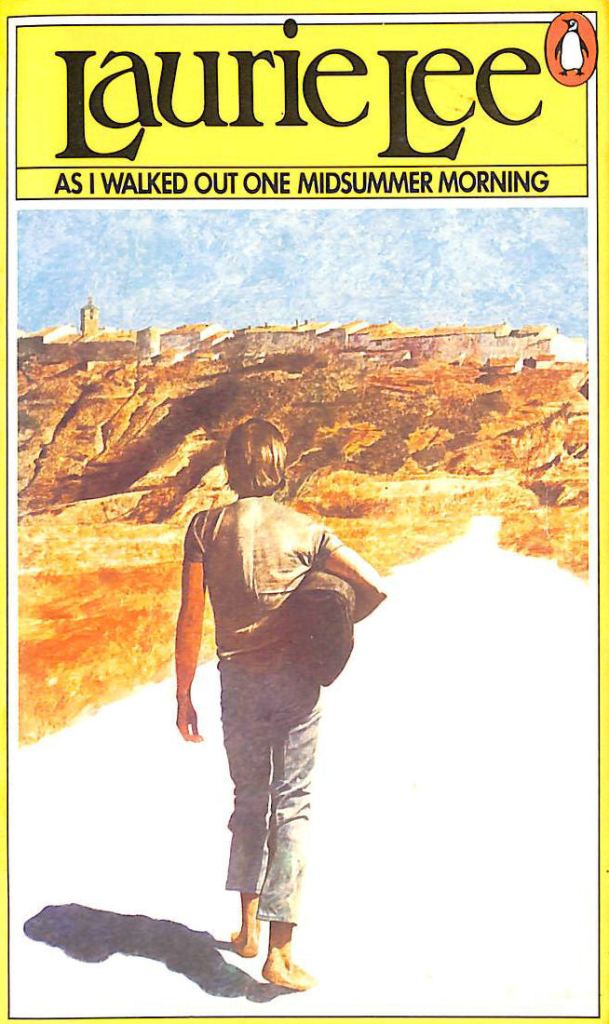
This was a book that I first read as a 13 year old during my first term at Winchester College. It wasn’t in any syllabus and it didn’t feature in any examination papers but my div don ( a strangely named chap called Simon Flowerdew Elliot who had quit a career in the City to become a master at Winchester) enjoyed it and so, as it turns out, did I.
The midsummer morning in question was in 1934, one of those sleepy summer days between the wars. Laurie Lee grew up in an impoverished single-parent household in the Cotswolds – those early years are covered in the first book of his autobiography, Cider with Rosie. At the age of 19, “still soft at the edges,” he left home to see the world. He walked down the cottage path carrying a hazel stick, a small tent, a violin, and a tin of treacle biscuits made by his mother. And he would keep walking for a year and a half, all the way to the southern coast of Spain.
When darkness came, full of moths and beetles, I was too weary to put up the tent. So I lay myself down in the middle of a field and stared up at the brilliant stars. I was oppressed by the velvety emptiness of the world and the swathes of soft grass I lay on. Then the fumes of the night finally put me to sleep—my first night without a roof or bed.
It takes him three months across Spain southwards to the sea. By the end of the first one the blisters have hardened up and he can walk without pain
Over the first two months he walks to London, taking in Portsmouth because he’s never seen the sea. He sleeps in the fields, and pays his way by busking with the violin. He overwinters in London, working on a building site. And then spends all his saved up wages on a one way ticket to Vigo.
People who go on extreme journeys rarely offer any reason. Stuart Kettell, who pushed a Brussels sprout up Snowdon with his nose in 2014, did raise £5000 for the Macmillan Cancer charity. “People definitely think I’m mad, and I’m beginning to think it myself,” he said as he coaxed his small brassica up what seems to be the Llanberis path (I guess Crib Goch would have been pushing it…).
And Lee did have a reason for choosing Spain: his language skills. Thanks to a glamorous young woman from Buenos Aires, he knew a sentence of Spanish. Por favor dame un vaso de agua would come in very useful when he collapses with sunstroke in the wheat fields west of Valladolid. A moment anticipated even in the preliminary stroll across Salisbury Plain.
I pretended I was T. E. Lawrence [of Arabia], engaged in some self-punishing odyssey, burning up my youth in some pitiless Hadhramaut, eyes narrowing to the sand-storms blowing out of the wadis of Godalming in a mirage of solitary endurance.
It takes him three months across Spain southwards to the sea. By the end of the first one the blisters have hardened up and he can walk without pain. He’ll face an attack by wolves (but perhaps they were just wild dogs), heatstroke, bedbugs the size of beetles, two mountain ranges and the outbreak of the Spanish Civil War. He busks in the streets, in cafés, and once in a brothel. Meanwhile meeting up with vicious National Guards, gay waiters, lovelorn landladies and a slightly well-known poet called Roy Campbell.
3. Journey through Europe – John Hillaby

I first came across John Hillaby as a fifteen year old. Reading the iconic account of his walk from Land’s End to John O’Groats (Journey through Britain) was the inspiration for me to embark on long distance walking and instilled in me a love of travel literature that remains as strong today as it did 45 years ago.
While it’s not quite up to the standard of Hillaby’s iconic account of his walk across Britain (Journey through Britain), the account of his 1,300 mile walk across Europe from the Hook of Holland to Nice on the Mediterranean, is still definitely worth reading. Despite lugging a 40 pound backpack and having to navigate his way without the benefit of established footpaths, Hillaby managed to accomplish the entire walk in a staggering 67 days.
At a walking pace, as opposed to the speed of the wheeled, waterborne, or airborne, one is more apt to pause to take in one’s surroundings, get the lay of the land, its history, even its history as considered in the context of that of another place, e.g., in the fourth chapter, “Across Brabant,” Hillaby considers the Valkenswaard via the 15th century Boke of Seynt Albans, also known as The Book of Hawking, Hunting, and Blasing of Arms out of Hertfordshire, England. It provides hierarchy of raptors and the social ranks for which each bird was appropriate and so lends insight into the Dutch home of falconry.
Hillaby brandishes Shakespeare, Tennyson, Xenarchos, and the odd lines of a shanty or a bit of folklore as he connects the dots on his maps with their places in history. His story mostly abounds with the kind of exuberance with which the hiker in the great out of doors will be familiar, but it is also fraught with his dismay at the demise of the great out of doors at the hands of corporate developers
The travelogue is a splendid potpourri of factual account, lively anecdote,mythology,history,geology,natural history and private comment. People, customs, contretemps, an all-pervading and undisguised hatred of motor traffic, digressions on wild boars, falcons and wild plants,cogitation, are some of the themes of this diverting and entertaining book. In the words of Bernard Levin “what shines is his enjoyment of life, of life itself and the fact that he is living. It is this zest that carries him along his journey and us with him. A splendid book by a splendid man’.
And there are some classic insights about long distance walking such as the following passage: A young man I met in Lorraine said that all his life he had wanted to travel alone as I did, but somehow he could never make up his mind to begin. What made it so worthwhile? After talking until two in the morning I thought I had got pretty close to the answer. Independence, I said. Walking means no pre-ordained schedules, no hanging about waiting for transport,for other people to depart. Alone with a pack on your back you can set off at any time,anywhere, and change your plans on the way if you want to. Looking round at his well-appointed apartment, I said of course it depended on what he did for a living. Could he get away for a few weeks? He shook his head, sadly. No, he said. It was difficult. He ran a travel agency.
4. Clear Waters Rising – Nicholas Crane

It was only when I returned from my most recent walk from Geneva to Le Grau-du-Roi that I realised that my path had crossed Nicholas Crane’s – in a little a village in the Cevennes called La Bastide Puylaurent. His short stay there encapsulates what makes Crane such an excellent travel writer. In the space of a few paragraphs he not only manages to encapsulate the place but also infuse his narrative with original insights, fascinating encounters and obscure historical narratives that I only became aware of when I returned home and reread the passage in ‘Clear Waters Rising’.
This lovely book narrates one of the most extraordinary adventures imaginable; a walk from Cape Finisterre in north-west Spain all the way to Constantinople – a 6,000-plus mile trek through the mountainous spine of the continent, undertaken continuously over eighteen months, mostly alone, with a strict prohibition on using any means of transport other than Shanks’ pony. Crane has to fend off attempts to get him in cars by, inter alia, Ukrainian border policemen and a Turkish general, and declines to use a cable car in his attempted climb of Mont Blanc.
Crane started on the Camino Frances, walking east rather than west, before turning north at O Cebreiro to go through the Sierra de Ancares and the Cantabrian mountains of northern Spain. He descended to the Basque country, then climbed into the Pyrenees, passing through Andorra. At the old French spa town of Vernet-les-Bains he turned north through the Cevennes towards the Alps, which he reached just as winter was setting in, having started at Finisterre in midsummer. For the next few months he slogged through the snow and ice in France, Switzerland, Italy and Germany, often sleeping outdoors in his tent in very cold conditions (until Grenoble, he had no tent and often slept outdoors or in ruined huts and barns). By the spring he had reached Vienna; thence he headed for the Carpathians, which form a long sickle around the Hungarian plain. Weaving in and out of Slovakia and Poland for a couple of months, he had a tricky couple of weeks in Ukraine, then just emerging from Communism, where the authorities insisted on his being accompanied on his travels, then a long spell in the Romanian Carpathians. Declining to cross into Serbia – this was 1993, with the Yugoslavian war at its height – he followed the Danube into Bulgaria. Forced to cut short his adventures in the Balkan mountains after close calls with various armed and / or sinister folk, he dropped down in to the Maritsa valley and sped onward towards the Bosphorus via Edirne – old Adrianople, where the Romans under Valens were badly (and, for the Western Empire, perhaps fatally) beaten by the Goths in 378. He finally reached the Byzantine capital shortly before Christmas.
Crane wisely doesn’t attempt a relentlessly detailed day-by-day travelogue, which I suspect would have become repetitive. Instead he focuses on local colour, helped by his travel writer’s knack for serendipitous encounters with “characters”, as well as interesting but not overlong explanations of the history of the places through which he is passing. Occasionally he throws in a little family history too; there seems to be a long history of Cranes going on long walks in remote parts of Mitteleuropa, with both his parents and grandparents having done so. He has a great love for dramatic and beautiful landscapes, seldom in short supply on his long amble, which he communicates very well. He often mentions, without making a big thing of it, going to church; I wondered if this was perhaps indicative of some kind of faith. His is certainly a humane and thoughtful perspective on the mountain peoples of Europe, and the tensions they face in modernity; he admires without romanticising.
You have to admire Nick Crane’s grit and pluck, the more so since in the best British adventurer’s tradition, he does not harp on the physical or mental adversity (though he does not ignore it; he writes frankly about the difficulties of barely seeing his new wife for eighteen months, and is honest about the exhaustion and demoralisation that occasionally overtook him). He faced some truly awful weather, tramping through the Alps at the height of winter, and was caught in a ferocious storm in Transylvania that nearly destroyed his tent. He had several nasty falls, and close calls with a bear and numerous fierce sheepdogs. It did occur to me that he seemed to be rather under-prepared for bad weather, but then again he was having to carry everything he needed and was already an experienced adventurer.
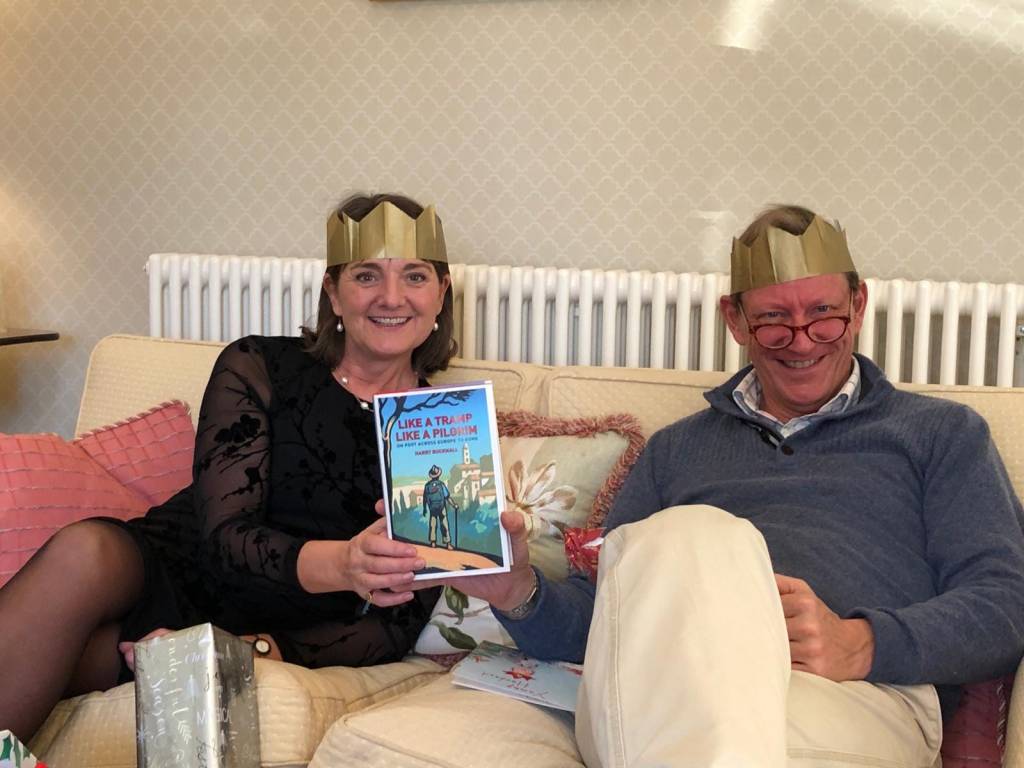
5. Like a Tramp Like a Pilgrim – Harry Bucknall
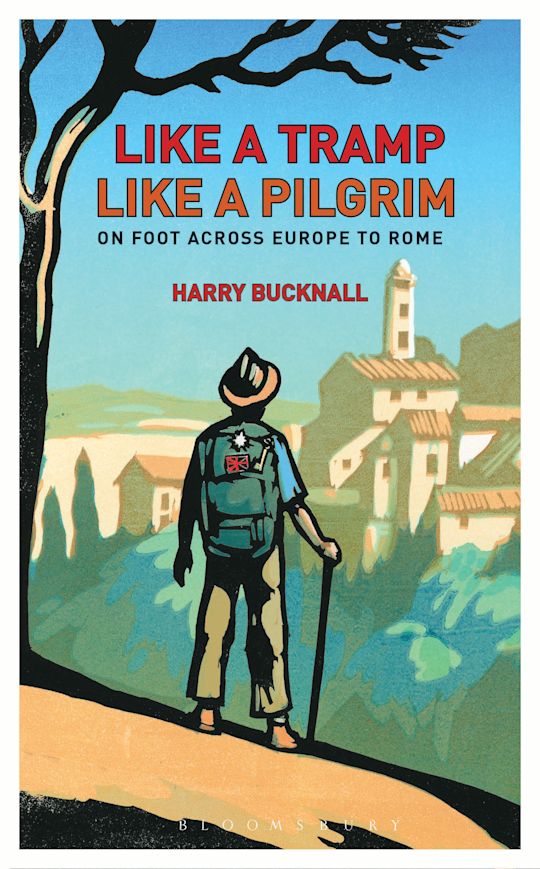
Watching in disbelief as his computer was struck by lightning in 2007, Harry Bucknall had
no idea that the subsequent trail of events would lead him to Rome – five years later, on foot.
Following the Via Francigena, the ancient pilgrim path that dates back nearly two thousand years, Harry walks through England,France, Switzerland and Italy weaving a historical tapestry liberally coloured with tales of angels and saints, emperors and kings and war and revolution. He uncovers a little known route that leads him through vineyards and villages, towns and cities and over rivers and mountains to the heart of the Eternal City, Saint Peter’s Basilica.
Like A Tramp, Like A Pilgrim is a joyous journey of Elizabethan proportion filled with anecdote,
adventure and mishap as Harry encounters the changing faces of a landscape suffused with
history; yet his journey is perhaps most enriched by the extraordinary stories of those he meets –
fellow pilgrims and locals alike – along the way.
I have to admit that on first reading there were several passages in the book that I found more than triflingly annoying – specifically the frequency with which Harry was able to drop in and visit innumerable affluent friends who providentially lived close to the route he took on the Via Francigena. For this reason alone his backpack weighed a bit more than the average walker’s as he decided to pack suitable attire to wear at smart evening functions! Staying in stately homes and chateaux is all very well, but standards, dear boy, have to be maintained!
Having read the book for a second time and got to meet Harry in person (when he kindly agreed to come down and give a talk about his walk to a 100 people I had invited to our village church in Wiltshire), I can heartily recommend it as a humorous and insightful account of his walk from Dorset to Rome.
6. The Crossway – Guy Stagg
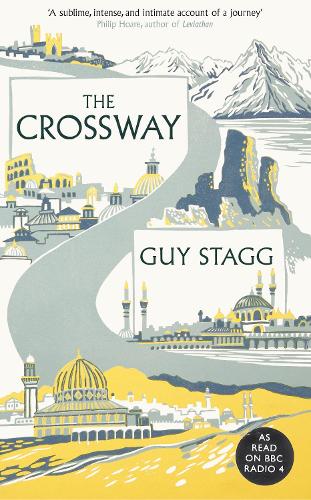
On New Year’s Day in 2013, Guy Stagg set out to walk alone from Canterbury to Jerusalem. He planned this journey, which would take ten months, cross 11 countries and cover 5500km, in the wake of severe depression, a suicide attempt and the powerful urge “to leave oneself behind”.
Although he trekked from shrine to shrine, monastery to monastery, cathedral to cathedral, along the ancient routes of Christian pilgrimage, Stagg did not at the start – nor at the end – share the faith of the footsore wanderers who had trudged these paths before him. Instead, he was “a nonbeliever hoping a ritual would heal him”. His pilgrim’s progress begins in anguish and perplexity. It finishes not in triumphant conversion but in different shades of doubt. Stagg’s quest for “the emptying of self” via slogging hardship, loneliness and exhaustion, his attraction to this “substitute suicide”, leads not to some blazing epiphany. At most, he gains a clearer view of the hopes and fears he packed with his rucksack in Kent. The book (his debut) that he has made from his trip offers little in the way of facile pseudo-spiritual uplift. It is much richer, deeper – and more valuable – than that.
Stagg’s pedestrian itinerary takes him through France, across the Alps into Switzerland, down the length of Italy to Rome, then – after a sea crossing – through Albania, Macedonia and Greece into Turkey. Leaving Istanbul, he traverses Turkey to its southern coast, where the grim realities of civil strife in Syria mandate a hop to Cyprus, a trek through that island, a passage to and through parts of Lebanon, followed by an airborne detour (the only one) via Jordan into Israel. As for so many weary travellers before him, the spiritual supermarket of Jerusalem proves a grievous disappointment. The “Holy Land” itself feels like a messianic madhouse afflicted by “righteous blindness”. Sectarian egotists each claim a monopoly on “divine endorsement”. In the Levant as a whole, the bloody chronicles of Crusade and foreign invasion contaminate the pilgrim’s individual struggle for rebirth. Here, inevitably, “the history of sacred travel becomes a record of conquest”.
As he walks the seasons pass, from the snowbound terrors of the Great Saint Bernard pass to the baking monotony of the Anatolian interior. Across peak and plain, forest and suburb, through blizzard, hail and heatwave, Stagg strides, or staggers, onwards despite falls, wounds, sickness, fever and the bouts of hopelessness that leave him – as when struck down by chronic diarrhoea on a Lebanese mountain – “crying at the shame and crying at the pain and crying at the fear as well”. A sort of pantomime penitent, he follows the Christian pilgrims’ map to Rome, Constantinople and Jerusalem without the inner compass of any settled faith. In flight from panic and emptiness, Stagg craves a direction and a purpose. He longs “to print my life with a pattern of its own”. A weaker, smugger book might have, unambiguously, found one. Bookshop shelves now groan with self-help tomes that deploy the logistics of traditional pilgrimage (the Camino de Santiago has become a favourite route) to tell comforting tales of fast-track regeneration. A first-rate writer, and a tough-minded one, Stagg never downplays the confused masochism that helps drive him on to the next bare cell in a run-down convent or rubbish-strewn wayside shelter.
Pilgrimage cannot by itself allay the “hunger for hurt” that fed his former despair. Rather, he grasps that this epic walk may let him channel and control “the awful thrill of surrender”. After all, “when we make our own suffering, the pain is a feeling like power”. Few contemporary writers dare face the dangerous lure of sacrifice in a world – and among people – presumed to run exclusively on rational self-interest and the desire for personal or collective fulfilment. Yet the fatal attraction of martial jihad shows that, in the Islamic world at least, sacrifice can still re-write the rules of contemporary history. Stagg stays close to the Christian traditions of self-denial. “Today we have to crucify ourselves,” a Cypriot priest tells him. Beyond his brush with Turkish politics as President Erdogan smashes the Gezi Park protests in Istanbul, he hardly touches on the recent wars of faith that have weaponised that “hunger for hurt” around the eastern stretches of his trek. Yet with candour, and clarity, The Crossway shows that even the solitary pursuit of “inner martyrdom” can enslave as well as liberate.
All the same, Stagg does find riches in abundance on his way. For a start, he writes with a sort of rapturous exactitude about the peoples, climates and landscapes he meets, from the rain that “lisped in the trees and applauded against the cliffs” in the Apennines to the glowing “outcity” of the Istanbul suburbs, “made strange by the night, like the endless wastes of the ocean floor”. He fills in the history of Christian pilgrimage, sketches its star turns – such as Benoît-Joseph Labre, the French peasant lad who became the patron saint of pilgrims – and explains the growth of the monastic orders in whose surviving houses he finds refuge across swathes of Catholic Europe. Among these cheerful monks and nuns, but not only with them, Stagg receives the truest blessing of his trip. This is the understanding of sacrifice not as some self-abasing orgy of endurance but “the habit of kindness”, or “the steady practice of patience”. “The charity of so many strangers” keeps both his hope – and his body – alive. He finds those routine customs of hospitality in pretty good shape everywhere. People of all backgrounds cherish them. Among the pious country folk of rural Turkey, during the broiling, parched, hungry days of Ramadan, he discovers that “Their religion was not ritual, or prayer, but the practice of sympathy performed day after day”.
Debating with the Orthodox mystics of Mount Athos, Stagg finds that “I could not reason my way across leap of faith”. That leaps eludes him in Jerusalem, as it had in Canterbury. No final revelation crowns the march. As a Protestant pastor tells him in Albania, “In every country there are proud men and wicked men, injustice and sin. Everywhere the same. So why walk?”
In part, because that “habit of kindness”, which the sole pilgrim stirs into action, from Picardy to Thessaly to Galilee, yields a powerful antidote to the beguiling fantasy of suicide as “a form of salvation”. Readers may also draw their own lessons from Stagg’s open-ended, open hearted journey. For this one, The Crossway prompted no nostalgia for a lost age of zeal and faith. It shows, rather, that pilgrimage loses its way when doubting seekers swell into a crowd, a sect or (worse) an army. Stagg states that, apart from the need “to mend myself”, he wanted to explore “the major crises of Christianity”, as the faith declines in Western Europe West and faces fresh persecution in the Middle East. Yet you notice that the scriptural virtues he admires appear to survive better in “secularised” societies than in states and regions where politicised religion now holds sway. Even the reflex goodness of those Anatolian peasants has nothing to do with Islamist dogma. Stagg is not the first pilgrim, nor the last, to learn that the last place to look for the Kingdom of God is in Rome or Jerusalem.

Finally three “honourable mentions” for travelogues that didn’t quite make my top ‘six of the best’ accounts of walking in Europe.
From the Camargue to the Alps – Bernard Levin
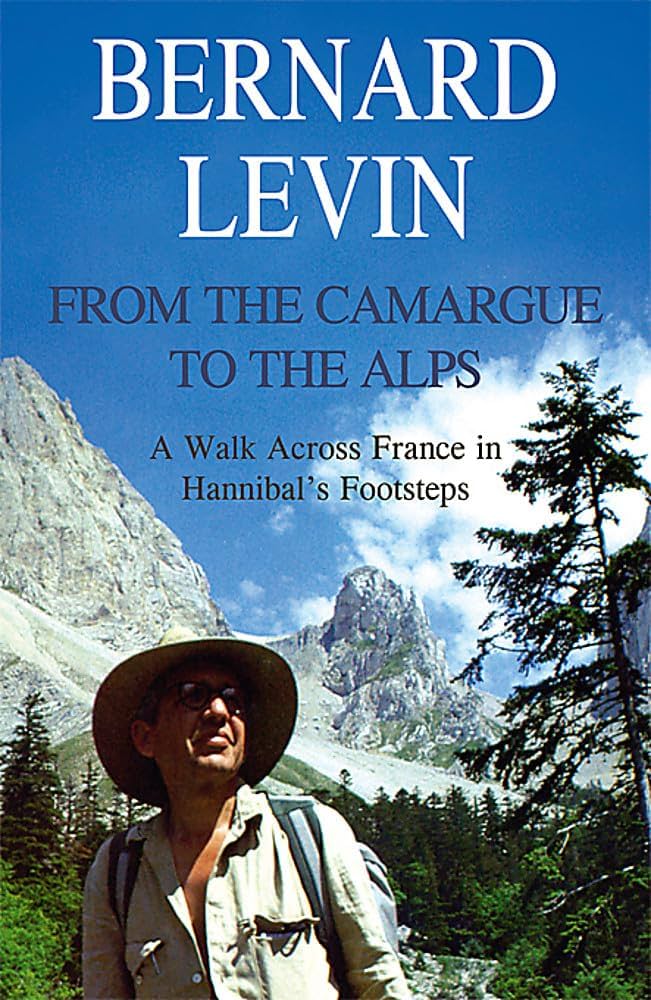
Bernard Levin was once described by the editor of The Times, for whom he worked as a columnist for 26 years, as “one of the most gifted and influential columnists to write for The Times. The beauty of his language and the originality of his thought ensured that he had an enthusiastic audience far beyond the borders of Britain.”
I first came across him in a book of essay entitled “Enthusiasms”, a brilliant cornucopia of essays on everything Levin was passionate about – Enthusiasms, a collection of essays on many of the things he genuinely adored (orchestral music, Shakespeare, walking, cats, fine dining, and himself),
With passion and wit, Bernard Levin describes his travels on foot through the beautiful countryside of south-eastern France. He follows in the mighty footsteps of the great Carthaginian enemy of Rome, Hannibal, who made the expedition with an army and elephants nearly two millennia before. From the Camargue via the Rhône Valley, across the Alps, and into Italy during August snowstorms, he comments on the social and historical importance of the landscapes he passes through, taking detours to the table of chef Jacques Pic at Valence and the Arles region immortalized by Van Gogh.
This book appeals in all sorts of ways. Originally published in the 1980s and republished in 2009, it is redolent of an almost forgotten France, when the franc was still in circulation and returnable glass wine bottles had moulded stars around the necks.
It is also one of a very few travel books written about the Camargue, which I passed through at the end of my recent walk from Geneva to Le Grau-du-Roi on the Mediterranean Untamed, harsh, beautiful and unchanging, the salt flats, the endless skies and the unique culture make it quite different from anywhere else in the world.
Another attraction is Bernard Levin’s sly wit. I like the jokes he slips in. Why are a sailor’s trousers like two French cities? They are Toulon and Toulouse. Just the kind of quip that appeals to me.
Bernard Levin himself looms out of an even earlier age; these days do people even have inflatable coat-hangers? He also packed drip dry shirts, and a supply of paperbacks. And seriously, who on earth only ever wears silk socks? So bonkers. Do silk socks even exist? (In the end, especially for the journey, he bought six pairs of pure wool socks from Harrods.)
It’s a multi-layered kaleidoscope of a book. Reading it is also an armchair journey through the south of France over the Alps to Italy and what could be better than that?
Bernard Levin’s journey would not have been complete without enjoying the hospitality of the Moussets—the fifth generation of their family to produce wine at Châteauneuf-du-Pape, before turning eastwards, to face the greater challenge of the Alps
Pilgrim Snail – Ben Nimmo
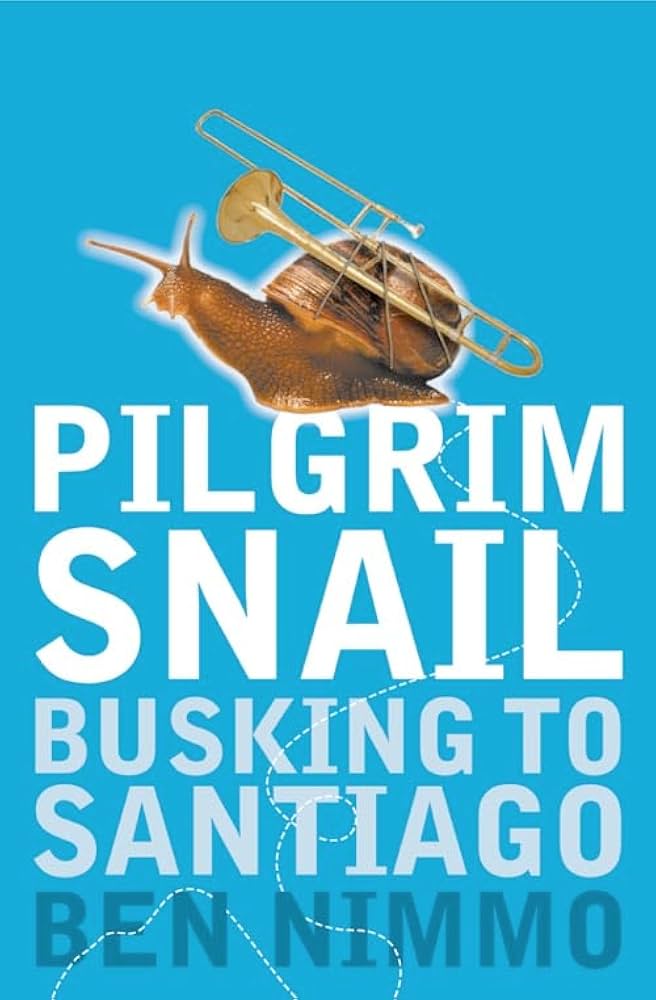
Ben Nimmo’s travelogue about walking from Canterbury to Santiago de Compostela armed with his trusty trombone, is the perfect escapist travel narrative, peppered with gloriously funny anecdotes, from a keen observer of people and places. It does help though if you are a jazz afficionado!
The motivation behind Ben Nimmo’s mammoth walk from Canterbury to Santiago de Compostela in Spain as described in Pilgrim Snail was a sombre one: he wanted to pay tribute to the girl he loved, murdered while working for charity in Belize.Ben Nimmo did what any rational human being would and decided to walk from one of the greatest European medieval pilgrim sites to another – Canterbury to Santiago de Compostela in Spain – in her memory, taking with him his trombone and busking for charity.
But Nimmo’s odyssey became a life-changing one, and reading about it is anything but a sombre experience. This fascinating record of his adventure conveys the peaks and troughs with maximum vividness. Nimmo’s sole companion on his eventful trip was a trombone, and for the nine months (and 2,000 miles) of his journey he struggled against injuries, massive storms and even a phantom bear–all the time weighed down by his mammoth rucksack. But what makes Nimmo’s picaresque narrative so diverting are the bizarre encounters and amusing incidents as well as the panoply of colourful characters he encounters. These range from pulling a corpse from a Belgian canal to teaching the five-year-old daughter of a Burgundian farmer to play the trombone in return for tractor driving lessons, smugglers with courtly manners, monks who are rather too fond of the communion wine and even a hospitable anti-blood sports neo-nazi with whom he shares a sandwich. His journey sees him getting involved with he European championship of boules (with square balls), discussing life, religion and Dixieland jazz with a lay brother in a Luxembourg monastery and even includes observations on chicken worship in a provincial Spanish cathedral.
Nimmo explores the historical wealth of Europe ranging from the wool farms of Flanders to the Cather castles of Languedoc, the twentieth century battlefields and pre-historic caves and conveys it all in prose that veers from the caustically funny to the sharply evocative. He considers Santiago pilgrims past, present and future, and makes new friends everywhere with the help of his trusty trombone. If you have ever thought about setting off on the Camino, this book might just be the inspiration that you need!
Stalin’s Nose – Rory Maclean
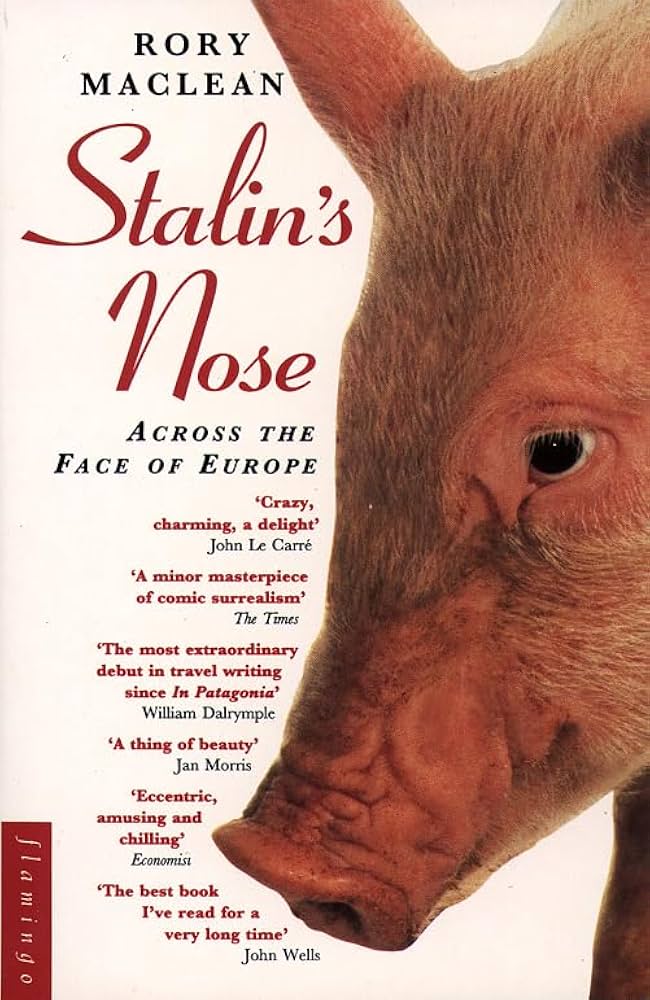
Ok I have to admit that this book is less about walking in Europe than driving through Europe – in a Trabant with two elderly aunts and the cast of a Tamworth pig. Truth is sometimes very much stranger than fiction!
In Rory MacLean’s groundbreaking debut travel book, Winston the pig drops on to Uncle Peter’s head and kills him dead. Unwilling to be left alone in her house Aunt Zita, a faded Austrian aristocrat and a vivacious eccentric, hijacks her nephew and, together with Winston, sets out on one last ride. The Berlin Wall has fallen only weeks before and Zita is determined to reach across the reopened borders and rediscover her remarkable east European family. In a rattling Trabant the unlikely trio puff and wheeze across the changing continent, following the threads of memory. Zita’s relations – the angel of Prague, the Hungarian grave digger who buried Stalin’s nose, a dying Romanian propagandist – help tie together the loose ends of her life. They picnic at Auschwitz. They meet Lenin’s embalmer. They carry a long-lost corpse over the Carpathian mountains. Through war and revolution, decay and regeneration, “Stalin’s Nose” is a surreal and darkly comic ride and a portrait of Europe like no other.
Hopefully this review of my ‘six of the best’ European walking travelogues has either whetted your appetite to embark on a long distance walk of your own or will at least tempt you over the coming months to delve into the world of travel writing about long distance walking. If not, I guess there is always one fail safe fall back option to help you while away the long winter evenings – get stuck into the Book of Amos!


 Pilgrim's Progress - Long Distance Walks in Europe and the UK
Leave a comment