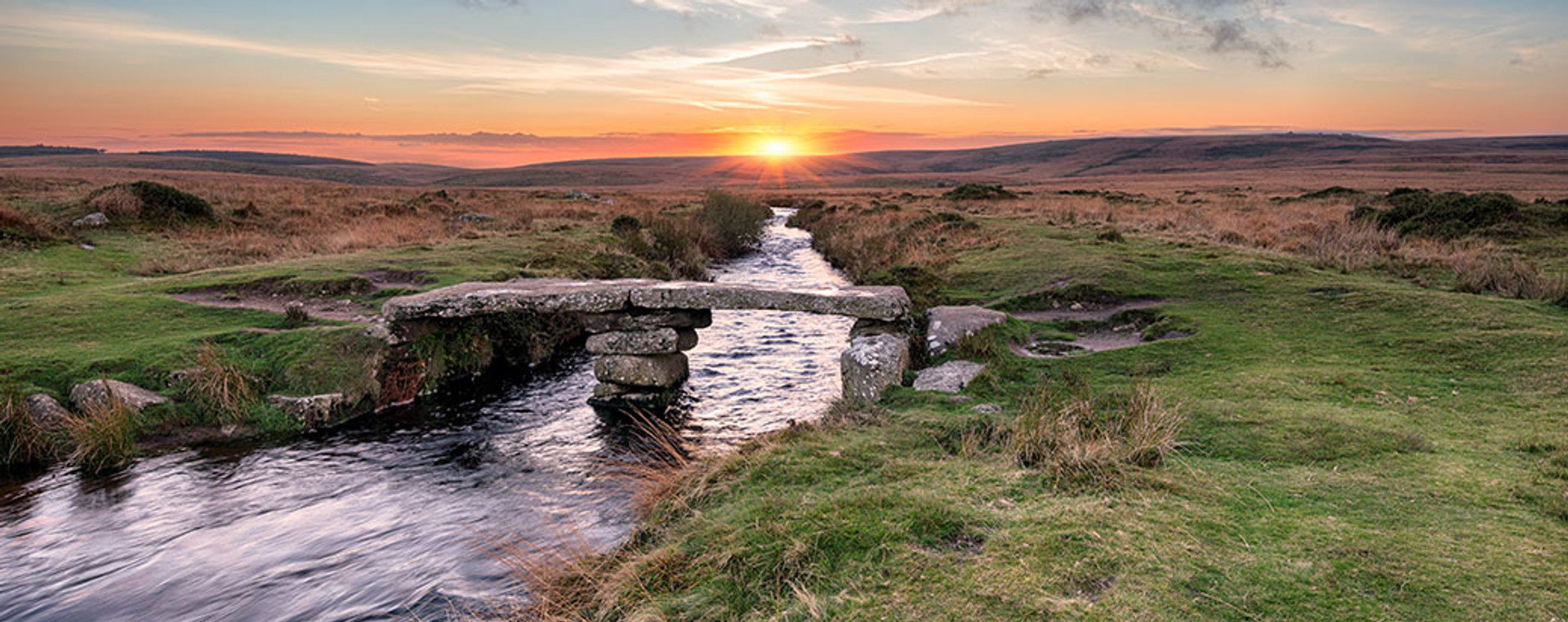
It is always hard to see the purpose in wilderness wanderings until after they are over.
Pilgrim’s Progress – John Bunyan
Today’s walk from Saint Christol to Grabels – 10 hours walking, most of it on tarmac and through a concrete jungle that comprises Montpellier and its suburbs. Throw in a wrong turning which added another 7km to the day’s walk, and it’s fair to say that I have enjoyed better days.
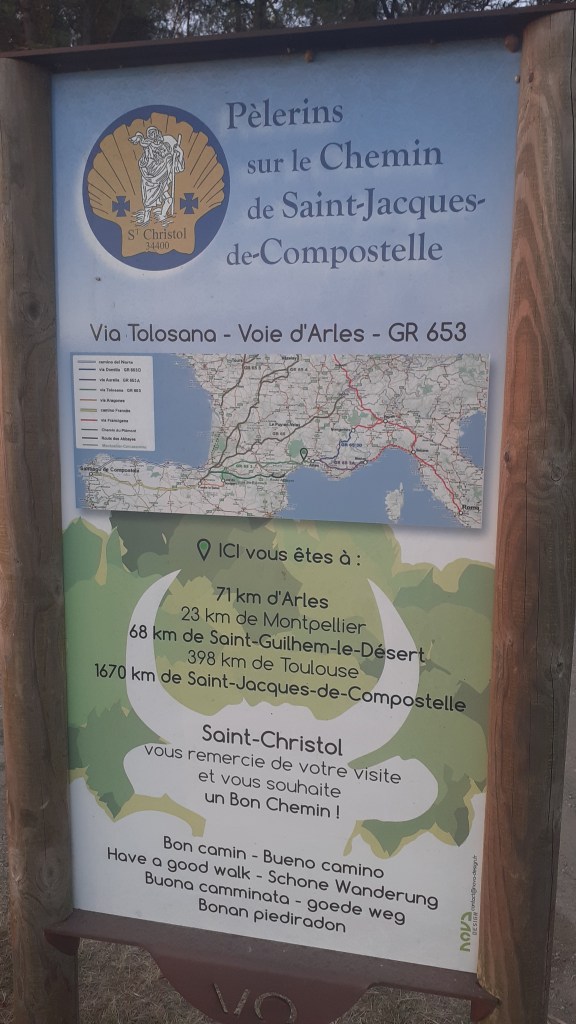
Before I left the gite at St Christol I had a look through the livre d’or (guest book). I was somewhat surprised to discover that I was the first Brit to have stayed there. Surprised because the gite had been open since 2019 and surprised because according to the French national tourist board, around 13 million Brits visit France each year. France is the most visited country in the world and Brits account by far and away the most tourists. Clearly walking the Chemin d’Arles has yet to catch on in a big way!
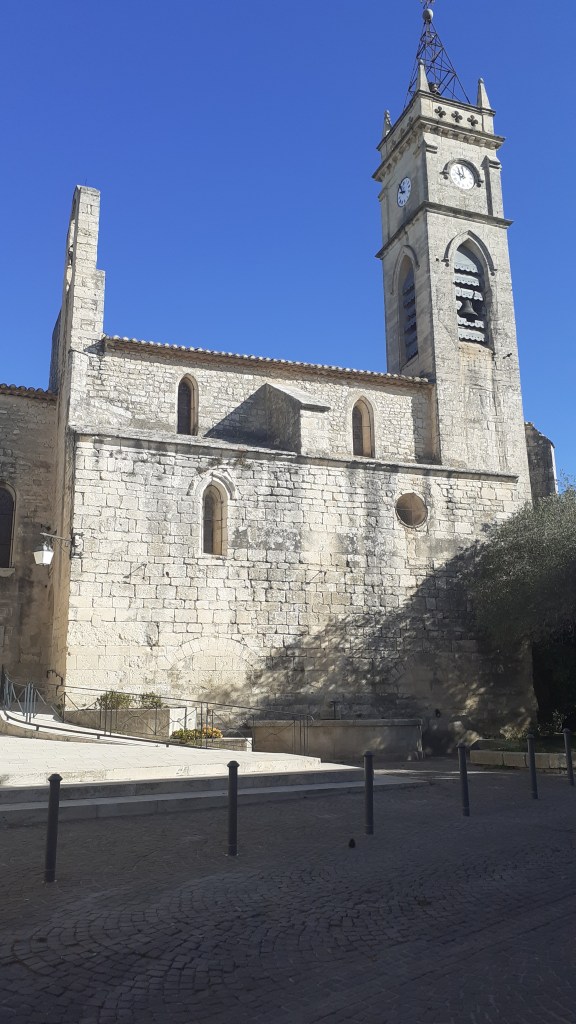
I reached the little village of Saint-Geniès-des-Mourgues by 8.30am. I then somehow proceeded to retrace my steps back towards Saint Christol for 45 minutes before I realised my mistake, did a rapid U turn and reached Saint-Geniès for the second time at 10am. If there was a silver lining, it was the fact that the Mairie was open and able to stamp my pilgrim passport.
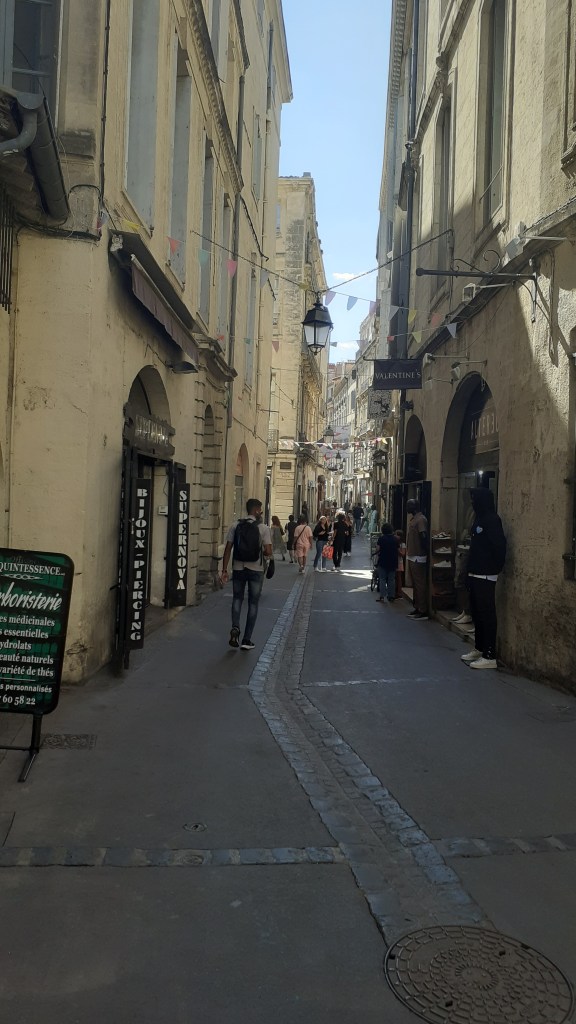
For the next 7 hours I spent most of the time zig zagging through industrial estates, housing estates,getting lost in a local government administrative zone on the outskirts of Montpellier and walking alongside thundering highways. Back in Arles Monsieur Débarde had mentioned that many walkers simply hop on a bus and avoid the slog through the concrete jungle.By the end of the day I could understand why.
The population of Montpellier is 300,000 (of whom 70,000 are students) and growing by 8-10,000 each year. Medicine is a big thing in the city which produces about 40% of the country’s doctors and has a large number of hospitals. It also boasts one of the oldest universities in the world, founded in 1220. Montpellier was part of the Spanish kingdom of Aragon and didn’t become part of France until it was sold to the French king in 1349. Needless to say, Montpellier retains strong links with Spain in general (it welcomed many refugees from the Spanish Civil War in the 1930s) and Catalonia in particular.
When I did eventually make it into the centre of Montpellier, I couldn’t but be impressed by the monumental Arch of Triumph – the Porte de Peyrou.
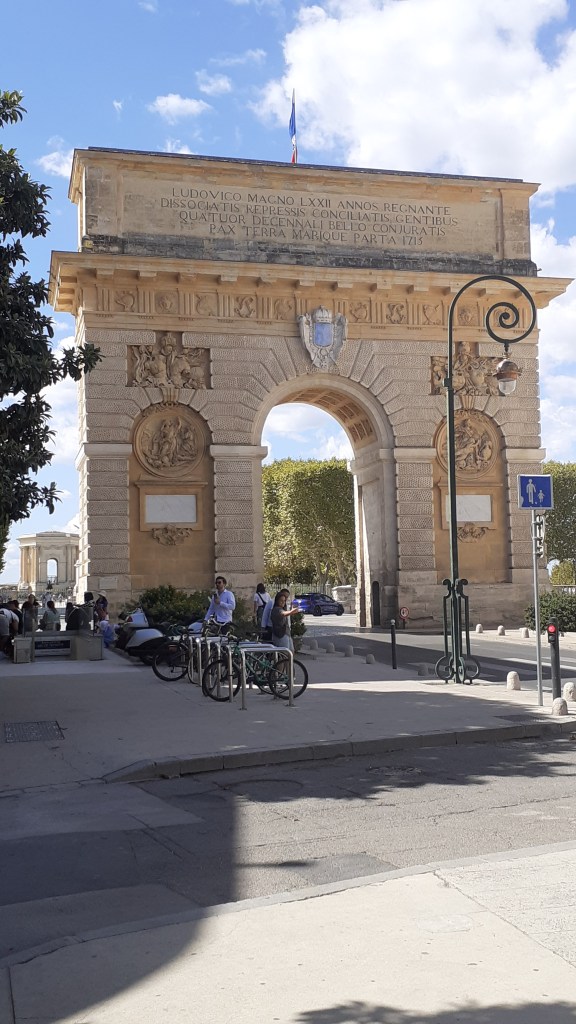
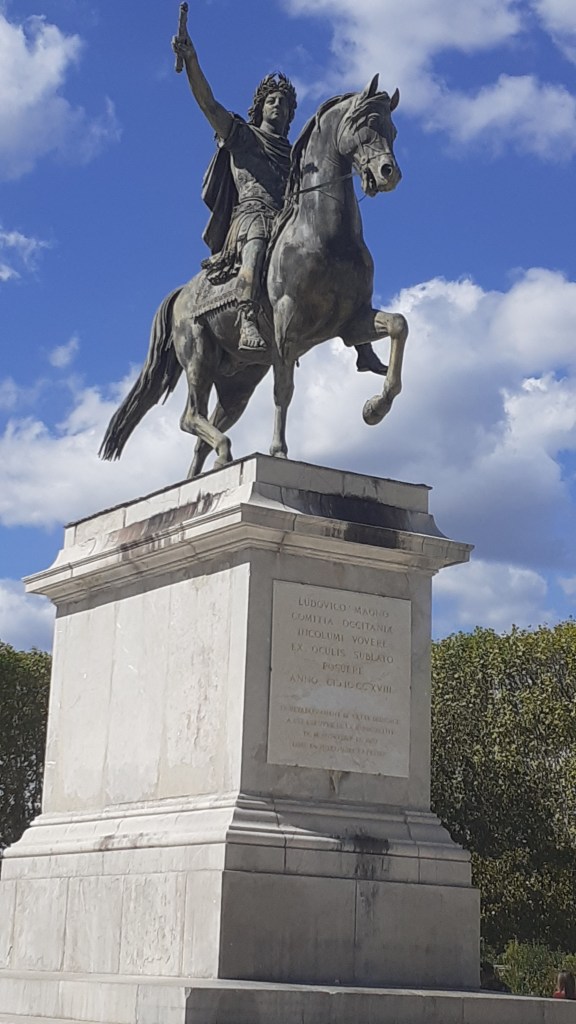
The Porte du Peyrou ( peyrou is an Occitan word meany stony/pierreux) was dedicated to the glory of King Louis XIV of France, the ‘Sun King’. It was designed in 1690 by François d’Orbay, a French architect involved in designed some of France’s most iconic landmarks, notably the Louvre and the Palace of Versailles.
The original statue of Louis XIV on horseback was erected in 1686 only to be destroyed a little over a hundred years lated in 1792 during the French Revolution.
I’d had a few problems booking accommosation in the village of Grabels just outside Montpellier. I’d emailed the municipal gite in Grabels only to be told that it was full and all 13 beds were occupied. I emailed the only other accommodation in the village only to be told by Jean Marie, the husband of the owner, that his wife was away for a month walking the Chemin d’Arles and so he wouldn’t be able put me up for the night! He thankfully relented when I suggested that I might be sleeping on the streets if I couldn’t anywhere to pitch my tent for the night.
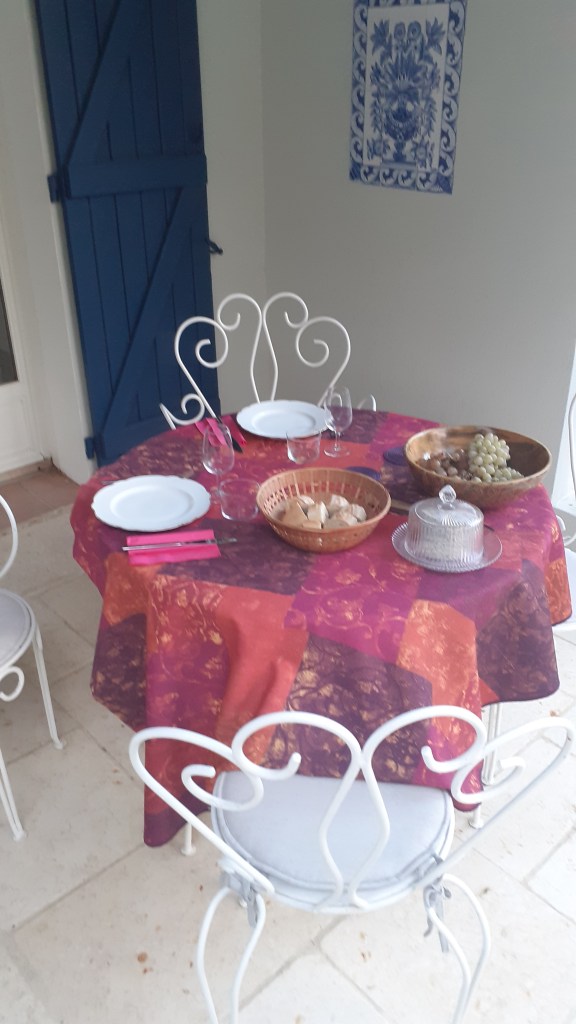
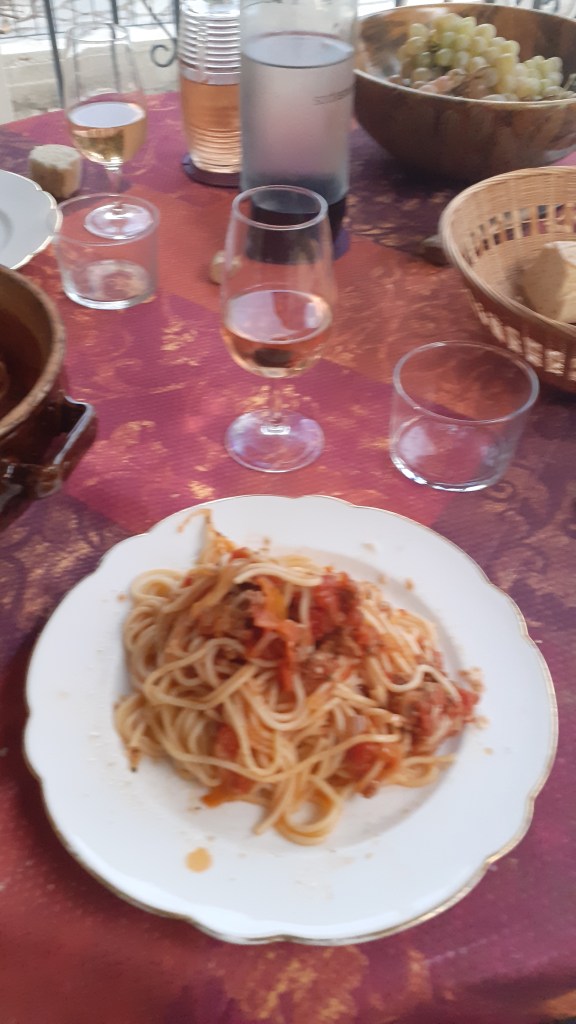
When I did eventually make my way to his house, Jean Marie couldn’t have been more helpful. He offered me a beer on arrival, allowed me to have full use of his swimming pool and then cooked me up some spaghetti bolognaise for supper over which we chatted about his family (7 children), his career as a journalist and the reasons why he’d moved to Grabels from north west France 13 years ago. The wine flowed, the meal moved onto cheese and grapes grown in his garden and before long the long day pounding the concrete through Montpellier were distant memories.
 Pilgrim's Progress - Long Distance Walks in Europe and the UK
Leave a comment